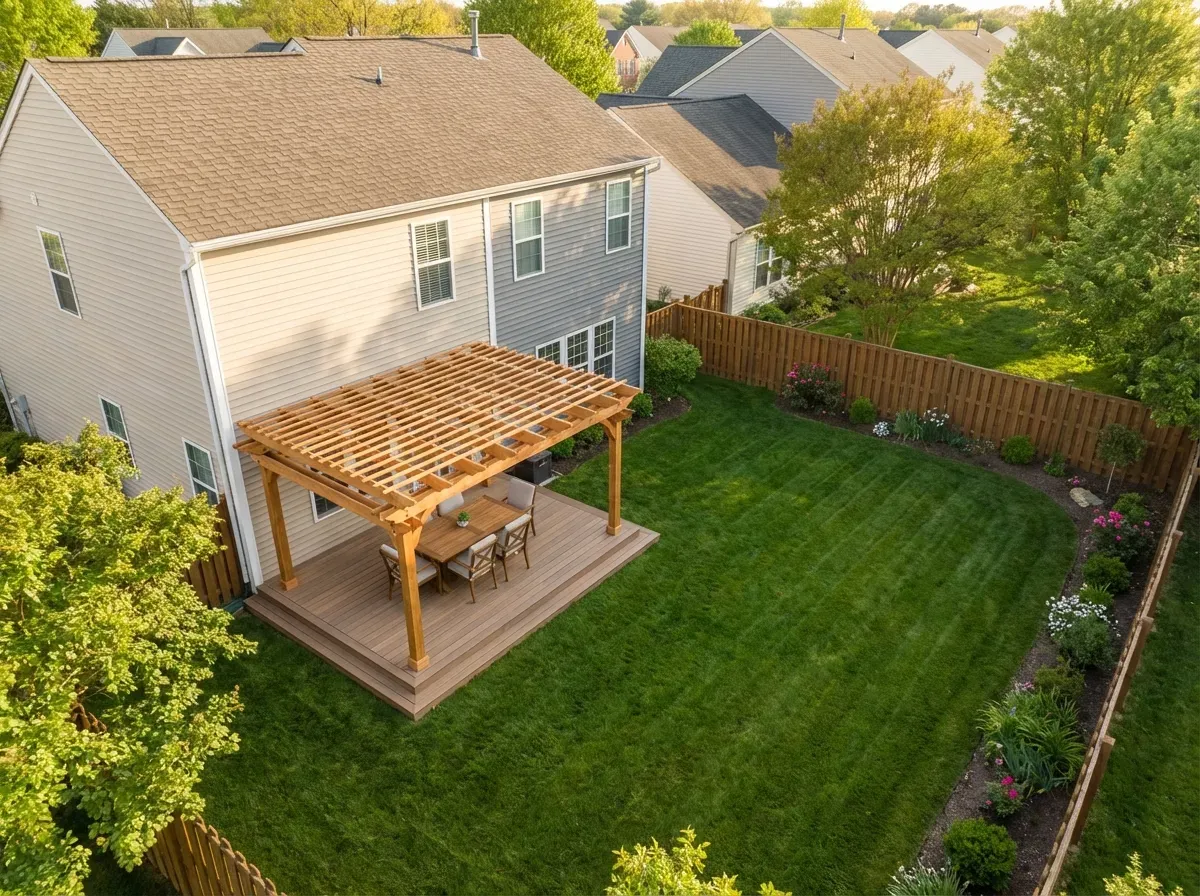
A pergola transforms your outdoor space from a simple backyard into a true extension of your home—a place where morning coffee feels special and summer evenings become memorable. But getting the dimensions right is where most homeowners struggle. Too small, and your new structure feels cramped. Too large, and it overwhelms your landscape while draining your budget.
Here in Northern Virginia, where outdoor living seasons stretch from April through October, planning your pergola dimensions carefully ensures you’ll maximize every moment under that beautiful latticed roof. Whether you’re envisioning intimate dinners in Vienna, weekend gatherings in Sterling, or a peaceful retreat in Loudoun County, this guide will help you determine the perfect pergola size for your space and lifestyle.
After building hundreds of decks and outdoor structures across Fairfax and Loudoun counties, our team has learned exactly what works—and what homeowners wish they’d done differently. This guide shares that experience so you can get it right the first time.
Key Takeaways for Pergola Dimensions
Before you start planning, remember these essential points:
☑ Define your purpose first. Every dimensional decision should flow from how you’ll actually use the space—whether that’s intimate dining, outdoor cooking, or relaxed lounging.
☑ Standard heights range from 8-10 feet. This provides headroom and visual proportion. Go higher (9-10 feet) if adding fans or hanging elements.
☑ Scale to your property. Keep your pergola footprint to roughly 25-30% of your usable outdoor area for visual balance.
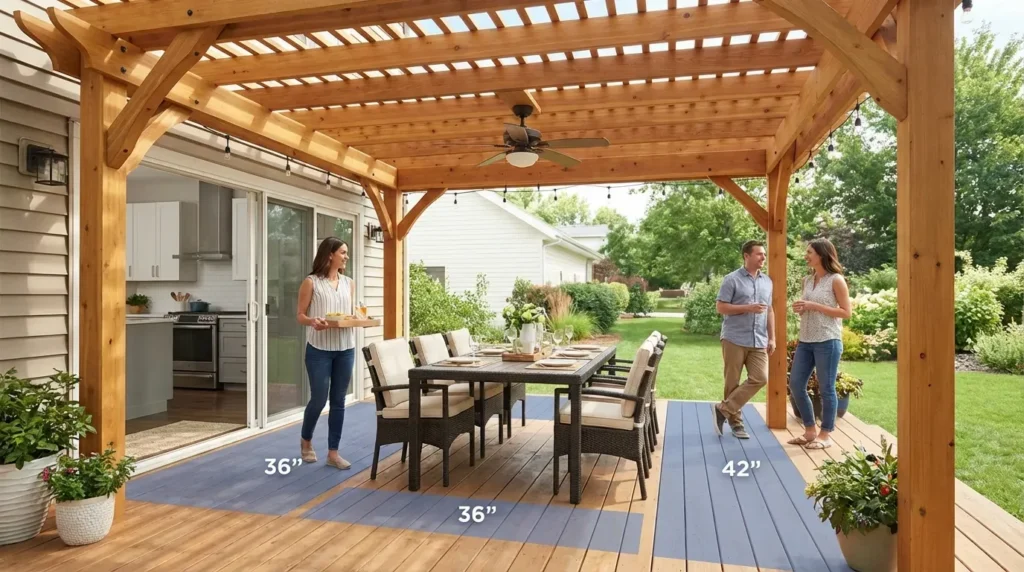
☑ Measure your furniture. Calculate clearances for chairs, walking paths, and traffic flow. Add 36-42 inches around furniture for comfortable movement.
☑ Post spacing of 8-12 feet balances openness with structural efficiency. Wider spans require heavier beams.
☑ Budget $3,000-$22,000 depending on size and materials. Get multiple quotes and compare what’s included.
☑ Local codes matter. Northern Virginia jurisdictions have specific requirements—verify before you build or work with a contractor who handles permits.
☑ Consider climate. Orientation and rafter spacing affect shade, while larger structures require more robust anchoring against wind.
Table of Contents
Start with Purpose: What Will You Use Your Pergola For?
Before measuring anything, ask yourself one fundamental question: How do I want to live in this space?
Your intended use drives every dimensional decision. A pergola designed for quiet morning meditation needs completely different proportions than one built to host your extended family for Fourth of July barbecues.
Dining and Entertaining
For outdoor dining, plan around your table size plus comfortable movement space. A standard 4-person dining set requires roughly 64 square feet, but you’ll want additional clearance so guests aren’t bumping into posts when they stand. For this use, most Northern Virginia homeowners find that 10×10 to 12×12 feet works beautifully for intimate family meals, while 12×16 feet or larger accommodates dinner parties with ease.
Outdoor Kitchen Coverage
If you’re integrating a grill station or full outdoor kitchen, you’ll need to account for counter space, appliances, and the cook’s working area. We recommend a minimum of 12×14 feet for basic grill coverage, expanding to 14×18 feet or more for comprehensive outdoor kitchens with island seating.
Many of our Sterling and Ashburn clients combine their pergola project with a complete deck addition, creating a unified outdoor living space that flows seamlessly from indoor kitchen to outdoor cooking area.
Lounge and Relaxation Areas
Planning to create a comfortable seating area with sofas or loungers? Sectional sofas with coffee tables typically need 100 to 150 square feet of covered space. Factor in additional room if you envision adding planters, a fire pit table, or other decorative elements.
Walkways and Garden Passages
For pergola-covered walkways connecting different areas of your landscape, a narrower profile works best. 6 to 8 feet wide provides comfortable passage for two people walking side by side, with length determined by your garden’s layout.
Essential Pergola Dimensions: Height, Width, and Depth
Height: The Vertical Sweet Spot
Pergola height affects both comfort and aesthetics. Too low, and the space feels oppressive—guests will instinctively duck even when they don’t need to. Too high, and the structure loses its sense of shelter, appearing disconnected from the outdoor room below.
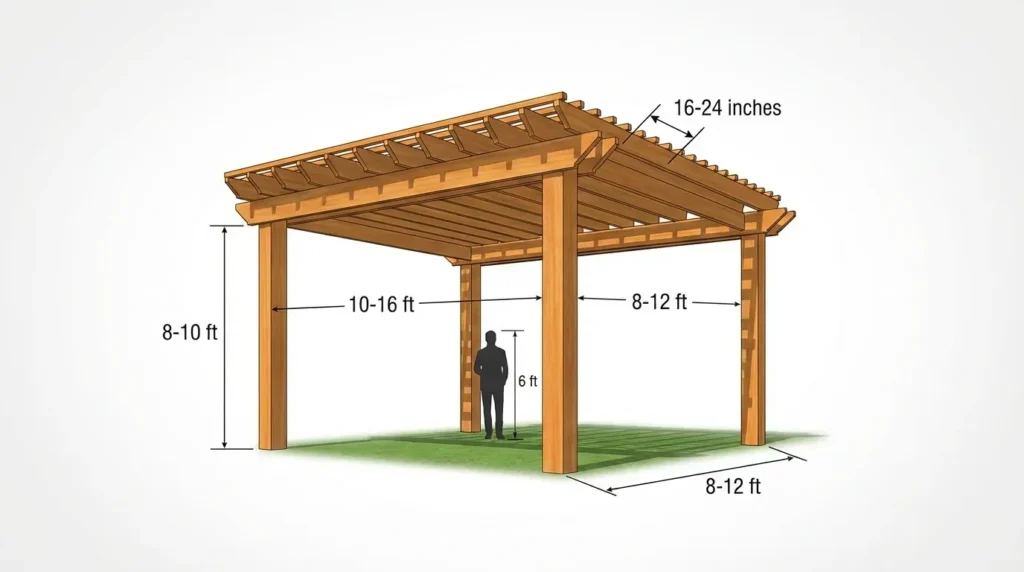
The ideal pergola height ranges from 8 to 10 feet at the lowest beam. This provides ample headroom while maintaining an intimate, sheltered atmosphere. If you’re planning ceiling fans, pendant lighting, or hanging plants, aim for the higher end of this range—at least 9 to 10 feet at the beam level.
For attached pergolas that connect to your home, ensure the ledger board height allows for proper roof drainage away from your house. You’ll also want to avoid blocking windows, doors, or existing architectural features.
Pro Proportion Tip: As a general design rule, your pergola’s height should be at least half its width. A 12-foot-wide pergola looks best with a minimum 8-foot height. This ratio creates visual balance that feels naturally pleasing.
Width and Depth: Defining Your Footprint
Your pergola’s width and depth create its footprint—the actual covered area you’ll use. When determining these dimensions, consider both your furniture layout and movement patterns.
Recommended Pergola Sizes by Primary Use:
| Primary Use | Recommended Size | Square Footage |
|---|---|---|
| Small dining (2-4 people) | 10×10 feet | 100 sq ft |
| Medium dining (6-8 people) | 12×12 feet | 144 sq ft |
| Large entertaining | 12×16 feet | 192 sq ft |
| Outdoor kitchen | 14×18 feet | 252 sq ft |
| Lounge/seating area | 12×14 feet | 168 sq ft |
| Hot tub enclosure | 12×12 feet minimum | 144 sq ft |
For attached pergolas extending from your deck, the depth (how far it projects from your house) typically ranges from 8 to 12 feet. This provides meaningful coverage without overwhelming your yard or creating structural complications.
Pergola Cost in Northern Virginia: What to Budget
Understanding costs helps you make informed decisions about size and materials. In Northern Virginia, pergola pricing varies significantly based on dimensions, materials, and complexity.
Typical Pergola Costs by Size
| Pergola Size | Pressure-Treated Wood | Cedar/Redwood | Vinyl/Composite |
|---|---|---|---|
| 10×10 feet | $3,000–$5,500 | $5,500–$8,000 | $6,000–$9,000 |
| 12×12 feet | $4,500–$7,000 | $7,000–$10,500 | $8,000–$12,000 |
| 12×16 feet | $6,000–$9,500 | $9,500–$14,000 | $11,000–$16,000 |
| 14×18 feet | $8,500–$13,000 | $13,000–$19,000 | $15,000–$22,000 |
Prices include materials, labor, and standard footings. Actual costs vary based on site conditions, design complexity, and current material prices.
What Affects Pergola Pricing
Size is the primary cost driver—each additional square foot adds materials and labor. But several other factors influence your final investment:
Material choice creates the biggest price swing. Pressure-treated lumber costs least upfront but requires regular maintenance. Cedar and redwood offer natural beauty and rot resistance at mid-range prices. Vinyl and composite materials cost more initially but need almost no maintenance over their lifespan.
Attachment type matters too. Freestanding pergolas require four full-height posts with footings, while attached pergolas use your home’s structure for support, sometimes reducing costs.
Site conditions like sloped yards, difficult access, or rocky soil for footings can add 10-20% to labor costs.
Electrical work for fans, lighting, or outlets adds $500–$2,000 depending on complexity.
Permits and engineering, required in most Northern Virginia jurisdictions, typically run $200–$500.
Why Our Pricing Is Different: At Modern Kitchen & Home Solutions, we provide transparent, all-inclusive quotes—no hidden fees or surprise change orders. Our direct relationships with material suppliers mean you get premium quality without premium markups. Get your free estimate and see the difference.
Post Spacing and Structural Considerations
The distance between your pergola posts affects both aesthetics and engineering. Wider spans create an open, airy feeling but require heavier beams to prevent sagging. Closer spacing uses less substantial materials but can make the space feel more enclosed.
Optimal Post Spacing
Standard post spacing ranges from 8 to 12 feet between columns. For most residential pergolas, 10-foot spans strike an excellent balance between openness and structural efficiency.
When planning post placement, consider these practical factors:
Traffic flow: Position posts so they don’t block natural walking paths or create awkward navigation around furniture.
Furniture placement: Think about where posts land relative to your planned layout. A post in the middle of where you want your dining table defeats the purpose of careful planning.
Attachment points: For attached pergolas, posts should align with your deck’s structural elements whenever possible. If you’re considering a new deck with your pergola, we can engineer both structures together for optimal integration.
Local codes: Northern Virginia jurisdictions, including Fairfax County and Loudoun County, have specific requirements for pergola construction. Post depth, footing size, and maximum spans may be regulated, especially for structures over certain heights or square footages.
Beam and Rafter Sizing
As spans increase, so must beam dimensions. For typical residential pergolas:
| Span Distance | Recommended Beam Size |
|---|---|
| 8-foot spans | 2×6 or 2×8 beams |
| 10-foot spans | 2×8 or 2×10 beams |
| 12-foot spans | 2×10 or 2×12 beams, or doubled lumber |
| Over 12 feet | Engineered beams or steel reinforcement |
Rafters typically use 2×6 or 2×8 lumber spaced 16 to 24 inches apart, depending on desired shade density and aesthetic preference.
Scaling Your Pergola to Your Property
A beautifully proportioned pergola enhances your landscape. An oversized one overwhelms it. A key principle in outdoor design: your pergola should complement your yard, not dominate it.
The 25-30% Rule
As a general guideline, your pergola should cover no more than 25 to 30 percent of your usable outdoor space. This ratio maintains visual balance and leaves room for lawn areas, gardens, and other landscape features.
For a 1,000 square foot backyard (not uncommon in Sterling, Ashburn, or similar Northern Virginia communities), this suggests a pergola footprint of roughly 250 to 300 square feet maximum—about 16×18 feet or equivalent.
Setback Requirements in Northern Virginia
Your pergola’s placement must respect property lines. Typical requirements in our area:
| Setback Type | Typical Requirement |
|---|---|
| Side yard | 5-10 feet from property lines |
| Rear yard | 10-25 feet (varies by zone) |
| From structures | 5-10 feet from detached buildings |
| HOA requirements | Varies—always check first |
Always verify requirements with your local building department before finalizing dimensions or placement. We handle permit applications for our clients, ensuring your project meets all local codes.
Visual Proportion to Your Home
Consider how your pergola relates to your house’s scale. A 20×20 pergola might look stunning behind a spacious colonial but appear out of place attached to a modest townhouse. When in doubt, photograph your home and sketch potential pergola sizes to visualize the relationship—or better yet, let us create a 3D rendering so you can see exactly how different sizes will look.
Planning for Furniture: Measure Before You Build
[IMAGE PLACEMENT: Pergola with Furniture Layout]
One of the most common pergola planning mistakes is building first and shopping for furniture second—only to discover your dream outdoor sectional doesn’t quite fit, or your dining chairs bump posts every time someone stands up.
Furniture Dimensions to Know
Before finalizing your pergola size, measure (or research) the furniture you plan to use:
Dining Sets:
| Table Size | Approximate Dimensions | Minimum Pergola Size |
|---|---|---|
| 4-person table | 36×36 inches | 9×9 feet |
| 6-person table | 36×72 inches | 10×12 feet |
| 8-person table | 40×96 inches | 12×14 feet |
Add 36 inches around each side for chair movement
Seating Arrangements:
- 3-seat sofa: approximately 84×36 inches
- Sectional: varies widely—measure your specific piece
- Lounge chairs: approximately 30×70 inches each
- Coffee table: typically 48×24 inches
Cooking Equipment:
- Standard grill: 24-48 inches wide
- Outdoor kitchen island: typically 6-10 feet long
- Prep space clearance: minimum 36 inches on working sides
Clearance Calculations
Beyond furniture dimensions, factor in comfortable movement clearances:
| Clearance Type | Minimum Distance |
|---|---|
| Walking paths | 36-42 inches between furniture and posts |
| Chair push-back | 36 inches behind dining chairs |
| Traffic lanes | 48 inches for primary pathways |
| Grill clearance | 36 inches from combustibles |
Practical Example: For a 6-person dining setup with a 36×72 inch table:
- Table footprint: 3×6 feet = 18 square feet
- Chair clearance (36″ each side): adds 6 feet to each dimension
- Total furniture zone: 9×12 feet = 108 square feet minimum
- With comfortable walking clearance: approximately 11×14 feet recommended
Not Sure What Size Fits Your Space?
This is exactly why we offer free on-site consultations. Our design team will:
✓ Measure your actual space and note any obstacles or opportunities ✓ Discuss how you want to use your outdoor area ✓ Show you 3D renderings of different pergola sizes in your yard ✓ Provide a detailed, no-obligation quote
Schedule Your Free Consultation →
No pressure, no obligation—just expert advice tailored to your home.
Attached vs. Freestanding: How It Affects Dimensions
Attached Pergolas
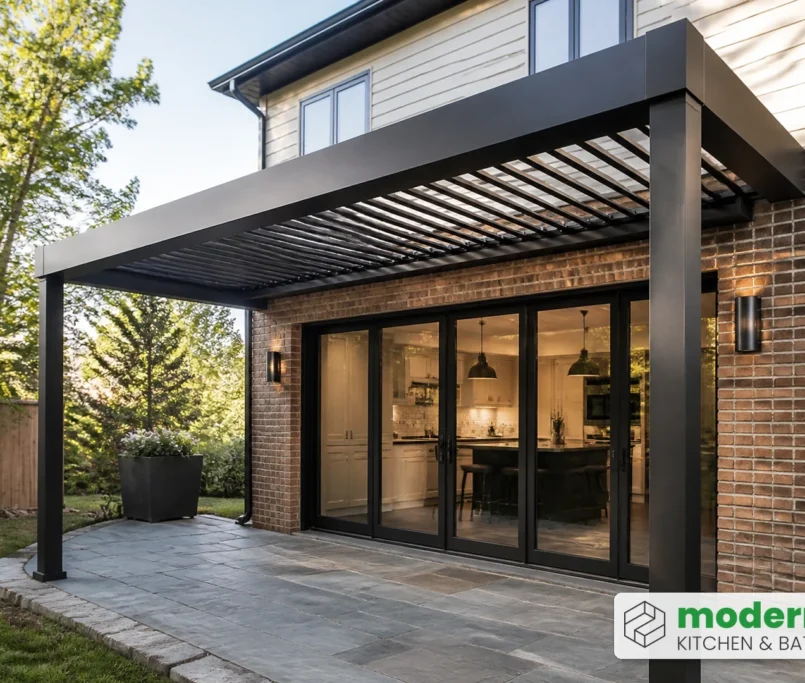
Pergolas attached to your home via a ledger board offer several advantages: they create seamless indoor-outdoor flow, often cost less (fewer posts and footings), and can be sized to match existing architectural features like doors or windows.
Dimensional considerations for attached pergolas:
- Width often determined by the span of doors or the width of your deck
- Projection depth typically 8-12 feet from the house
- Height must accommodate proper drainage slope away from your home
- Ledger attachment point affects available ceiling height
Attached pergolas work beautifully with our deck addition projects, creating cohesive outdoor living spaces that feel like natural extensions of your home.
Freestanding Pergolas
Freestanding structures offer placement flexibility and can serve as destination points in your landscape. They require four or more posts with adequate footings.
Dimensional considerations for freestanding pergolas:
- Can be positioned anywhere setbacks allow
- Often larger since they’re not constrained by house attachment
- Four corner posts minimum—larger pergolas may need intermediate posts
- Ideal for creating distinct outdoor “rooms” separate from your home
Climate Considerations for Northern Virginia
Our Northern Virginia climate—with hot, humid summers and occasionally harsh winters—should influence your pergola dimensions in specific ways.
Summer Shade Planning
Virginia’s summer sun is intense. If shade is a priority, consider:
Orientation: East-west beam alignment provides more midday shade when you need it most.
Rafter spacing: Closer rafters (12-16 inches) increase shade density. Wider spacing (20-24 inches) creates a more open, airy feel with dappled light.
Depth: Deeper pergolas (12+ feet from attachment) capture more shade as the sun moves across the sky.
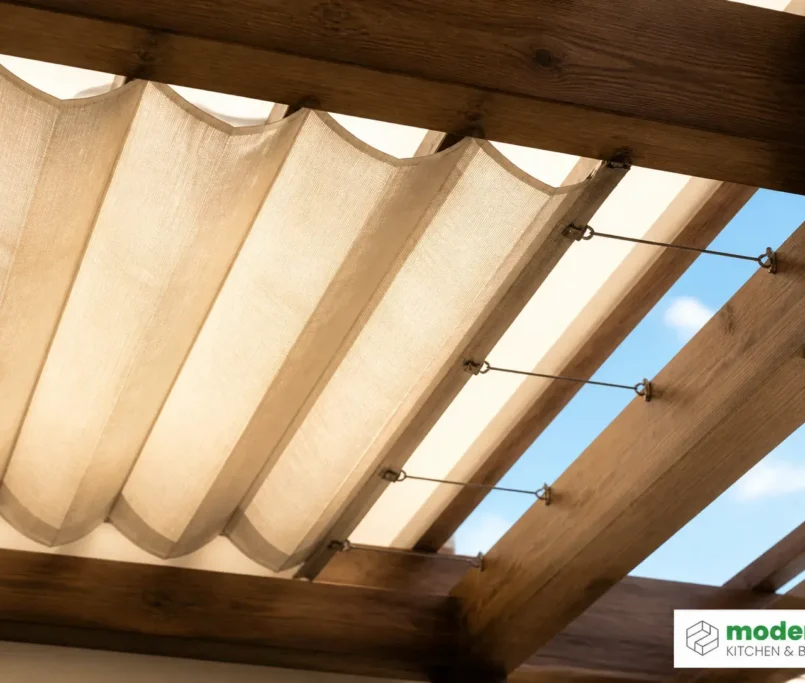
Some homeowners add retractable canopies or shade fabric, which works best on pergolas at least 10 feet wide where the fabric can span effectively without sagging.
Wind and Weather Resistance
Larger pergolas catch more wind. If your property is exposed—especially in open areas of Loudoun or Prince William counties—your structure needs appropriate engineering. We calculate wind loads and specify adequate post sizing and anchoring for your specific location and pergola dimensions.
Frequently Asked Questions for Pergola Dimensions
What is the standard pergola size for a backyard?
The most popular residential pergola sizes range from 10×10 feet to 12×14 feet. These dimensions accommodate most common uses—from outdoor dining to comfortable seating areas—without overwhelming typical suburban backyards. However, “standard” really depends on your specific yard size, intended use, and local regulations. Many Northern Virginia homeowners with larger properties opt for 12×16 feet or larger to create true outdoor living rooms.
How tall should a pergola be for comfortable use?
Most pergolas should be 8 to 10 feet tall at the lowest beam. This height provides ample headroom while maintaining an intimate, sheltered feeling. If you’re planning to add ceiling fans, pendant lights, or hanging plants, aim for at least 9 to 10 feet to ensure these elements don’t interfere with head clearance. Never go below 7.5 feet, as this creates an uncomfortable, cramped sensation.
How much clearance do I need around pergola furniture?
Plan for minimum 36 inches of clearance around seated furniture for comfortable chair movement. For walking paths and primary traffic areas, allow 42 to 48 inches. Behind dining chairs, where people push back to stand, maintain at least 36 inches to the nearest obstruction. These clearances ensure your pergola feels spacious and functional rather than cramped.
How much does a pergola cost in Northern Virginia?
Pergola costs in Northern Virginia typically range from $3,000 to $22,000 depending on size and materials. A basic 10×10 pressure-treated wood pergola starts around $3,000-$5,500, while a large 14×18 cedar or composite structure can reach $15,000-$22,000. Factors affecting price include material choice, site conditions, electrical requirements, and permit fees. Always get detailed quotes that specify what’s included.
Can a pergola be too big for my yard?
Absolutely. An oversized pergola can overwhelm your landscape, block views, and make your yard feel smaller rather than more functional. A good rule of thumb: your pergola should cover no more than 25-30% of your usable outdoor space. Beyond aesthetics, oversized structures may require additional permits, engineering, and significantly higher costs for materials and installation.
How far from my property line can I build a pergola?
Setback requirements vary by jurisdiction. In most Northern Virginia areas, you’ll need 5-10 feet from side property lines and 10-25 feet from rear property lines, depending on your zoning classification. HOA covenants may impose additional restrictions. Always check with your local building department and homeowners association before finalizing placement and dimensions.
What size pergola do I need for an outdoor dining set?
For comfortable outdoor dining, add approximately 6 feet to each dimension of your table to account for chair movement and circulation. A 4-person table (roughly 3×3 feet) needs a minimum 9×9 foot pergola. A 6-person table (roughly 3×6 feet) requires at least 10×12 feet. For 8 people, plan for a minimum 12×14 foot structure. When in doubt, go slightly larger—you’ll appreciate the extra space.
Do I need a permit for a pergola in Northern Virginia?
Permit requirements vary by county and often depend on your pergola’s size, height, and whether it’s attached to your home. In Fairfax County, pergolas typically require permits if over certain heights or square footages. Loudoun County has similar requirements. Attached structures almost always require permits due to their connection to your home’s structure. Contact your local building department for specific requirements—or work with a licensed contractor like Modern Kitchen & Home Solutions who handles the permit process for you.
Should I match my pergola dimensions to my deck size?
While your pergola doesn’t need to match your deck exactly, the two should feel proportionally related. A common approach is to cover approximately 50-75% of your deck area, leaving some open space for sunbathing or unobstructed sky views. For a 16×20 foot deck, a 12×16 pergola creates balanced coverage while maintaining openness.
Why Choose Modern Kitchen & Home Solutions for Your Pergola Project?
When you’re investing in outdoor living space, the contractor you choose matters as much as the dimensions you select. Here’s what sets us apart:
Local Expertise: We’ve built pergolas, decks, and outdoor structures throughout Northern Virginia for over a decade. We know local codes, HOA requirements, and what works in our climate.
3D Visualization: See your pergola at any size, in your actual space, before construction begins. No guessing, no surprises.
Transparent Pricing: Our quotes include everything—materials, labor, permits, and cleanup. The price we quote is the price you pay.
Quality Materials: Direct relationships with suppliers mean premium materials without premium markups.
Full-Service Approach: From initial design through permit approval to final walkthrough, we handle every detail.
Warranty Protection: Our workmanship warranty gives you peace of mind long after the project is complete.
Ready to Plan Your Perfect Pergola?
Getting your pergola dimensions right is the foundation of a beautiful, functional outdoor living space. But measurements are just the beginning—material selection, style details, and expert installation transform good planning into stunning results.
At Modern Kitchen & Home Solutions, we bring over a decade of Northern Virginia craftsmanship to every outdoor project. Our 3D design process lets you visualize your pergola at any size, in your actual space, before a single post is set. We’ll help you navigate permit requirements, optimize your dimensions for maximum enjoyment, and deliver quality construction that lasts.
Schedule Your Free Pergola Consultation
What You’ll Get:
- On-site measurements and space assessment
- Discussion of your vision and how you’ll use the space
- 3D rendering of your pergola design
- Detailed, all-inclusive quote
- Answers to all your questions
No pressure. No obligation. Just expert advice.
📍 Visit Our Showroom: Sterling, VA 🌐 Online: modernkitchenva.com
About Modern Kitchen & Home Solutions
Modern Kitchen & Home Solutions is a family-owned remodeling company serving Sterling, VA and the greater Northern Virginia area. We specialize in kitchen remodeling, bathroom renovation, basement finishing, deck additions, and outdoor living spaces. With our commitment to quality materials, transparent pricing, and exceptional customer service, we’ve helped hundreds of homeowners create spaces they love.
Proudly serving Vienna, Sterling, Ashburn, Leesburg, Reston, Centreville, Fairfax, Oakton, Burke, Lorton, Clifton, Merrifield, Loudoun County, Fairfax County, and throughout Northern Virginia.
Found this helpful? Make us your go-to source on Google
If our content has been useful, you can tell Google to show more of it when you search. Click below, then check the box next to Modern Kitchen and Bath on the page that opens. It takes about five seconds.

You'll need to be signed in to your Google account. One click, then tick the box next to our name.