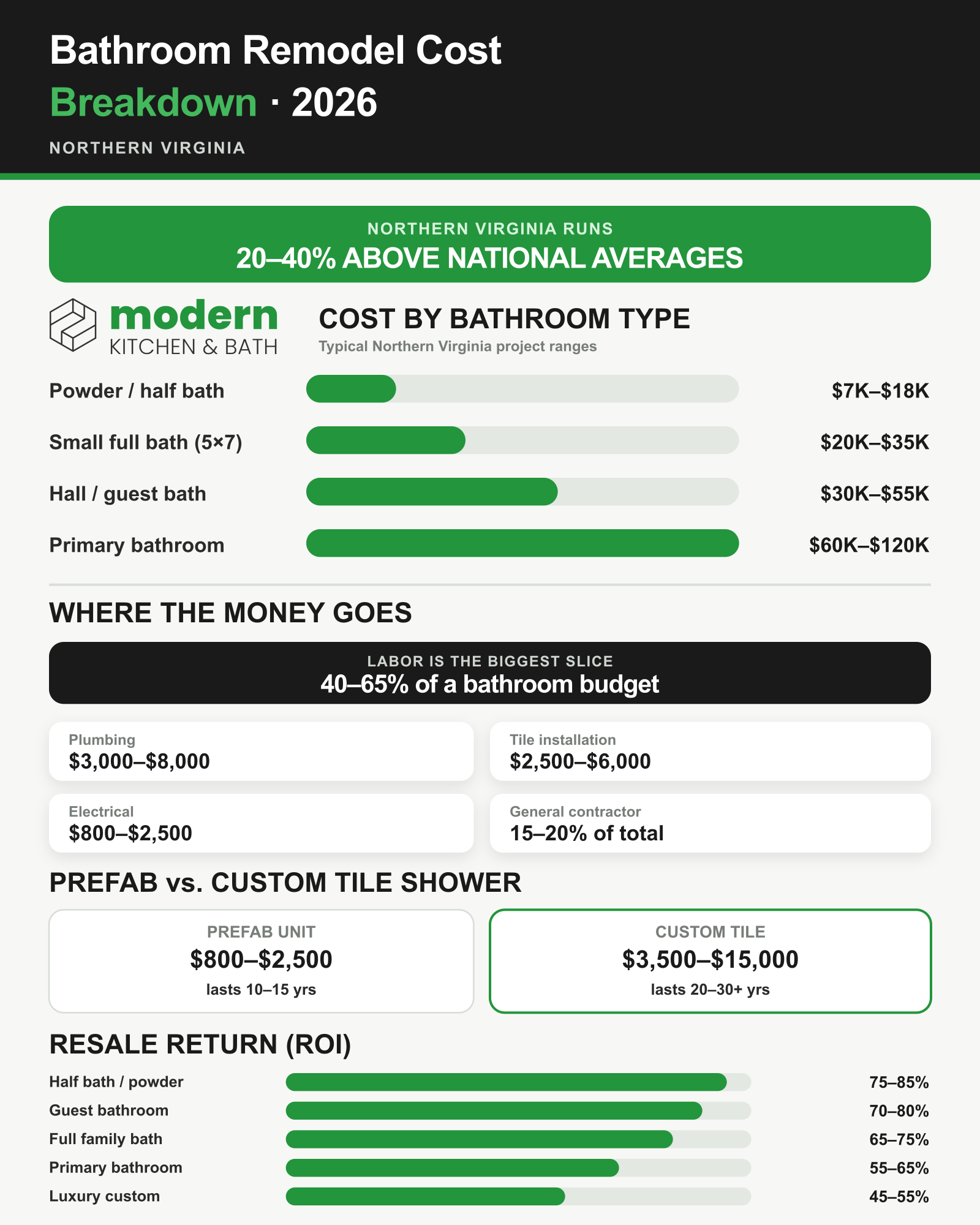
Quick answer: in Northern Virginia in 2026, a powder room runs about $7,000 to $18,000, a small full bathroom (5×7) runs $20,000 to $35,000, a standard hall bathroom $30,000 to $55,000, and a primary bathroom $60,000 to $120,000, with luxury spa renovations going higher. Our market runs roughly 20 to 40 percent above national averages, which is why online calculators keep coming in low.
If you have collected a few quotes already, that gap probably explains the sticker shock. Bathrooms are the most labor-dense room in the house, and a small footprint does not make them a small project. This guide breaks down what a bathroom remodel actually costs in Northern Virginia in 2026, where the money goes, and how to read a quote so you can tell a fair bid from a thin one. Pricing here is cross-checked against the 2026 breakdown from USA Cabinet Store’s bathroom remodeling cost guide.
Bathroom Remodel Cost in Northern Virginia (2026)
Bathroom pricing tracks the type of bathroom far more closely than raw square footage, because every bathroom needs the same trades regardless of size. Here is what homeowners in Loudoun, Fairfax, Arlington, and Prince William are paying this year.
| Bathroom type | Typical size | Northern Virginia cost | What it covers |
|---|---|---|---|
| Powder room / half bath | 15 – 25 sq ft | $7,000 – $18,000 | Toilet, vanity, flooring, lighting, paint |
| Small full bath (5×7) | 35 – 45 sq ft | $20,000 – $35,000 | Tub or shower, tile, vanity, toilet, fixtures |
| Hall / guest bath | 40 – 60 sq ft | $30,000 – $55,000 | Full gut, tiled shower, new vanity and fixtures |
| Primary bathroom | 75 – 150+ sq ft | $60,000 – $120,000 | Walk-in shower, double vanity, tile, sometimes a tub |
| Luxury spa primary | 150+ sq ft | $120,000+ | Custom tile, freestanding tub, heated floors, designer fixtures |
For comparison, the national picture is meaningfully lower. The 2026 national average bathroom remodel is about $16,500, with most homeowners spending $8,000 to $45,000, a mid-range update around $16,000 to $28,000, and a primary bathroom at $18,000 to $80,000. Those national figures are up 4 to 6 percent from 2025, driven by skilled-labor shortages and material inflation. The Washington D.C. metro sits 25 to 40 percent above them, so treat any national calculator as a floor rather than an estimate. Even our source guide notes that within Virginia, areas near Washington D.C. cost far more than rural parts of the state.
Why Does a Small Bathroom Cost So Much?
This is the single most common reaction we hear, and homeowners say it plainly online. One put it this way: “Why does a tiny bathroom remodel cost as much as a car now?” after getting $15,000 to $30,000 quotes on a 5×7 with basic finishes. The reaction is fair, and the answer comes down to four things.
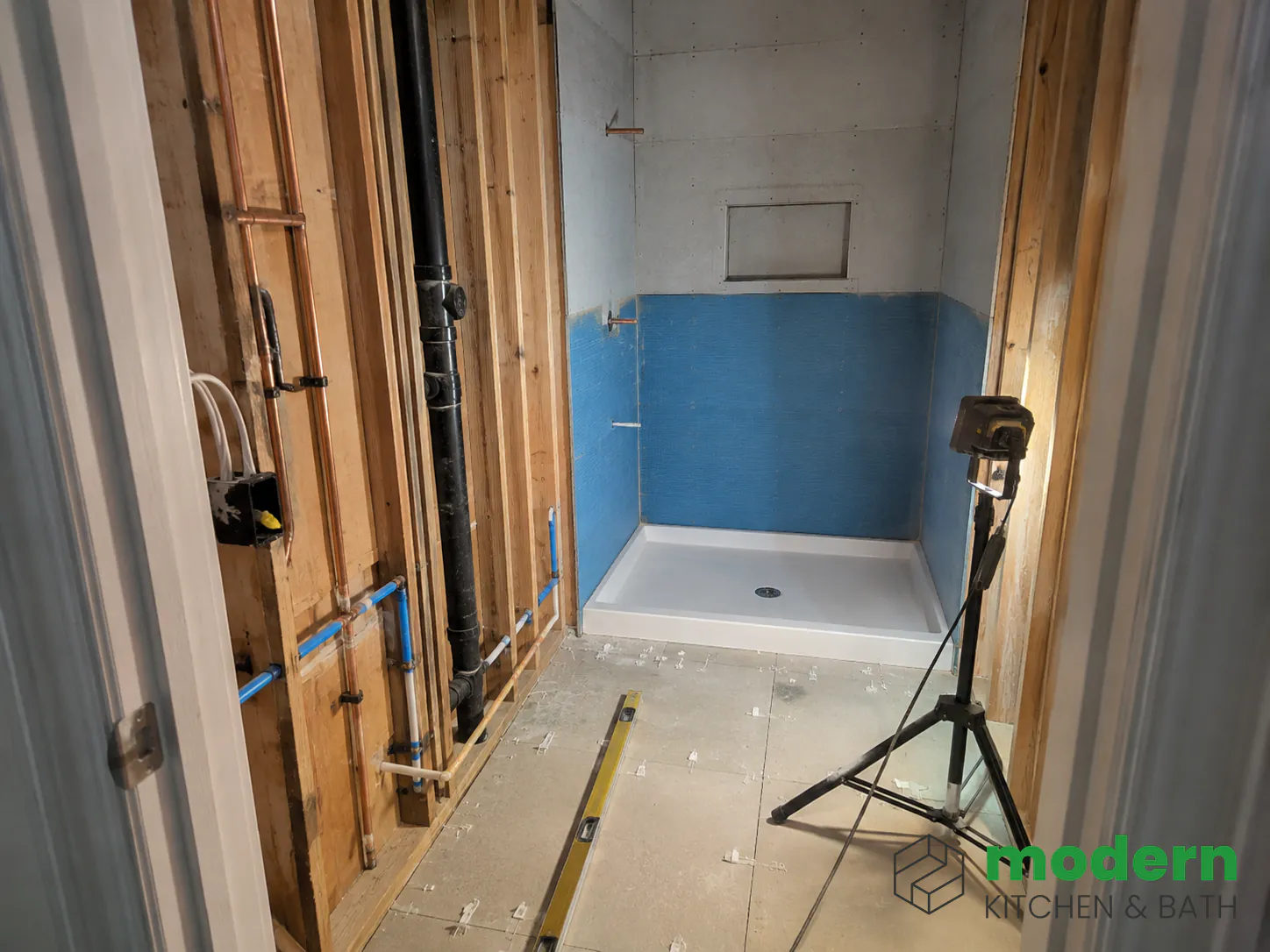
- Bathrooms are labor-dense, not material-dense. Labor accounts for roughly 40 to 65 percent of a bathroom budget. You are paying for plumbers, tile setters, electricians, and carpenters to work in sequence inside a room the size of a walk-in closet, where only one trade fits at a time.
- Every bathroom needs the same trades. A 35-square-foot bathroom still needs supply lines, drains, venting, waterproofing, electrical, and a finished tile assembly. Shrinking the room does not remove a single one of those steps.
- Waterproofing is unforgiving. A shower is a permanent wet assembly. Doing it correctly costs money up front, and doing it poorly costs far more later when water finds the subfloor.
- Skilled labor rates keep climbing. Licensed plumbers now command $85 to $175 per hour nationally, up 8 to 10 percent from 2025, and electricians $60 to $145 per hour. In Northern Virginia the top of those ranges is the norm, with plumbers commonly at $100 to $150 per hour, partly because Loudoun County’s data center construction keeps pulling trades toward commercial work.
The honest version: a bathroom is the most expensive room in the house per square foot. That is not a market distortion, it is what happens when you compress plumbing, waterproofing, tile, and electrical into 40 square feet and then ask it to stay watertight for 20 years.
Bathroom Remodel Cost Per Square Foot
Per-square-foot math is a useful sanity check as long as you use it as a range, not a quote. Nationally in 2026, a budget cosmetic refresh runs about $80 to $120 per square foot, a mid-range remodel $180 to $280, high-end work $300 to $450, and luxury custom $500 to $800 or more. In Northern Virginia, add roughly 20 to 40 percent to each of those bands. Because bathrooms are small, per-square-foot figures also run much higher than kitchens, which surprises people comparing the two.
Worked Example: a 5×8 Bathroom (40 Square Feet)
Running those national rates against a typical 40-square-foot bathroom gives you a concrete starting point: $3,200 to $4,800 for a budget refresh, $7,200 to $11,200 mid-range, $12,000 to $18,000 high-end, and $20,000 to $32,000 or more for luxury. Add the 20 to 40 percent Northern Virginia premium and the mid-range version of that same bathroom lands around $8,600 to $15,700 on materials-and-labor math alone, before permits and any surprises behind the walls. That is why real local quotes on a small full bath cluster in the $20,000 to $35,000 range once a full scope is included.
Cost by Bathroom Type
Powder Room and Half Bath
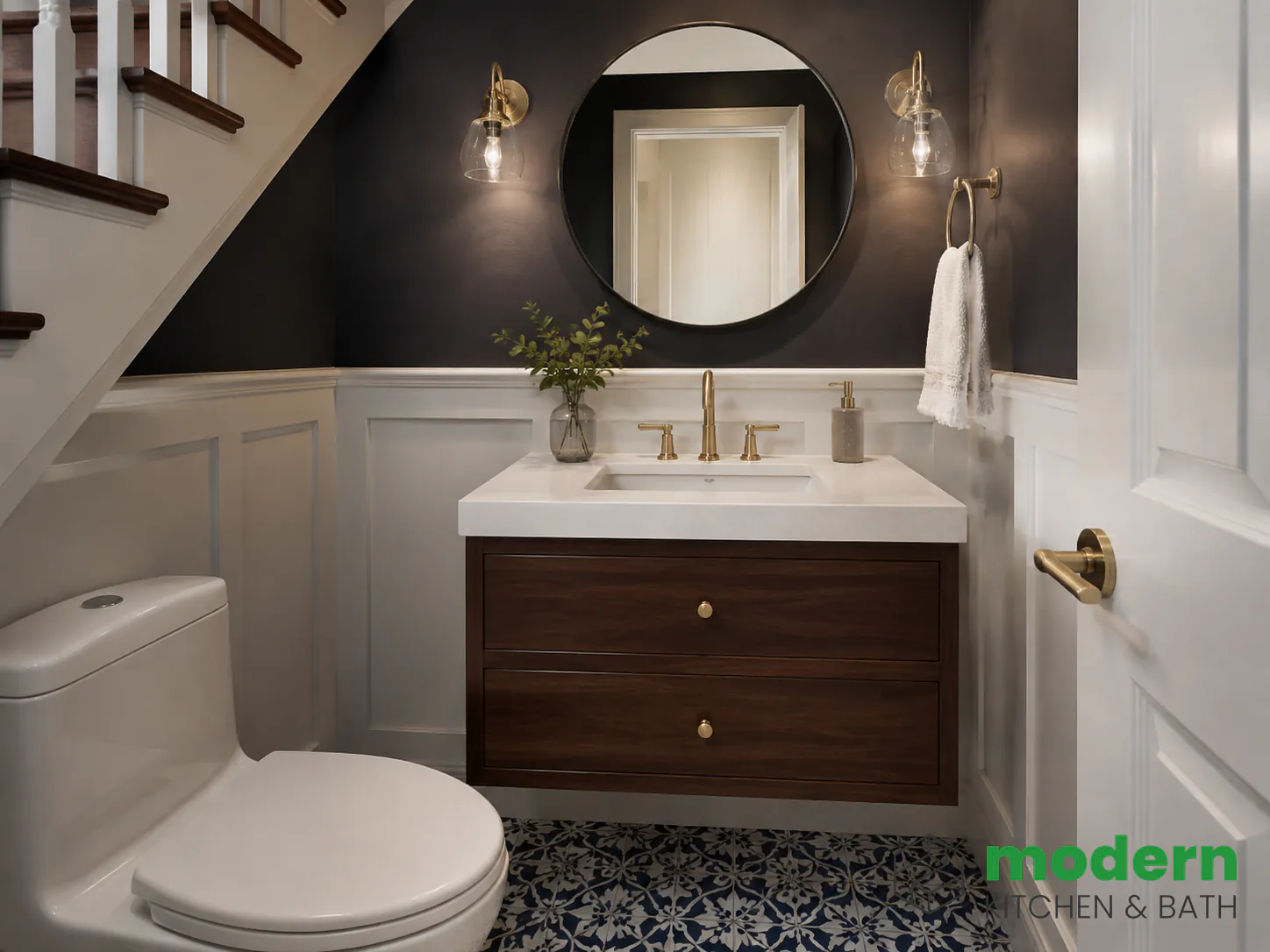
With no shower or tub, a powder room skips the most expensive assembly in the room. That keeps the budget to roughly $7,000 to $18,000 here, covering a new toilet, vanity, flooring, lighting, and paint. It is also the best value in the house at resale, recouping about 75 to 85 percent, the highest return of any bathroom project.
Small Full Bath and Hall Bath
Once a shower or tub enters the picture, cost jumps. A 5×7 full bath with quality mid-range finishes typically lands at $20,000 to $35,000 in Northern Virginia, and a larger hall or guest bath with a fully tiled shower runs $30,000 to $55,000. This is the tier most families are actually shopping for, and it is where material choices swing the number the most.
Primary Bathroom
A primary bathroom carries the most scope: a walk-in shower, a double vanity, extensive tile, better fixtures, and often a freestanding tub or heated floors. Expect $60,000 to $120,000 locally, with true spa-level renovations climbing past that. Nationally the same project runs $29,000 to $50,000 mid-range and $51,000 to $80,000 high-end, which shows the size of the regional premium.
Where the Money Goes
Labor is the largest slice of a bathroom budget at 40 to 65 percent, which is the opposite of a kitchen, where cabinets dominate. Within the labor line, plumbing typically runs $3,000 to $8,000, tile installation $2,500 to $6,000, and electrical $800 to $2,500, with a general contractor adding 15 to 20 percent for project management, scheduling, permits, and warranty.
On the material side, here is what the individual pieces cost:
| Item | Typical cost |
|---|---|
| Demolition and haul-away | $390 – $2,100 |
| Standard vanity | $525 – $2,940 |
| Double vanity (4 ft) | $580 – $3,360 |
| Vanity installation | $105 – $630 |
| Toilet (plus installation) | $105 – $630 each |
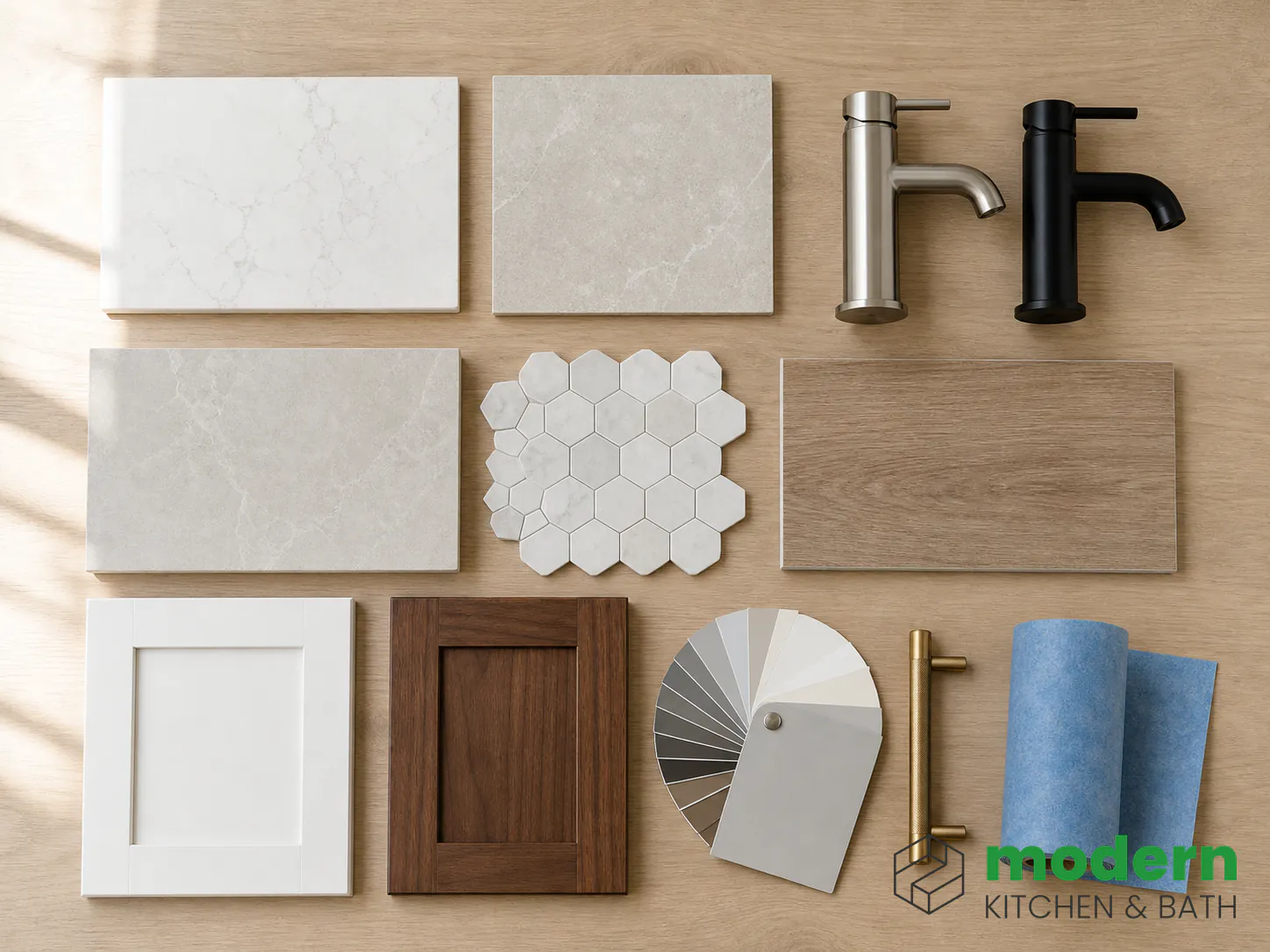
| Floor tile | $525 – $3,673 |
| Tile walls | $15 – $20 / sq ft |
| Natural stone tile walls | $17 – $30 / sq ft |
| Prefabricated shower unit, installed | $800 – $2,500 |
| Custom tiled shower, installed | $3,500 – $15,000 |
Smart upgrades sit on top of all of this: a digital shower system runs $800 to $3,500, a smart toilet $1,500 to $5,000, and a lit smart mirror $500 to $2,000. Newer ventilation and waterproofing code requirements can also add $500 to $1,500 for compliance.
Prefab Shower or Custom Tile? The Real Lifetime Cost
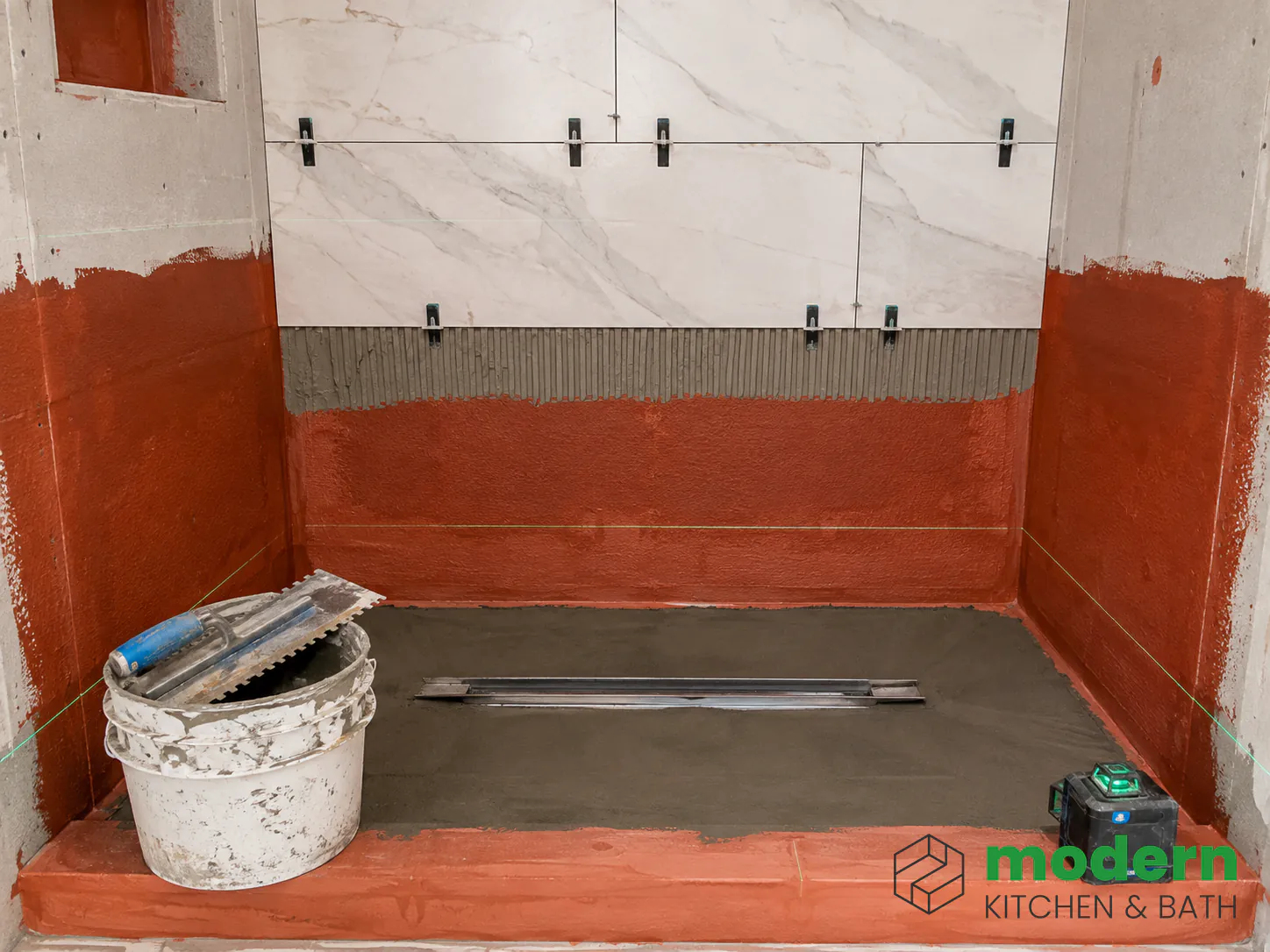
This is the decision that moves a mid-range bathroom budget the most, and the sticker price alone will mislead you. A prefabricated acrylic or fiberglass unit costs $800 to $2,500 installed and lasts about 10 to 15 years with almost no maintenance. A custom tiled shower costs $3,500 to $15,000 installed but lasts 20 to 30 years or more, with periodic grout resealing at $200 to $400 every two to three years and a re-grout at $500 to $1,500 every 10 to 15 years.
Run it over 20 years and the gap narrows sharply: a prefab unit totals roughly $3,500 once you include replacement, while custom tile lands around $5,000 to $6,500 including maintenance. If you are selling within five to ten years, prefab is the sensible financial call. If this is your long-term home, tile is worth the difference for durability, appearance, and resale appeal.
Tub-to-Shower Conversion Cost
Converting a tub to a shower is one of the most requested projects we see, and the price depends almost entirely on whether the plumbing stays put. Staying inside the existing footprint, a conversion runs $2,000 to $8,000 with a prefab unit or $3,500 to $12,000 with custom tile. Moving plumbing adds roughly $500 to $1,500 per fixture relocated, because supply lines, drain pipes, and vent stacks all have to be rerouted. Be careful with high-pressure quotes from one-day conversion outfits. One homeowner described a salesperson measuring briefly and quoting “$19k and change” just to pull an old tub and drop in a branded shower insert, which is well above what that scope should cost here.
Moving Plumbing Is the Expensive Choice
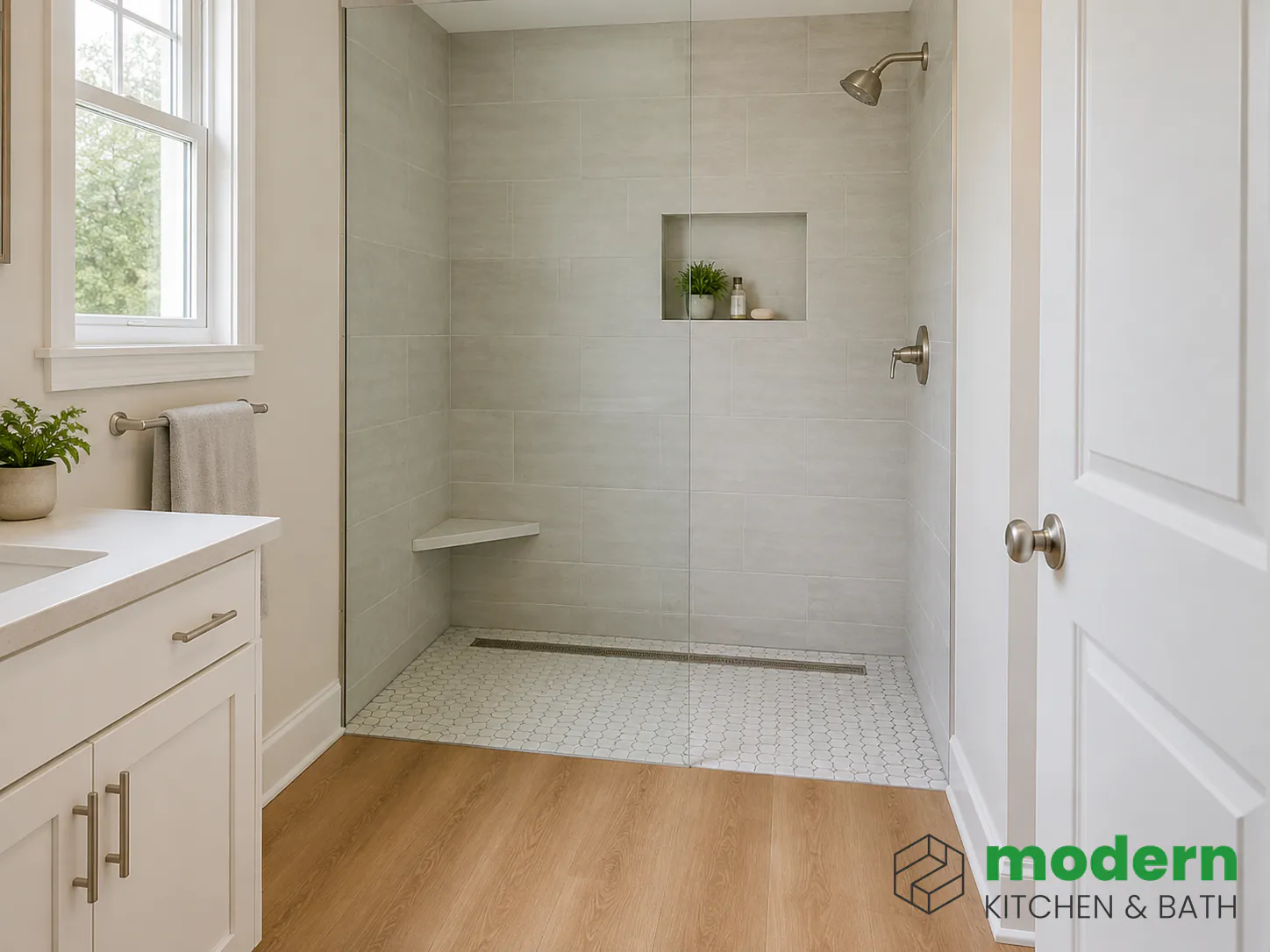
Keeping fixtures where they are is the highest-impact budget decision you can make, and it saves roughly $3,000 to $10,000. Relocating a toilet, shower, or vanity means opening walls and floors, rerouting supply and drain lines, and re-venting, and in a home on a slab it can mean cutting concrete. Modifying existing plumbing runs about $500 to $1,600, while a full rough-in for a relocated or new fixture group runs $2,000 to $5,000. If the current layout works, spend the difference on better tile, a better shower, and better lighting.
Adding a New Bathroom vs. Remodeling One
Adding a bathroom where none existed is a different project financially, typically $15,000 to $50,000 or more, because you are building everything from scratch. Beyond fixtures, budget for plumbing rough-in at $2,000 to $5,000, framing at $1,500 to $4,000, drywall at $1,000 to $2,500, waterproofing at $500 to $1,200, added electrical circuits at $500 to $1,500, and extending HVAC at $1,000 to $3,500. If the new bathroom goes on a second story, structural engineering for load and floor reinforcement adds $500 to $2,500, and many jurisdictions require stamped plans, adding $1,000 to $3,000. Permits also cost more for a new bathroom ($300 to $1,500) than for a remodel ($200 to $800). If you are finishing a lower level, our basement remodeling cost guide covers how a bathroom fits into that budget.
Permits and Timeline in Northern Virginia
Any bathroom remodel that touches plumbing, electrical, or structure requires permits here, and trade permits are filed alongside the building permit. Fairfax County permit costs generally run $800 to $1,500 following the fee increase in July 2025. Loudoun County bases its fee on about 1 percent of project cost plus a $130 plan review. A licensed contractor normally handles the filing and inspections. Skipping permits is a false economy, because unpermitted bathroom work is exactly what home inspectors flag at resale.
On schedule, a cosmetic refresh takes about 1 to 3 weeks, a full gut of a standard bathroom 4 to 6 weeks, and a primary or high-end renovation 6 to 10 weeks. The 2026 labor shortage is adding 1 to 2 weeks in many markets, and booking two to three months ahead generally gets you better scheduling than calling at the last minute. Tile and fixture lead times matter too, so finalize selections before demolition starts.
Is a Bathroom Remodel Worth It?
Bathrooms are among the strongest returns in home improvement, but the return curve is not linear, and it tracks the type of bathroom closely. The smaller and more universal the project, the better it performs at resale.
| Bathroom type | Typical resale return |
|---|---|
| Half bath / powder room | 75 – 85% (highest) |
| Guest bathroom | 70 – 80% |
| Full family bathroom | 65 – 75% |
| Primary / master bathroom | 55 – 65% |
| Luxury custom renovation | 45 – 55% |
The pattern is consistent: budget and mid-range updates recoup about 70 to 80 percent, while luxury renovations return closer to 45 to 55 percent because they are often customized past what neighborhood comparables support. If you are remodeling specifically to sell, the sweet spot is roughly $15,000 to $25,000 spent on a walk-in shower, a modern vanity, quality tile, and better lighting, the features buyers consistently respond to. Note the inversion worth planning around: the primary bathroom costs the most and returns the least, so spend there for how you will live in it, not for resale math.
Accessibility and Aging-in-Place Bathrooms
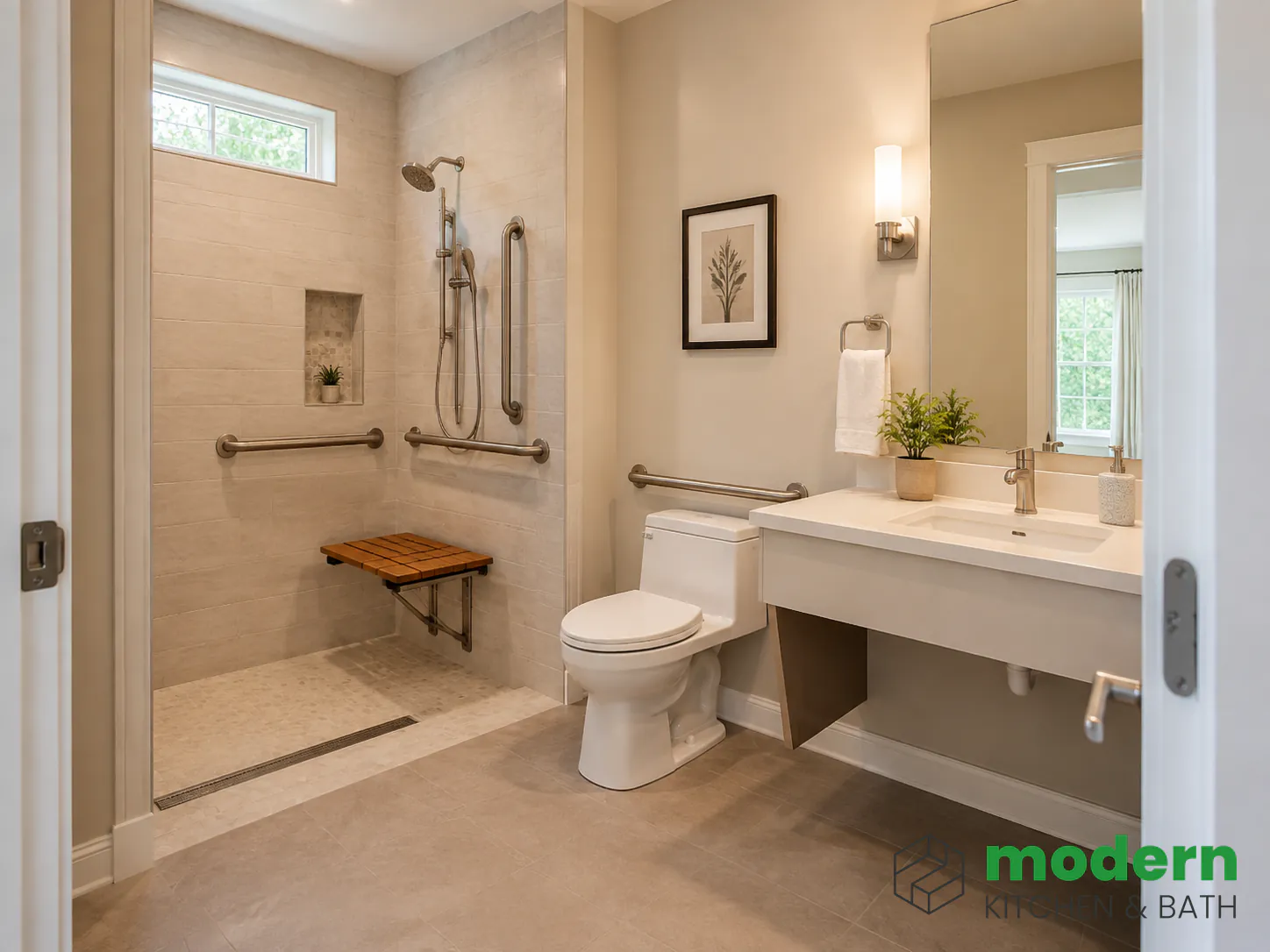
A growing share of the bathroom projects we quote are about staying in the home safely rather than resale. Curbless showers, grab bars, comfort-height toilets, wider door openings, and bench seating all add cost, but there are funding paths most homeowners never hear about.
- Medical expense deduction. The IRS allows deductions for medically necessary home modifications, including accessible bathroom work. The catch is that qualifying medical expenses must exceed 7.5 percent of your adjusted gross income, so it helps most in years with significant medical spending.
- Veterans grants. The VA Home Improvement and Structural Alteration (HISA) program provides up to about $6,800 toward modifications tied to a service-connected disability, which is relevant given how many veterans live in Northern Virginia.
- Area Agency on Aging. Many local agencies offer low-interest loans or grants specifically for aging-in-place bathroom modifications. This is usually the first call worth making.
- Insurance benefits. Medicare does not cover renovations, but some Medicare Advantage plans include supplemental benefits for bathroom safety items such as grab bars and walk-in tubs. Separately, if your remodel is driven by an accident or water damage, homeowners insurance may cover part of the work and sometimes safety features installed alongside it.
One point worth planning around: a walk-in shower conversion quoted at $13,000 is a common figure, and doing it while you are healthy and the walls are already open is far less expensive than retrofitting later as an emergency.
Paying for a Bathroom Remodel
Most homeowners fund a bathroom project through equity. A home equity loan gives you a fixed rate, a fixed term, and predictable payments, while a HELOC lets you draw only what you spend, which suits a phased project. Both borrow against your home, so they carry lower rates than unsecured options and the interest can be tax-deductible when the funds substantially improve the property. A personal loan is unsecured and faster to close, which makes sense for smaller or urgent work such as a failing shower, though the rate will be higher. Compare offers from at least three lenders on rate, term, and fees. Our financing page covers the options we work with, including plans with no money down on qualifying projects.
What Catches Homeowners Off Guard
The most useful budgeting advice usually comes from people who have just been through it. These are the themes that come up again and again in homeowner discussions, quoted directly from public renovation forums rather than from marketing copy.
Trades have minimums, and only one fits in the room at a time
This is the mechanical reason a small bathroom does not scale down in price. Each trade has a minimum charge, and they cannot overlap in a 40-square-foot room, so you pay several minimums in sequence.
Mobilization is a fixed cost
What is behind the wall is the real budget risk
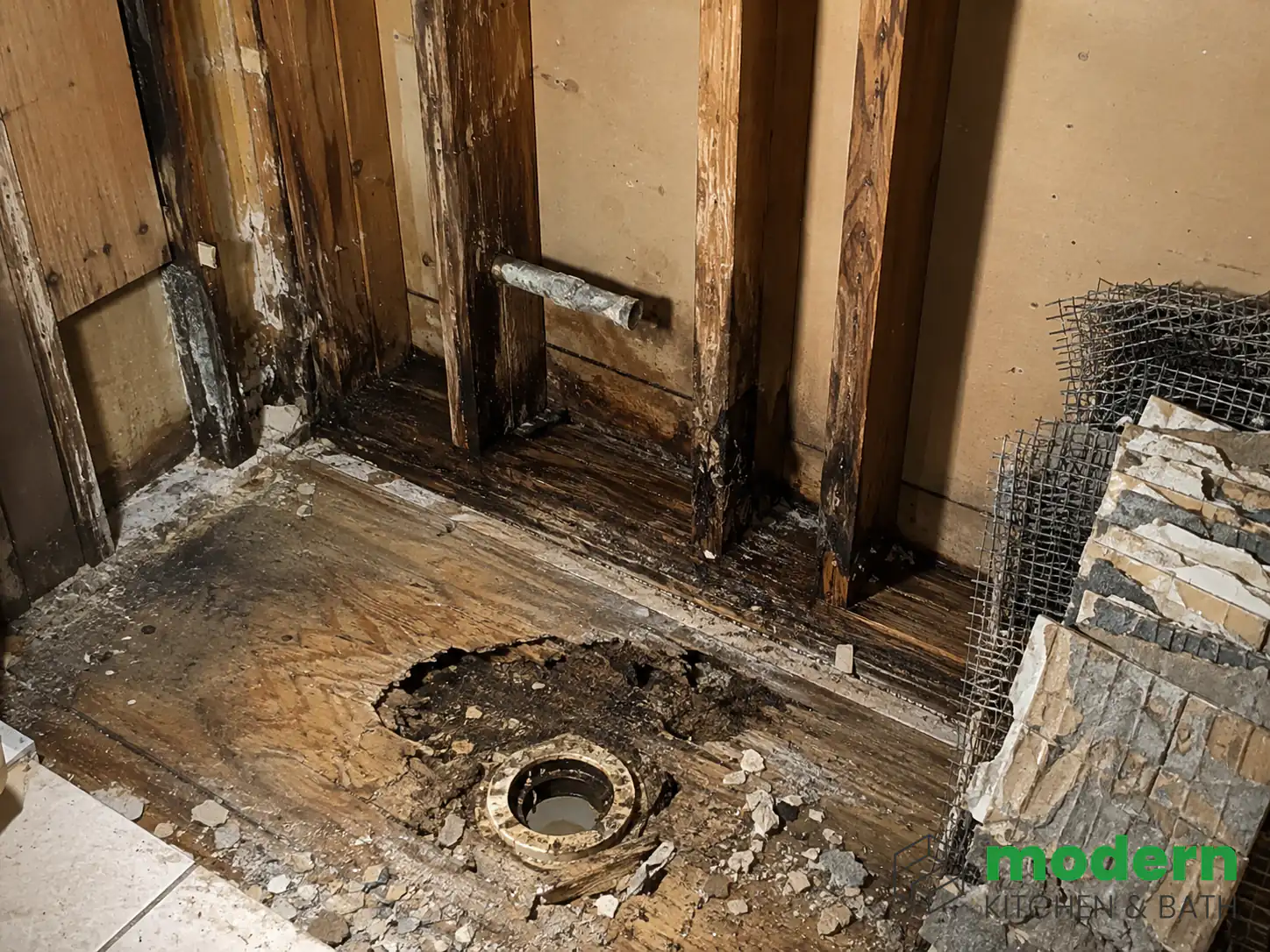
This is why a contingency matters more in a bathroom than almost anywhere else. Older Northern Virginia homes frequently hide water damage around tubs and shower pans that only appears at demolition.
Crews that vanish after demolition
This is the complaint we hear most, and it is worth screening for directly. Ask any contractor whether crews stay on your project until it is finished or rotate between jobs, and whether materials are on hand before demolition starts. A firm that orders your vanity, tile, and fixtures first and then schedules the crew has far less reason to leave you with an unusable bathroom for a month.
DIY savings are smaller than they look
Doing it yourself genuinely can cut costs, but the honest accounting includes tools, permits, inspections, and the months a family spends without a working bathroom.
How to Read a Bathroom Quote
Homeowners routinely report bids that vary widely for what sounds like the same job, and the fix is always the same: insist on an itemized estimate. One homeowner described asking a contractor to itemize precisely because of “surprise additional cost for things not listed, like disposal of toilet or shower debris.” That is the pattern to protect against. A good bathroom estimate breaks out:
- Demolition and debris disposal, stated explicitly
- Plumbing labor, and whether fixtures are being moved or reused in place
- Shower assembly: prefab unit versus tiled, including waterproofing method
- Tile by material, square footage, and installation rate
- Vanity, toilet, and fixtures listed by model, not as a lump “fixture allowance”
- Electrical: new circuits, exhaust fan, and lighting
- Permits, and who is pulling them
Be cautious at both ends of the range. A bid well under the others usually has thin allowances or missing scope, and a quote with only two lines for “labor” and “materials” makes honest comparison impossible. Also confirm how long the pricing is valid, since material costs have been moving and a quote from several months ago may not hold. One homeowner reported a bid rising by $1,000 after an eight-month delay, which is normal rather than a bait and switch.
A tradesperson’s note on waste: finish work like tile and trim carries an industry-standard 10 to 15 percent material waste allowance, because cuts, breakage, and pattern matching are unavoidable. If a bid looks padded on material quantity, that is often what you are seeing rather than an inflated margin.
Homeowners also describe the difficulty of comparing bids that turn out to describe different projects: one reads like a full multi-week renovation, the next comes in lower but stays vague about scope. As one homeowner summed it up, “it felt like choosing between overpaying or hoping nothing goes wrong.” The way out of that bind is to hand every bidder the same written scope so they are pricing identical work. Before signing, verify the contractor’s Virginia license, bonding, workers compensation, and liability insurance, and get a written contract with milestones and a defined scope rather than a verbal understanding.
Ways to Control the Cost Without Cutting Corners
- Keep the fixtures where they are. The single biggest saving available, worth $3,000 to $10,000.
- Spend on the wet zone, save on the dry zone. Waterproofing, the shower assembly, and the exhaust fan are where failures happen. Vanity hardware and paint are easy to upgrade later.
- Use tile strategically. A feature wall in a premium tile with a simpler field tile elsewhere gets the look without tiling the entire room in stone.
- Choose standard fixture sizes. Odd-sized tubs, vanities, and shower pans carry both a price premium and longer lead times.
- Book early. Scheduling two to three months out typically means better rates and a crew that is not stretched.
What Our Customers Say
A bathroom is a project you live with every day, so who does the work matters as much as the budget.
Frequently Asked Questions for Bathroom Remodel Cost
How much does a bathroom remodel cost in Northern Virginia in 2026?
A powder room runs about $7,000 to $18,000, a small full bathroom $20,000 to $35,000, a hall or guest bath $30,000 to $55,000, and a primary bathroom $60,000 to $120,000. Northern Virginia runs roughly 20 to 40 percent above national averages because of higher labor rates and permitting.
Why does a small bathroom remodel cost so much?
Because bathrooms are labor-dense rather than material-dense. Labor is 40 to 65 percent of the budget, and a small bathroom still needs plumbing, waterproofing, tile, electrical, and venting, with only one trade able to work in the room at a time. Shrinking the footprint removes almost none of the work, which is why a 5×7 bathroom can quote at $20,000 or more.
How much does a 5×7 bathroom remodel cost?
In Northern Virginia, a 5×7 full bathroom with quality mid-range finishes typically costs $20,000 to $35,000. Homeowners nationally report quotes of $15,000 to $30,000 for the same footprint with basic finishes, so our market sits at the upper end of that band and above.
What is the bathroom remodel cost per square foot?
Nationally in 2026, budget refreshes run $80 to $120 per square foot, mid-range $180 to $280, high-end $300 to $450, and luxury $500 to $800 or more. Add roughly 20 to 40 percent for Northern Virginia. Bathrooms run higher per square foot than kitchens because the trades are concentrated in a small space.
What is the most expensive part of a bathroom remodel?
Labor, at 40 to 65 percent of the total. Within that, plumbing runs $3,000 to $8,000 and tile installation $2,500 to $6,000. On the material side, the shower or tub assembly is the largest single item, especially a custom tiled shower at $3,500 to $15,000.
Do I need a permit to remodel a bathroom in Fairfax or Loudoun County?
Yes, if the work involves plumbing, electrical, or structural changes. Fairfax County permits generally run $800 to $1,500 after the July 2025 fee increase, and Loudoun County bases its fee on about 1 percent of project cost plus a $130 plan review. A licensed contractor usually handles the filing and inspections.
How long does a bathroom remodel take?
A cosmetic refresh takes about 1 to 3 weeks, a full gut of a standard bathroom 4 to 6 weeks, and a primary or high-end renovation 6 to 10 weeks. The 2026 labor shortage is adding 1 to 2 weeks in many markets, so booking two to three months ahead helps.
Is a prefab shower or a custom tile shower better value?
It depends on how long you are staying. A prefab unit costs $800 to $2,500 installed and lasts 10 to 15 years. A custom tiled shower costs $3,500 to $15,000 and lasts 20 to 30 years or more, with grout resealing at $200 to $400 every two to three years. Over 20 years the total costs land much closer together, so prefab suits a shorter horizon and tile suits a long-term home.
How much does it cost to convert a tub to a shower?
Staying within the existing footprint, a tub-to-shower conversion runs $2,000 to $8,000 with a prefabricated unit or $3,500 to $12,000 with custom tile. Moving plumbing adds roughly $500 to $1,500 per fixture relocated, since supply lines, drains, and vent stacks must be rerouted. Keeping the drain in place is the single biggest saving on this project.
Are one-day tub-to-shower conversions worth it?
They can be a reasonable fit for a straightforward swap where the existing plumbing stays put and the walls are sound, and the speed is real. What they do not do is address what is behind the surface, so if there is any history of leaks, soft flooring, or failed waterproofing, a liner or overlay system covers the problem rather than fixing it. Ask specifically what happens if damage is found once the old unit comes out.
What should an itemized bathroom quote include?
Demolition and debris disposal stated explicitly, plumbing labor with a note on whether fixtures move, the shower assembly and waterproofing method, tile by material and square footage, vanity and fixtures listed by model rather than as an allowance, electrical including the exhaust fan, and permits with a note on who pulls them. A quote showing only “labor” and “materials” cannot be compared fairly against another bid.
Can I do part of a bathroom remodel myself?
Yes, selectively. Demolition, painting, and installing hardware, mirrors, or accessories are reasonable homeowner tasks. Plumbing, electrical, waterproofing, and shower tile assemblies are worth leaving to licensed pros, because those are the areas that require permits and inspections and where a mistake shows up later as water damage.
Are there grants or tax breaks for accessible bathroom remodels?
Sometimes. The IRS allows a medical expense deduction for medically necessary modifications, though total qualifying medical expenses must exceed 7.5 percent of your adjusted gross income. Veterans may qualify for a VA HISA grant of up to about $6,800 for service-connected disability modifications. Many local Area Agency on Aging offices offer low-interest loans or grants for aging-in-place work, and some Medicare Advantage plans include supplemental benefits for safety items like grab bars, though Medicare itself does not cover renovations.
Does a bathroom remodel add value to my home?
Yes. Budget and mid-range bathroom updates recoup about 70 to 80 percent of their cost, and a powder room leads at 75 to 85 percent. Luxury renovations return closer to 45 to 55 percent. For a pre-sale remodel, roughly $15,000 to $25,000 focused on a walk-in shower, modern vanity, quality tile, and lighting delivers the strongest return.
Get a Real Bathroom Estimate
The only way to price your bathroom accurately is to look at the actual space, because the age of the plumbing, the condition behind the tile, your layout, and your fixture choices all move the number. At Modern Kitchen & Home Solutions, rated 4.8 stars across 66 Google reviews, we design and build bathrooms across Sterling and Northern Virginia, supply vanities, tile, and fixtures directly to help manage cost, and handle the permits and inspections along the way. Learn more about our bathroom remodeling service, or browse shower tile ideas to shape your design.
Ready to find out what your bathroom would cost?
Get a Free EstimateFound this helpful? Make us your go-to source on Google
If our content has been useful, you can tell Google to show more of it when you search. Click below, then check the box next to Modern Kitchen and Bath on the page that opens. It takes about five seconds.

You'll need to be signed in to your Google account. One click, then tick the box next to our name.