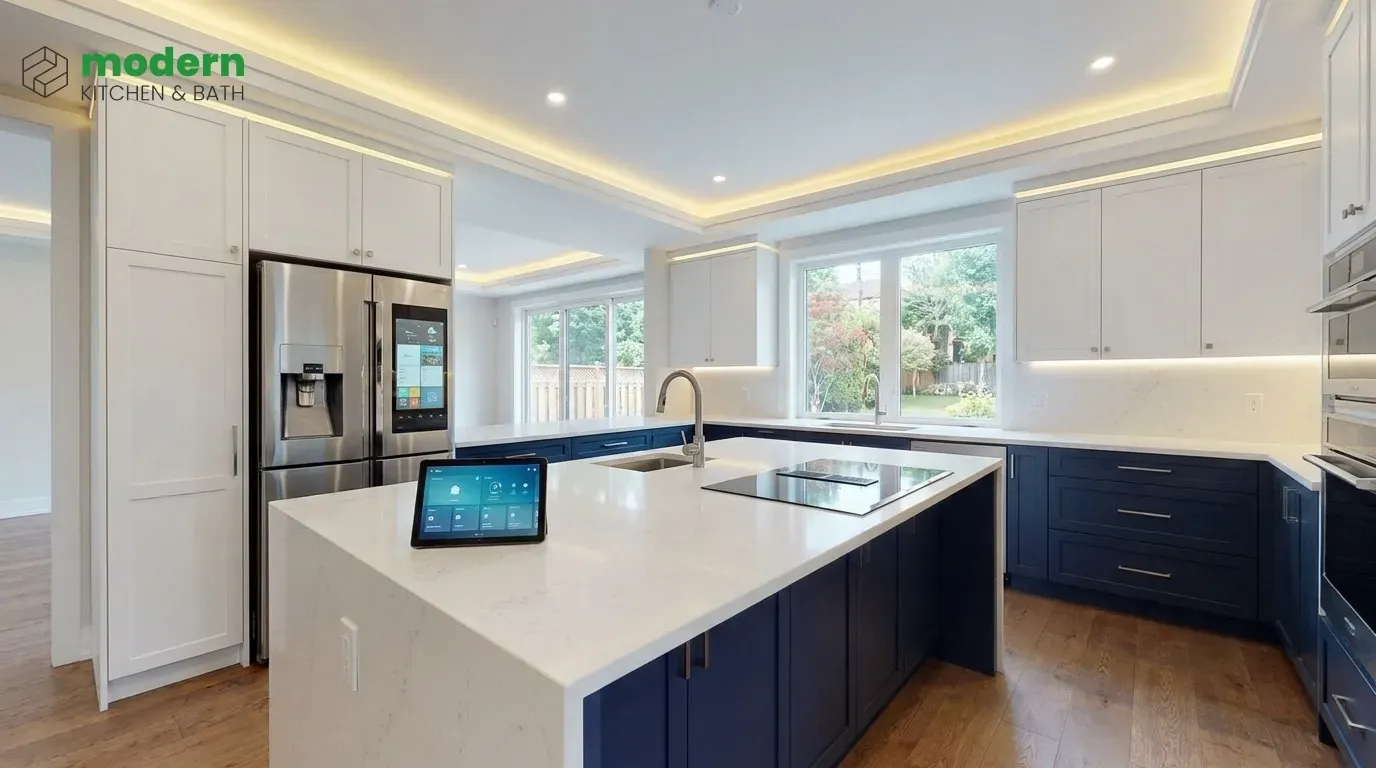
Half the kitchens we remodel in Sterling, Ashburn, and Fairfax already have at least one connected device sitting on the counter. A Wi-Fi coffee maker here. A voice-activated speaker there. But most of those devices operate in isolation, doing one job while ignoring everything else in the room.
That’s what changed in 2026. Smart kitchen technology has shifted from standalone gadgets to integrated systems where your refrigerator, oven, lighting, and faucet actually communicate with each other. The NKBA’s 2026 Kitchen Trends Report calls this “increasing the kitchen IQ,” and the 634 designers they surveyed placed smart technology integration among the top growth-phase trends for the next three years.
For Northern Virginia homeowners planning a kitchen remodel, this shift raises practical questions. Which smart features are worth the investment? How much do they add to a renovation budget? And can your home’s electrical system even support them?
This guide covers all of it. Real 2026 pricing for our market, specific product recommendations, the electrical and network infrastructure most NoVA homes need before a single smart device gets installed, and the mistakes we see homeowners make when they try to bolt smart features onto a kitchen that wasn’t designed for them.
<!– ========================================================== SMART KITCHEN TECHNOLOGY 2026 — ELEMENTOR HTML INFOGRAPHICS Modern Kitchen & Bath (modernkitchenva.com) ========================================================== INSTRUCTIONS: – Each infographic is a standalone HTML block – Paste each into an Elementor “HTML” widget – Zero CSS classes, zero blocks — fully inline – Logo URL: https://modernkitchenva.com/wp-content/uploads/2020/03/modern-kitchen.png (update if logo path changes) – Brand colors matched to actual logo: Green: #2D9B3A Dark charcoal: #333333 Light gray: #F5F5F5 White: #FFFFFF Accent dark: #1B1B1B ========================================================== –> <!– ===================================================== INFOGRAPHIC 1: SMART KITCHEN COST COMPARISON — NoVA Section: "What Smart Kitchen Upgrades Cost in Northern Virginia ===================================================== –>What Makes a Kitchen “Smart” in 2026
A smart kitchen is any kitchen where appliances, lighting, fixtures, or storage systems connect to your home network through Internet of Things (IoT) technology and can be controlled remotely, automated, or linked to each other. Think of it as three layers that build on one another.
The foundation layer is smart appliances. Refrigerators with internal cameras and AI-powered inventory tracking. Ovens that recognize food through sensors and adjust cooking time automatically. Induction cooktops with precise temperature control via smartphone apps. Dishwashers that optimize water usage based on load size and soil level.
The second layer is smart environment. This includes automated lighting with adjustable color temperature, touchless faucets with precise measurement dispensing, motion-sensor ventilation, and embedded wireless charging stations in countertops and drawers. Many of these devices communicate through wireless protocols like Zigbee, Z-Wave, or Wi-Fi, depending on the manufacturer and product category.
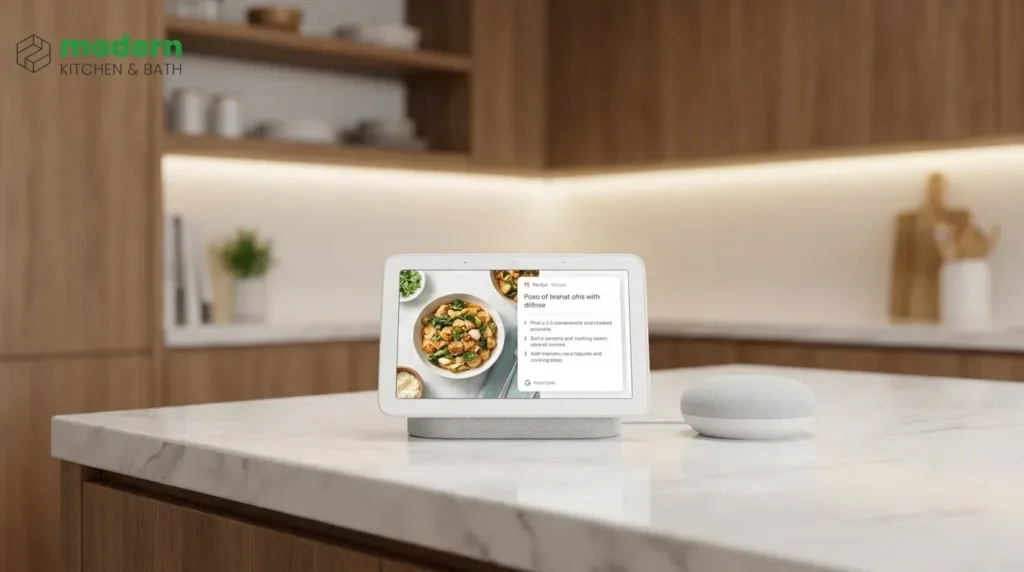
The third layer is the hub. A centralized home automation platform like Google Home, Amazon Alexa, Apple HomeKit, or Samsung SmartThings ties everything together. You tell the hub “start dinner mode” and it preheats the oven, turns on under-cabinet task lighting, activates the vent hood, and plays your cooking playlist. All from one voice command.
The NKBA found that homeowners want technology that enhances daily life, not dominates it. Wi-Fi-enabled appliances, mobile-app controlled lighting, and embedded wireless charging are the categories gaining the fastest traction. The smartest kitchens in 2026 are the ones where the technology disappears into the design.
Why 2026 Is the Inflection Point for Smart Kitchens
Three forces are converging this year that make smart kitchen upgrades more practical than they’ve ever been.
The Matter Standard Changed Everything
Before 2024, smart devices from different manufacturers rarely talked to each other. Your Samsung fridge couldn’t trigger your Lutron lights. Your Bosch oven didn’t know your Google thermostat had shifted to “home” mode. Each brand built its own walled garden.
The Matter connectivity standard, developed by the Connectivity Standards Alliance (CSA) and backed by Apple, Google, Amazon, and Samsung, broke down those walls. Platforms using Matter report a 40% reduction in device setup failures. In practical terms, this means a homeowner in Reston can now buy the best refrigerator regardless of brand and trust that it will integrate with their existing smart home ecosystem. Matter 1.3, released in 2025, expanded support to major kitchen appliances and energy management features.
AI Moved From Gimmick to Useful
The Consumer Electronics Show (CES) 2026 in Las Vegas showcased countertop ovens that recognize over 400 foods automatically. No manual programming. You place a chicken breast on the rack, the camera identifies it, and the oven selects the correct temperature, time, and cooking mode. That capability is available in consumer-grade appliances under $500.
Smart refrigerators now track expiration dates, generate grocery lists based on what you’ve consumed, and suggest recipes from what’s currently on the shelves. These features used to require a $4,000 Samsung Family Hub. In 2026, LG and Bosch offer similar functionality starting around $2,200.
The Market Hit Mainstream Scale
The U.S. smart home market reached approximately $54.5 billion in 2026. Over 77 million American households, roughly 51% of the total, actively use at least one smart home device. Gen Z leads adoption at 96%, followed by Millennials at 93%. This isn’t early-adopter territory anymore. It’s mainstream infrastructure.
For homeowners in Northern Virginia, where median home values exceed $600,000 in most of Loudoun and Fairfax County, smart kitchen features have moved from “nice to have” to “expected by buyers.” Seven in ten homebuyers now actively look for smart home features when shopping.
Smart Kitchen Appliances Worth the Investment
Not every smart appliance justifies its price premium. Some deliver genuine daily value. Others add Wi-Fi connectivity to a device that works perfectly fine with a manual dial. The honest test: if you’re already standing in the kitchen when you use the appliance, ask yourself whether the app actually improves the experience or just adds a step. Here’s where the money is well spent in 2026, based on what we see performing well in Northern Virginia remodels.
Smart Refrigerators
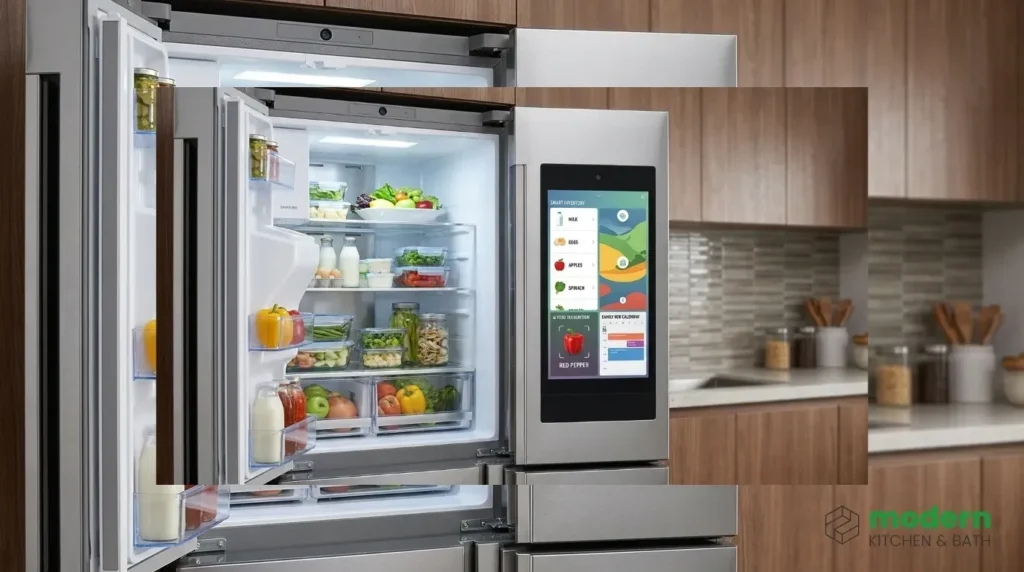
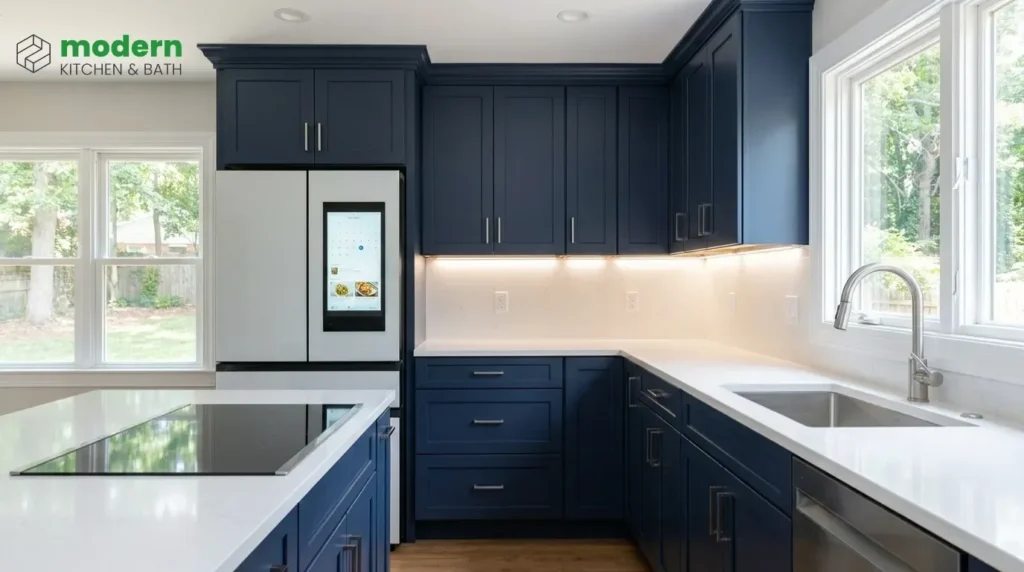
Internal cameras let you check contents from the grocery store. AI-driven inventory management tracks what you have, what’s expiring, and what you need to restock. Touchscreen displays serve as family hubs for calendars, recipes, and notes. Custom storage configurations, cited by 70% of NKBA respondents as trending, adapt shelf heights and drawer temperatures for different food types.
Budget to spend: $1,800 to $4,500 for a quality smart refrigerator. The Samsung Bespoke and LG InstaView lines dominate this market. Both integrate with Google Home and Amazon Alexa.
Smart Ovens and Ranges
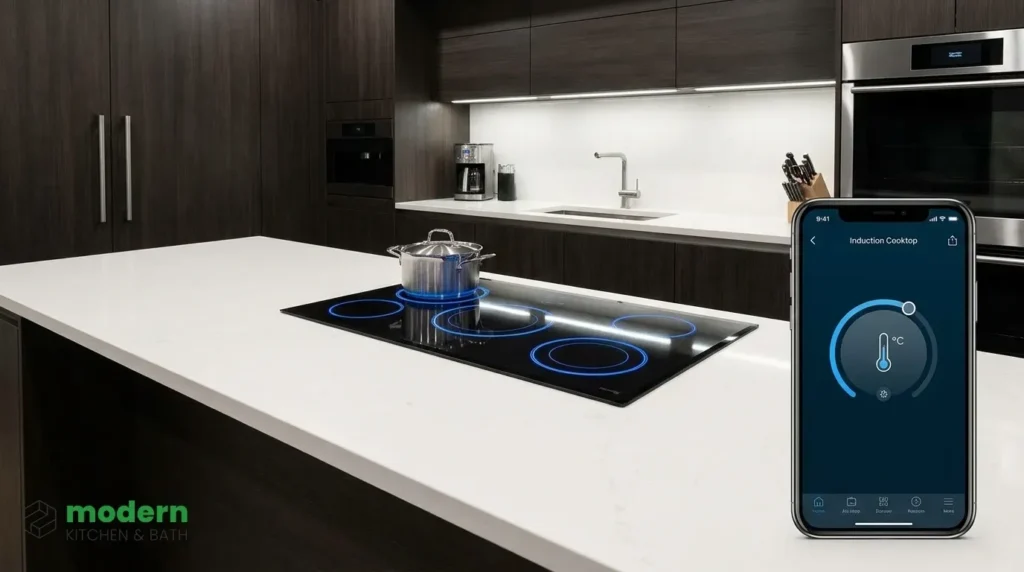
Induction cooktops with app-controlled precision are the biggest shift. They heat faster, use less energy, and offer granular temperature control that gas ranges can’t match. Smart wall ovens from Bosch, GE Profile, Samsung, and KitchenAid feature AI food recognition, remote preheating, and automatic shut-off that sends alerts to your phone.
Budget to spend: $1,200 to $3,800 for a smart range or oven. Induction cooktops start around $1,400 for a quality 30-inch model. Expect to add $800 to $2,000 for the required 240V electrical circuit if your kitchen doesn’t already have one.
Smart Dishwashers
Run diagnostics remotely, notify you when cycles finish, and optimize water usage based on load sensors. Bosch Home Connect and LG ThinQ lead this category. They reduce water consumption by 15% to 20% compared to standard models and run quieter cycles during off-peak electricity hours.
Budget to spend: $800 to $2,000. The smart premium over a comparable non-connected model is typically $200 to $400.
Touchless and Smart Faucets
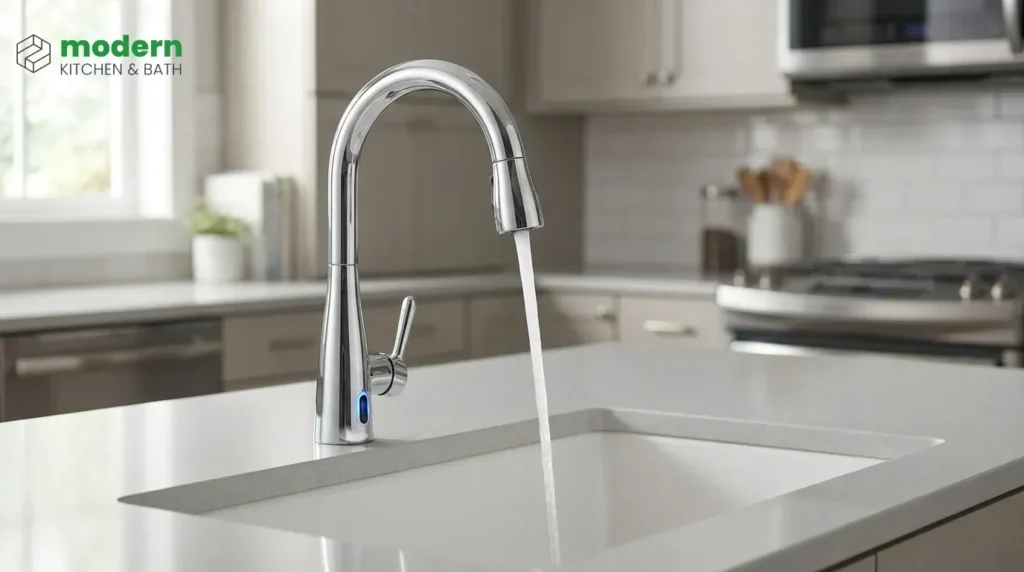
Moen MotionSense and Delta Touch2O are the two dominant smart faucet platforms. They dispense precise measurements by voice command (“fill 2 cups”), reduce water usage by 15% to 20% annually, and add a hygiene layer that matters when you’re handling raw chicken or kneading dough. Look for models with the EPA’s WaterSense certification for verified water efficiency.
Budget to spend: $350 to $900 installed. For most Sterling and Ashburn homes, installation ties into existing plumbing lines without additional permits.
What to Skip
Smart microwaves and basic smart coffee makers rarely justify their price premium. Consumer complaints consistently cite clunky apps that offer fewer options than the appliance’s own control panel. The connectivity adds minimal convenience to appliances you typically operate for 30 seconds at a time while standing directly in front of them. If the price difference between a smart and standard model is under $100, go for it. If you’re paying $300 extra for Wi-Fi in a microwave, put that money toward better under-cabinet lighting instead.
The Offline Fallback Rule
Every smart appliance you buy should work as a fully functional standard appliance when the Wi-Fi goes down or the manufacturer’s servers have an outage. This sounds obvious, but some smart ovens and faucets lock certain features behind the app with no manual override. Before purchasing, confirm that all core functions (temperature control, water flow, cooking modes) operate without an internet connection. If the appliance becomes useless without Wi-Fi, walk away.
What Smart Kitchen Upgrades Cost in Northern Virginia
Northern Virginia pricing runs 25% to 40% above national averages. Higher labor rates, complex permitting in Loudoun and Fairfax counties, and the data center construction boom that’s pulling licensed electricians away from residential work all contribute. Here are realistic 2026 costs for our market.
| Smart Upgrade | National Average | NoVA Range | ROI at Resale |
| Smart refrigerator | $1,500 – $3,800 | $1,800 – $4,500 | High |
| Smart oven/range | $1,000 – $3,200 | $1,200 – $3,800 | High |
| Induction cooktop + 240V circuit | $1,800 – $4,000 | $2,200 – $5,000 | High |
| Smart dishwasher | $700 – $1,800 | $800 – $2,000 | Moderate |
| Touchless faucet (installed) | $250 – $700 | $350 – $900 | Moderate |
| Smart lighting system | $800 – $2,500 | $1,000 – $3,000 | High |
| Smart hub + voice assistant | $100 – $350 | $100 – $350 | Low-Moderate |
| Full smart appliance package | $4,000 – $10,000 | $5,000 – $12,000 | High |
| Smart kitchen layer (all-in) | $7,000 – $20,000 | $9,000 – $25,000 | High |
A full smart kitchen layer adds $9,000 to $25,000 to a Northern Virginia remodel. On a typical mid-range renovation of $55,000 to $85,000 in Sterling, that’s a 15% to 30% addition. It sounds steep until you consider that smart features are now a top-three buyer expectation in this market.
Smart Kitchen Lighting: The Upgrade That Punches Above Its Weight
If you only make one smart upgrade during your remodel, make it lighting. Dollar for dollar, smart lighting delivers the most noticeable daily improvement and the best return at resale.
The NKBA reports that 95% of homeowners rank natural lighting as their top kitchen design priority, followed by quality lighting at 93% and task lighting at 92%. Smart lighting systems address all three by layering ambient, task, and accent illumination that adjusts automatically throughout the day.
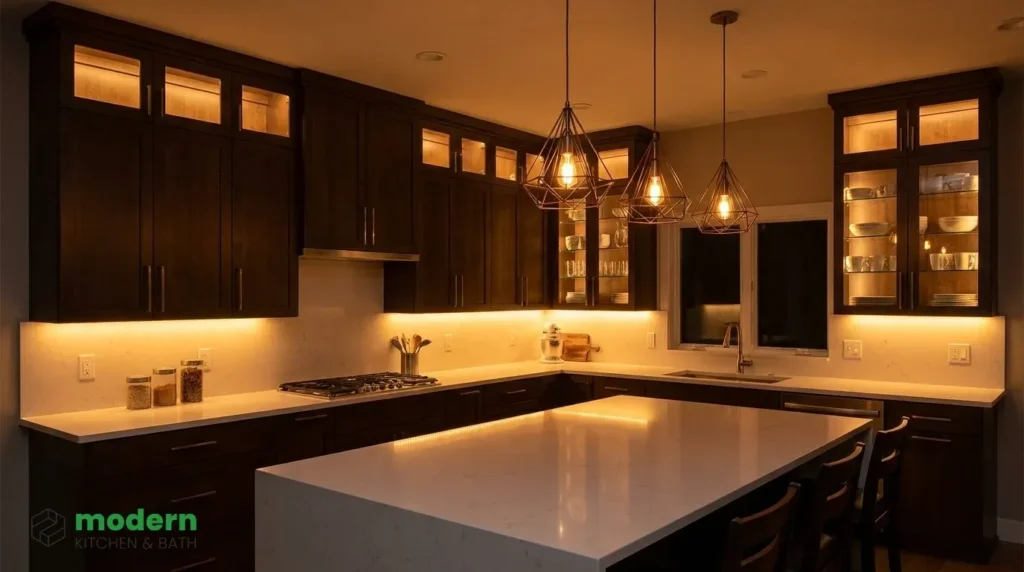
Under-cabinet LED strips with smart dimming controls cost $1,000 to $3,000 installed, depending on the length of your run. Motion-activated and adjustable color temperature strips are replacing older puck-style fixtures in most 2026 remodels. They shift from bright white (4000K to 5000K) for food prep to warm amber (2700K) for evening entertaining. The transition happens on a schedule, through a voice command, or triggered by a motion sensor.
Interior cabinet lighting, trending with 72% of NKBA respondents, illuminates glass-front uppers and open shelving. Pendant lights over islands now often include smart dimming and color-matching capabilities. The investment is small relative to a full remodel, and the effect on how a kitchen feels at different times of day is significant.
The Infrastructure Most NoVA Kitchens Need Before Going Smart
This is where many homeowners get caught off guard. They buy $8,000 worth of smart appliances and discover their 1990s-era kitchen can’t support them. Here’s what to assess before you start shopping.
Electrical Capacity
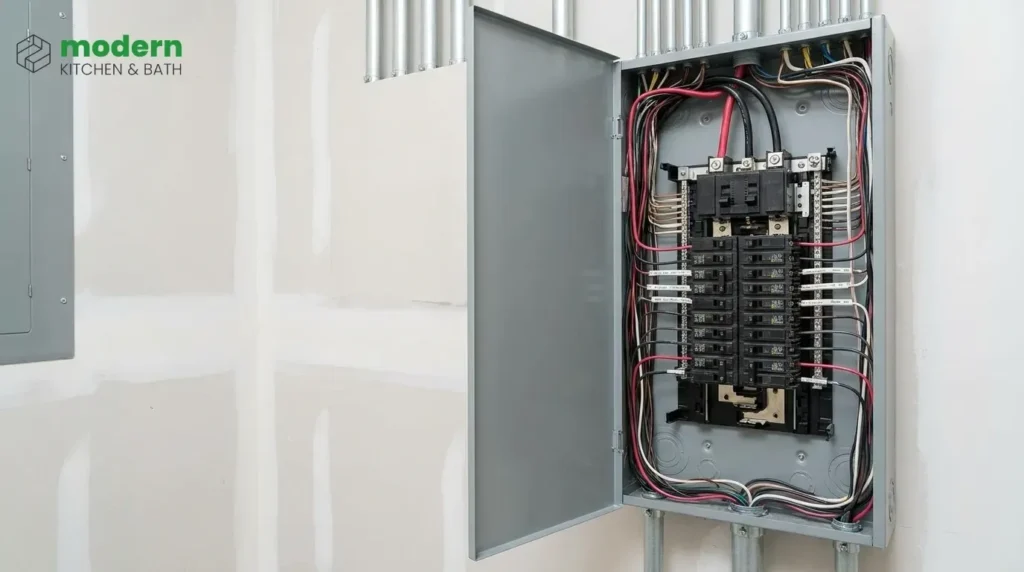
Many homes in Sugarland Run, Countryside, and Cascades, built between 1978 and 2000, have 100-amp or 150-amp electrical panels. A smart kitchen with an induction cooktop, wall oven, smart refrigerator, and dedicated lighting circuits may need a 200-amp panel upgrade. Budget $2,000 to $4,000 for the upgrade in Loudoun County, including the required permit and inspection.
Induction cooktops require a dedicated 240V, 40-amp or 50-amp circuit. If your kitchen currently has a gas range, running that new circuit typically costs $800 to $2,000 depending on how far the panel sits from the kitchen. The EPA notes that switching from gas to electric cooking reduces exposure to indoor air pollutants, which adds a health argument on top of the efficiency gains. This circuit upgrade is one of the most common “surprise” costs in smart kitchen remodels.
Network Infrastructure
Smart kitchens need reliable Wi-Fi. Thick plaster walls in older colonials or the concrete-and-steel construction in newer townhomes near Dulles Airport can degrade signal quality. A mesh Wi-Fi system like Eero, Google Nest WiFi, or TP-Link Deco costs $200 to $500 and solves most coverage issues. For larger homes, consider hardwiring an access point in the kitchen ceiling during the remodel when walls are already open.
Dedicated outlets for smart hubs, smart displays, and wireless chargers should be planned during the design phase. Adding outlets after cabinet installation means cutting into finished work, which drives costs up by 300% to 500% compared to doing it during rough-in.
Ecosystem Compatibility
Pick one platform early and stick with it. An Alexa-controlled refrigerator paired with an Apple HomeKit lighting system paired with a Google Nest thermostat creates daily friction. The Matter standard helps bridge gaps between ecosystems, but native compatibility still delivers the smoothest experience. Most Northern Virginia households we work with standardize on either Google Home or Amazon Alexa for the kitchen hub.
Software Support and Appliance Longevity
A smart oven lasts 12 to 15 years mechanically. The software running its touchscreen and app integration may not. This is one of the most overlooked risks in smart kitchen planning.
When a manufacturer discontinues app support or stops pushing firmware updates, your $3,000 smart oven becomes a $3,000 standard oven with a useless touchscreen. It still cooks, but the features you paid a premium for go dark. We’ve seen this happen with smaller brands that launched aggressively on social media, gained market share, then quietly pulled their cloud services two or three years later.
Stick with manufacturers that have demonstrated long-term software commitment. Samsung, LG, Bosch, and GE Profile have maintained app ecosystems and pushed regular firmware updates for five-plus years across their smart product lines. Ask the sales rep directly: how long will this appliance receive software updates? If they can’t answer, that’s your answer.
Repair is the other consideration. When a smart dishwasher throws a software error, your local appliance repair tech may not have the diagnostic tools to fix it. Authorized service networks for Samsung, LG, and Bosch exist in Northern Virginia, but response times can stretch to two or three weeks during peak remodel season. Factor this into your brand decision, especially for appliances your household depends on daily.
Permits and Regulations in Loudoun and Fairfax Counties
Smart kitchen installations involving electrical, plumbing, or structural work require permits in both Loudoun County and Fairfax County. Sterling falls under Loudoun County jurisdiction for building codes and inspections.
Adding a new 240V circuit for an induction cooktop requires an electrical permit. Panel upgrades require both a permit and a county inspection. Relocating plumbing for a touchless faucet with a different mounting configuration may trigger a plumbing permit. Budget $500 to $2,000 for permits depending on project scope.
Here’s what typically does not require a permit: swapping a standard faucet for a touchless model using the same supply lines, replacing existing appliances with smart versions on existing circuits, installing smart lighting on existing wiring, and mounting smart hub devices.
Virginia requires licensed contractors registered through the Department of Professional and Occupational Regulation (DPOR) for electrical and plumbing work. We’ve seen homeowners try to DIY electrical upgrades for induction cooktops, and the code inspection failures cost more to fix than hiring a licensed electrician would have cost from the start.
Six Mistakes Northern Virginia Homeowners Make With Smart Kitchens
We remodel kitchens in Sterling, Ashburn, Herndon, and Reston every week. Here are the smart kitchen mistakes we see repeatedly.
1. Buying appliances after cabinets are installed.
Smart appliances often have different dimensions, deeper door swings, and specific ventilation requirements compared to standard models. Your cabinet layout must accommodate the appliances, not the other way around. Measure the smart appliances first, then design the cabinetry.
2. Ignoring network coverage.
A smart oven that loses Wi-Fi connectivity every time someone uses the microwave isn’t smart. It’s frustrating. Test your Wi-Fi signal strength in the kitchen before committing to connected appliances. If the signal drops below -60 dBm, invest in a mesh system before spending a dollar on smart devices.
3. Mixing ecosystems without a plan.
Three different voice assistants controlling three different device groups is not an integrated kitchen. It’s three separate remote controls that happen to respond to your voice. Standardize on one platform before your first purchase.
4. Skipping the electrical assessment.
A 30-year-old panel in a Countryside colonial was not designed for a modern induction range, two smart ovens, and a sub-zero refrigerator. Get an electrical assessment before finalizing your appliance list. A licensed electrician can evaluate your panel capacity for $150 to $300.
5. Over-automating.
A kitchen faucet that dispenses water by voice command is useful when your hands are covered in flour. A cabinet door that opens via app on your phone is a novelty that wears off in two weeks. Spend on smart features that solve daily friction points. Skip the ones that add complexity to tasks that were already simple.
6. Not accounting for delivery lead times.
Smart appliances from Samsung, LG, and Bosch frequently have 4 to 8 week delivery windows in 2026, and specific configurations (panel-ready refrigerators, custom-color Bespoke models) can stretch to 10 to 12 weeks. Order appliances the day you finalize your design, not the day demolition starts. Several homeowners we’ve worked with in Sterling and Ashburn have purchased smart appliances months ahead of their remodel, storing them in the garage to lock in pricing and avoid timeline blowouts.
When to Add Smart Features to Your Remodel
The best time to integrate smart kitchen technology is during the remodel itself. Running conduit, adding circuits, wiring smart switches, and positioning outlets are all dramatically cheaper when walls are open. Retrofitting smart features after a completed renovation means cutting into finished drywall, cabinets, and tile. The cost difference runs 3x to 5x for the same work.
One timing factor for 2026: the 25% tariff on imported kitchen appliances and cabinets remains in effect through the year, with a scheduled increase to 50% in January 2027. If your remodel is on the calendar for late 2026 or early 2027, ordering smart appliances now locks in better pricing.
Not ready for a full remodel? A phased approach works. Start with a smart lighting system and a touchless faucet. Add a smart hub. Then upgrade appliances one at a time as existing ones age out. This approach spreads the investment over two to three years while building toward a fully integrated kitchen.
Energy Savings and Sustainability
Smart kitchen technology can meaningfully reduce your utility bills if you choose the right components. Induction cooktops operate at 85% to 90% energy efficiency compared to 40% for gas and 70% for traditional electric coils. The U.S. Environmental Protection Agency (EPA) and ENERGY STAR program data show that switching to induction saves $100 to $200 annually on cooking-related energy costs for an average household.
ENERGY STAR-rated smart refrigerators use approximately 40% less electricity than standard models from ten years ago. Smart dishwashers with sensor technology reduce water consumption per cycle by 15% to 20%. Smart power strips eliminate phantom power draw from standby appliances, saving $80 to $150 per year.
Smart lighting with occupancy sensors and scheduled dimming reduces kitchen lighting costs by 30% to 50% compared to leaving traditional fixtures on throughout the day. LED under-cabinet strips use a fraction of the energy that older halogen or puck-style fixtures consumed.
For Northern Virginia homeowners focused on sustainability, these savings compound. A full smart kitchen package can reduce kitchen-specific energy costs by $300 to $600 annually. That’s a 3 to 5 year payback on the smart premium, with savings continuing for the life of the appliances.
Smart Technology and Aging in Place
The NKBA’s 2026 report found that 31% of Baby Boomers are remodeling specifically for improved accessibility. Smart kitchen technology directly supports aging-in-place goals without making the kitchen look or feel institutional.
Voice-controlled appliances eliminate the need to reach, bend, or use small dials. Smart ovens with automatic shut-off prevent forgotten burners. Motion-activated lighting ensures safe navigation without fumbling for switches. Touchless faucets reduce grip requirements. Smart smoke and gas detectors send alerts to family members’ phones when triggered.
These features work for every generation. A smart kitchen that supports aging in place is also a kitchen that works beautifully for a busy family with young children or a couple who loves to cook and entertain.
Smart Kitchen Features and Home Resale Value
Northern Virginia’s real estate market rewards smart homes. Seven in ten homebuyers actively seek smart features when shopping, and homes with integrated smart technology sell faster in Loudoun and Fairfax counties.
A mid-range kitchen remodel in our market recovers 75% to 80% of its cost at resale. Smart features contribute to that recovery by positioning the kitchen as current and move-in ready. Buyers in the $600,000 to $900,000 range in Sterling, Ashburn, and Herndon increasingly expect smart appliances, touchless fixtures, and automated lighting as standard features, not premium add-ons.
The key is choosing smart features that appeal broadly. A Google Nest Hub mounted on the wall, voice-controlled lighting, and a smart refrigerator resonate with most buyers. A fully automated cooking station controlled exclusively through a proprietary app may alienate buyers who use a different ecosystem. Install smart, but install flexible.
Frequently Asked Questions For Smart Kitchen Technology
How much does a full smart kitchen cost in Northern Virginia?
A comprehensive smart kitchen layer on top of a standard remodel adds $9,000 to $25,000 in our market. This covers a full smart appliance package, lighting system, touchless fixtures, network infrastructure, and hub. The total kitchen remodel with smart integration typically runs $55,000 to $110,000 in Sterling, Ashburn, and Fairfax.
Do I need to upgrade my electrical panel for a smart kitchen?
Possibly. Homes with 100-amp panels, common in construction before 2000, may need a 200-amp upgrade to support induction cooking and multiple smart appliances. Budget $2,000 to $4,000 for the upgrade. Have a licensed electrician assess your current capacity before finalizing plans.
Which smart home platform works best for kitchens?
Google Home and Amazon Alexa dominate kitchen use. Both support the Matter standard for cross-brand compatibility. Apple HomeKit works well but has a smaller appliance ecosystem. Choose based on what your household already uses for phones and speakers.
Are smart kitchen appliances reliable?
Yes, from established brands. Samsung, LG, Bosch, GE Profile, KitchenAid, Moen, and Delta all have proven smart product lines with multi-year track records. Avoid no-name brands marketing heavily on social media with limited warranty support and uncertain software longevity.
Do smart kitchen features need special maintenance?
Firmware updates happen automatically on most devices. Keep your Wi-Fi network secured with WPA3 encryption and change default passwords on all connected devices. The physical maintenance is identical to standard appliances.
Will a smart kitchen work during a power outage?
Most smart appliances operate as standard appliances during outages, just without the connected features. A battery backup or whole-home generator keeps smart features running. Smart lighting with battery backup can provide emergency illumination. Always confirm that any smart appliance you purchase has full manual fallback capability.
Can I add smart features to my kitchen without a full remodel?
Absolutely. Start with plug-and-play upgrades like a smart speaker ($50 to $300), smart plugs for existing appliances ($25 to $45 each), LED smart bulbs ($15 to $40 each), and a touchless faucet adapter ($80 to $200). You can build a basic smart kitchen for under $500.
Do smart kitchens have cybersecurity risks?
Any connected device carries some risk. Use a strong, unique Wi-Fi password with WPA3 encryption. Keep device firmware updated. Consider a dedicated IoT network separate from your main home network for added security. Established brands like Bosch and Samsung have stronger security protocols than budget alternatives.
How long will smart appliance software be supported?
Samsung, LG, and Bosch have maintained active app ecosystems and firmware updates for five-plus years across their smart kitchen product lines. Before purchasing, ask the manufacturer directly about their software support timeline. If they can’t give you a clear answer, consider a brand that can.
Ready to Plan Your Smart Kitchen Remodel?
Modern Kitchen & Home Solutions has been designing and installing kitchens in Sterling and Northern Virginia for over a decade. We help homeowners navigate smart technology choices, coordinate with licensed electricians and plumbers, and ensure every connected device integrates smoothly with your design.
Visit our showroom in Sterling, VA to see smart kitchen technology in action. We’ll walk you through real product demos, discuss what makes sense for your home’s electrical capacity, and build a plan that fits your budget.
Schedule a free in-home consultation: call 571-517-1289 or visit modernkitchenva.com.
Found this helpful? Make us your go-to source on Google
If our content has been useful, you can tell Google to show more of it when you search. Click below, then check the box next to Modern Kitchen and Bath on the page that opens. It takes about five seconds.

You'll need to be signed in to your Google account. One click, then tick the box next to our name.