Most small kitchen remodel guides read like they were written for someone with a 300-square-foot kitchen and a six-figure budget. Neither describes most Northern Virginia homeowners. The typical kitchen we remodel in Sterling, Ashburn, or Fairfax runs between 90 and 160 square feet. It sits inside a townhome or colonial, usually with one wall of windows, a peninsula that eats into the walkway, and cabinetry installed sometime between 1995 and 2008. The bones are fine. The space just needs smarter choices, not more of it. These 30 ideas are what we actually recommend and install, ordered from the highest-impact changes to the finishing details. Read straight through, or jump to what fits your project.
How Much Does a Small Kitchen Remodel Cost in Northern Virginia?
Before design, the budget question. Costs in Northern Virginia sit above national averages because of labor rates, permit requirements, and the reality of working inside townhome construction. In 2026 that gap is about 10% to 20% on most work, and 15% to 25% in higher-end areas like McLean, Great Falls, and North Arlington. For a small kitchen, cost tracks square footage first. Here is where small kitchens land:
| Kitchen size | What it usually covers | Estimated cost (NoVa, 2026) |
|---|---|---|
| Compact, ~100 sq ft (10×10) | Cosmetic refresh up to a mid-range remodel | $15,000 – $45,000 |
| Medium, ~144 sq ft (12×12) | Mid-range up to a full remodel with a layout change | $25,000 – $50,000 |
Figured per square foot, Northern Virginia runs about $150 to $250. Where you land inside the range comes down to scope: a cosmetic refresh sits at the bottom, a mid-range remodel with new semi-custom cabinets and quartz lands in the middle, and a full remodel that moves the layout pushes to the top. Cabinets are the single biggest line item, about 25% to 35% of the budget. Plan a 10% to 20% contingency on top of whatever number you land on. One 2026 note worth budgeting around: appliance prices are projected to climb about 18% to 19% this year on tariffs, so locking in your appliance purchases early can protect your bottom line. For the full picture, see our 2026 Northern Virginia kitchen remodel pricing guide.
We come to your home, take measurements, and give you a detailed quote with no pressure. Our showroom is in Sterling, VA and we serve the entire Northern Virginia area.
Schedule a free estimate →
1. Start with Light Colors, They Do More Work Than Anything Else
White, warm cream, pale sage, and soft gray push walls back visually. It is not a trick. Light reflects off the surfaces and makes the space read larger than it measures. We have before-and-after photos of kitchens in Ashburn townhomes where the square footage did not change by a single foot, but the painted-and-lit version looks 30% bigger in photos and feels bigger in person.
The detail most people miss is the ceiling. Painting the ceiling the same white as the walls, or one shade lighter, removes the boxed-in effect that makes small kitchens feel low and compressed. On upper cabinets, white or off-white makes them recede so they stop competing for attention and the room reads as more open. The 2026 direction is not pure white but warm neutrals: greige, warm linen, and dusty cream. These pair better with the warm-toned wood floors most Northern Virginia townhomes already have.
2. Use a Mobile Kitchen Island
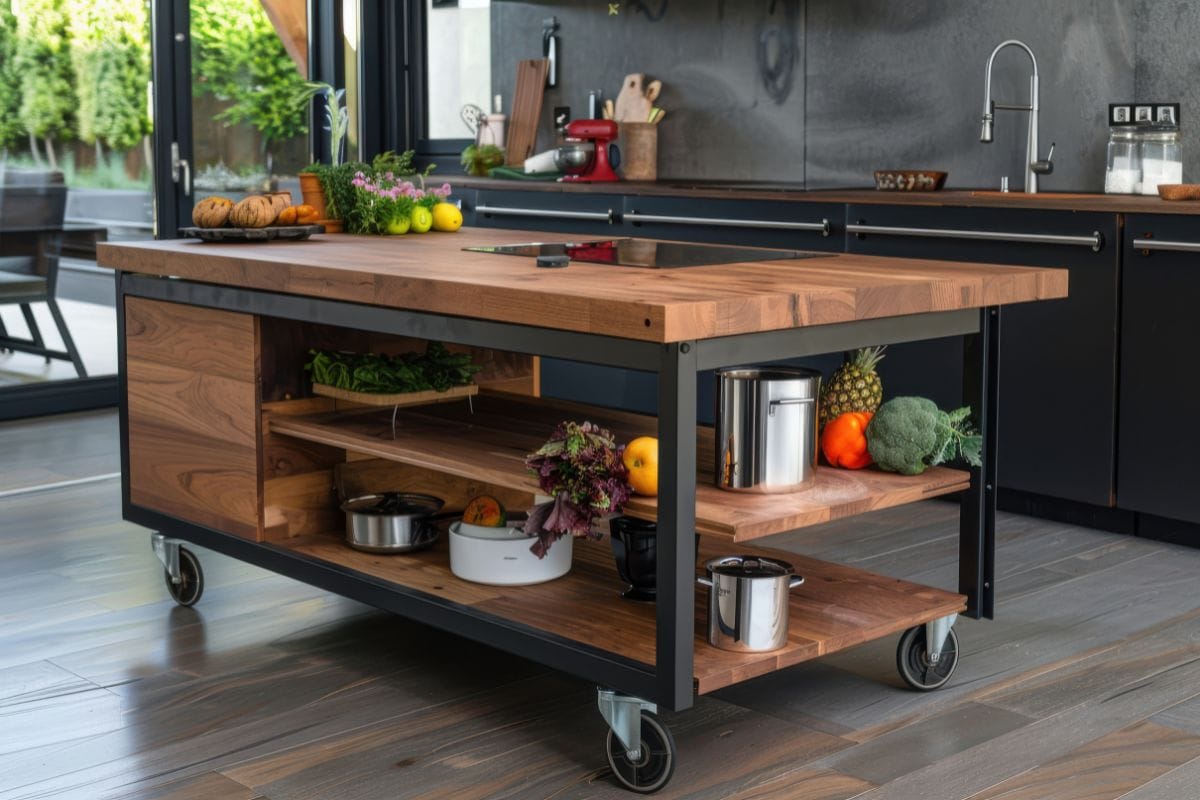
A fixed island in a small kitchen is often a mistake. It blocks traffic, shrinks the walkway below the 42-inch minimum, and creates a dead zone. A mobile butcher-block island on locking casters solves all three. Roll it in for meal prep, push it against the wall when you need floor space, use it as a serving station when guests are over. Look for islands with storage below, drawers or doors, so you gain function and not just surface. The best options have a shelf or towel bar on the end. For NoVa townhomes with open-plan living areas, a mobile island also lets you reconfigure the space for different uses without a single hammer swing.
3. Choose Modern Minimalist Hardware
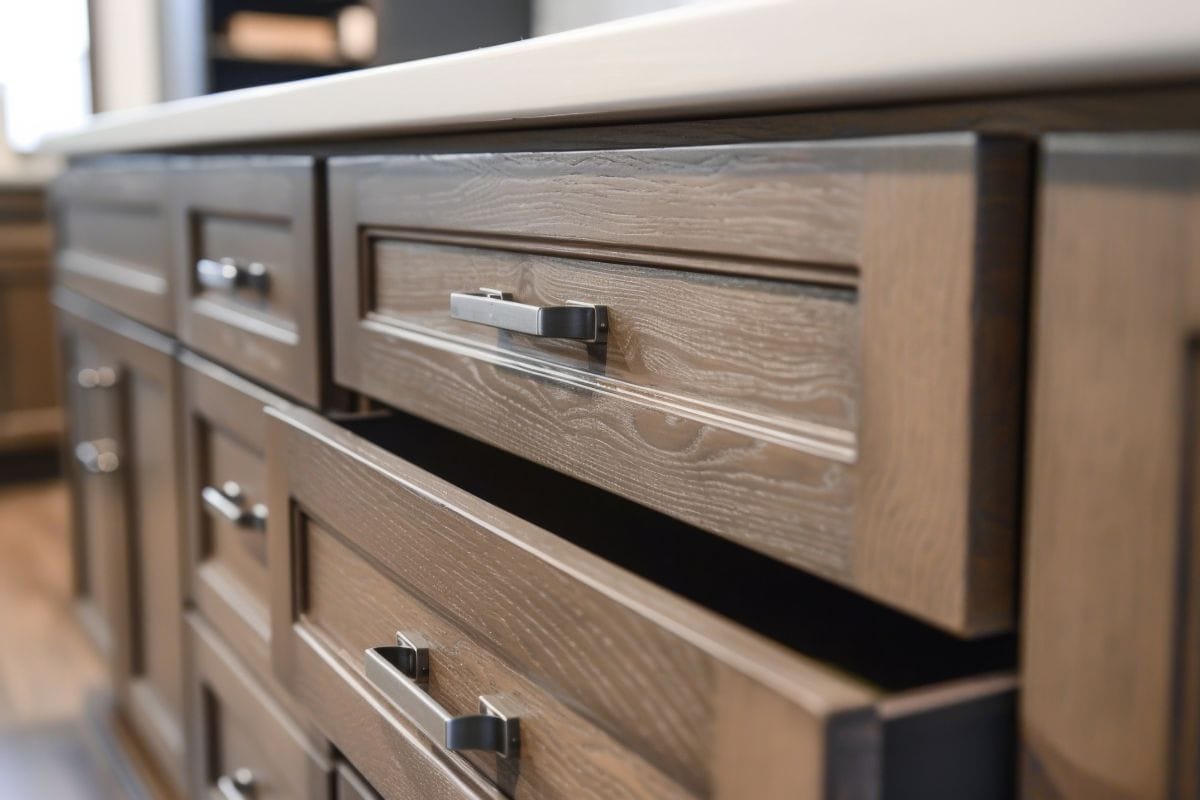
Hardware is the fastest, cheapest upgrade on this list. A full set of new pulls and knobs for a small kitchen costs $150 to $400 in materials and an afternoon of labor. The impact is out of proportion to the price. It is the detail people point to when they say a kitchen looks updated. The 2026 direction is long bar pulls, 6 to 10 inches, in matte black or brushed brass on the lowers, with smaller matching pulls on the uppers. Avoid mixing more than two metal finishes. If you have stainless appliances, brushed nickel ties everything together. If you want warmth, brushed brass against white or cream cabinets is the combination we install most often right now.

4. Replace Upper Cabinets with Open Shelving
Upper cabinets are often the reason small kitchens feel dark and closed in. They block light, add visual mass to the top half of the room, and push you to store things you rarely use at eye level. Removing some or all of them and adding floating shelves opens the room up.
The honest trade-off: open shelves need regular editing. Clutter looks worse on a shelf than behind a door. If you keep only what you use on display, this works beautifully. If not, keep your uppers. A middle path is removing the uppers on one wall, usually the window wall, and keeping them elsewhere, so you get the openness without losing all your storage. For the shelves themselves, 1.5-inch solid wood (white oak, walnut, or painted poplar) on floating brackets looks far better than laminate or thin plywood. The material difference is $200 to $500 for a typical wall, and it shows. If open shelving feels too exposed for your habits, decorative metal or fluted cabinet inserts are a 2026 alternative: they swap a solid door panel for a patterned one, adding character without putting your dishes on display.
5. Use Every Inch of Vertical Space
Most small kitchens waste 12 to 18 inches between the top of the upper cabinets and the ceiling. Carrying cabinetry all the way up adds meaningful storage, usually a full cabinet’s worth, and removes the dust-collecting gap that reads as unfinished. The cabinets look intentional instead of installed-and-forgotten. Other vertical wins: a wall-mounted magnetic knife strip frees a full drawer, a wall-mounted spice rack clears counter space, and a pegboard or rail above the counter keeps tools accessible without using drawer space. None of these cost much. Together they can free up 30% to 40% of your counter surface.
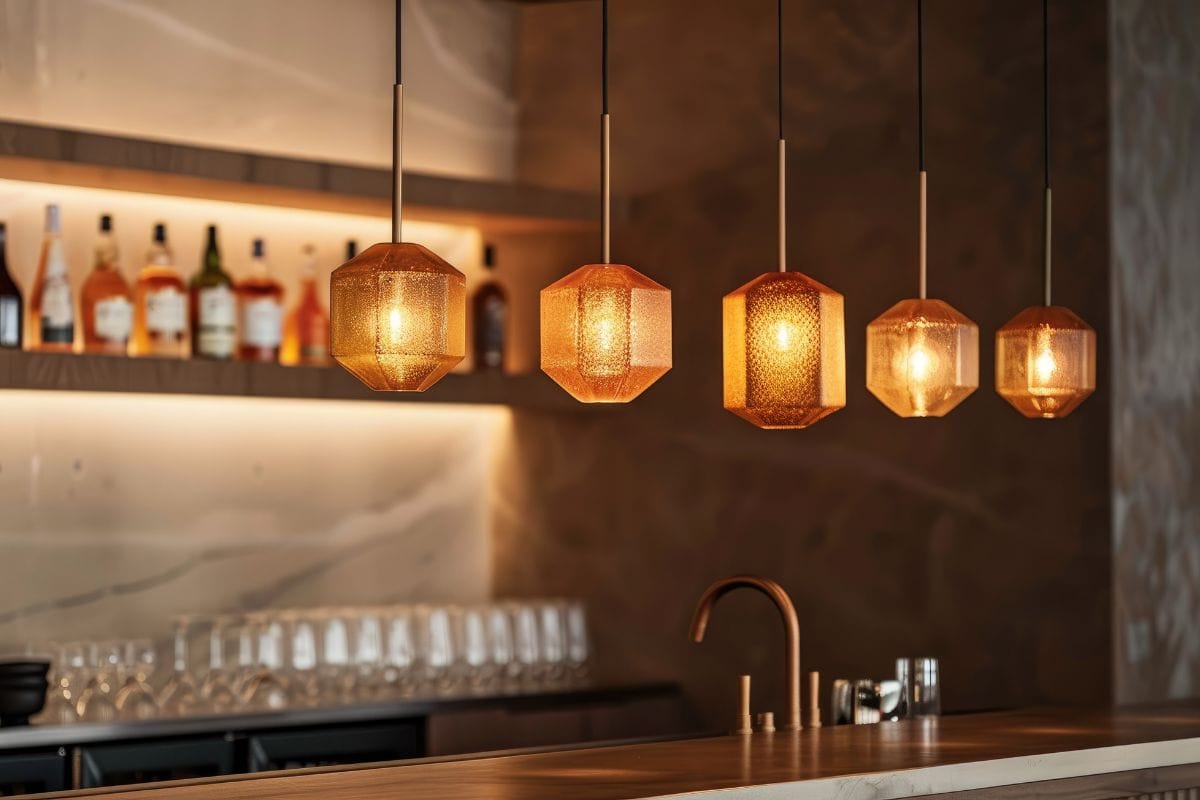
6. Layer Your Lighting in Three Types, Not One
a. Under-cabinet LED strip lighting
The single best lighting upgrade for a small kitchen. Under-cabinet LED strips light the counter where you actually work, kill the shadows cast by overhead fixtures, and make the whole room feel brighter without adding anything to the ceiling. Warm white, 2700K to 3000K, suits most Northern Virginia kitchen finishes better than cool white. Dimmer-compatible strips run full for cooking and low for evenings.
b. Pendant lights over the peninsula or island
Pendants do two jobs. They provide task light over a work area, and they signal that the kitchen and the living space are connected, which makes both feel bigger. In a small kitchen, one or two pendants hung 30 to 34 inches above the counter is the right scale. Oversized pendants in a compact room look forced.
c. Decorative wall sconces
In the narrow corridors common in older Northern Virginia townhomes, sconces on the end wall add warmth and depth without competing with the overhead fixtures. They earn their place in kitchens with low ceilings, where a ceiling fixture would feel intrusive.
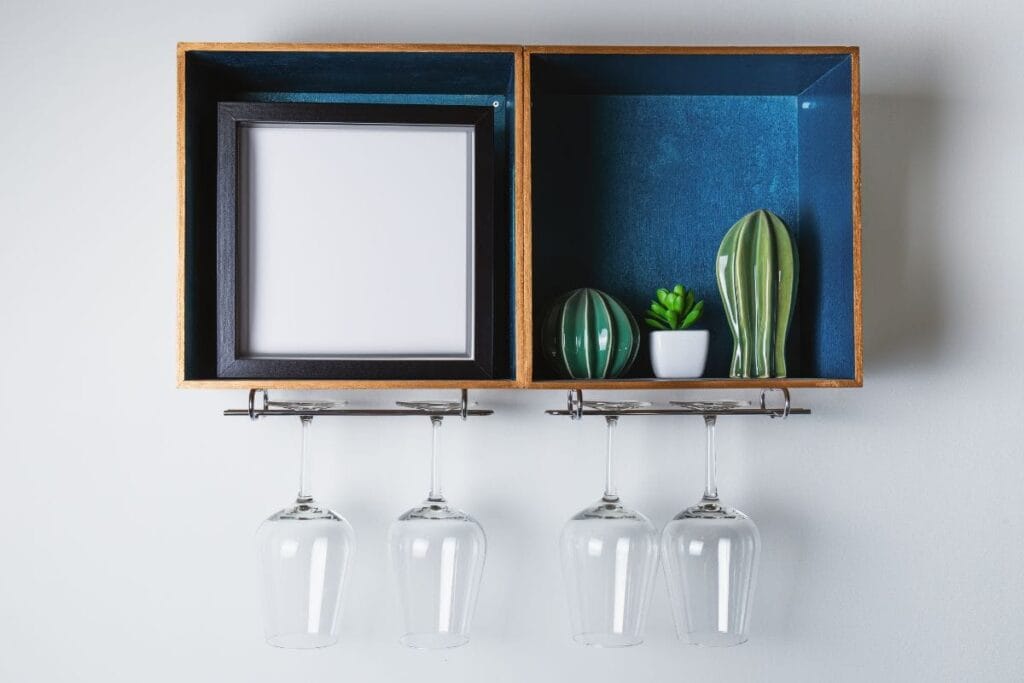
7. Choose Pieces That Are Decorative and Functional
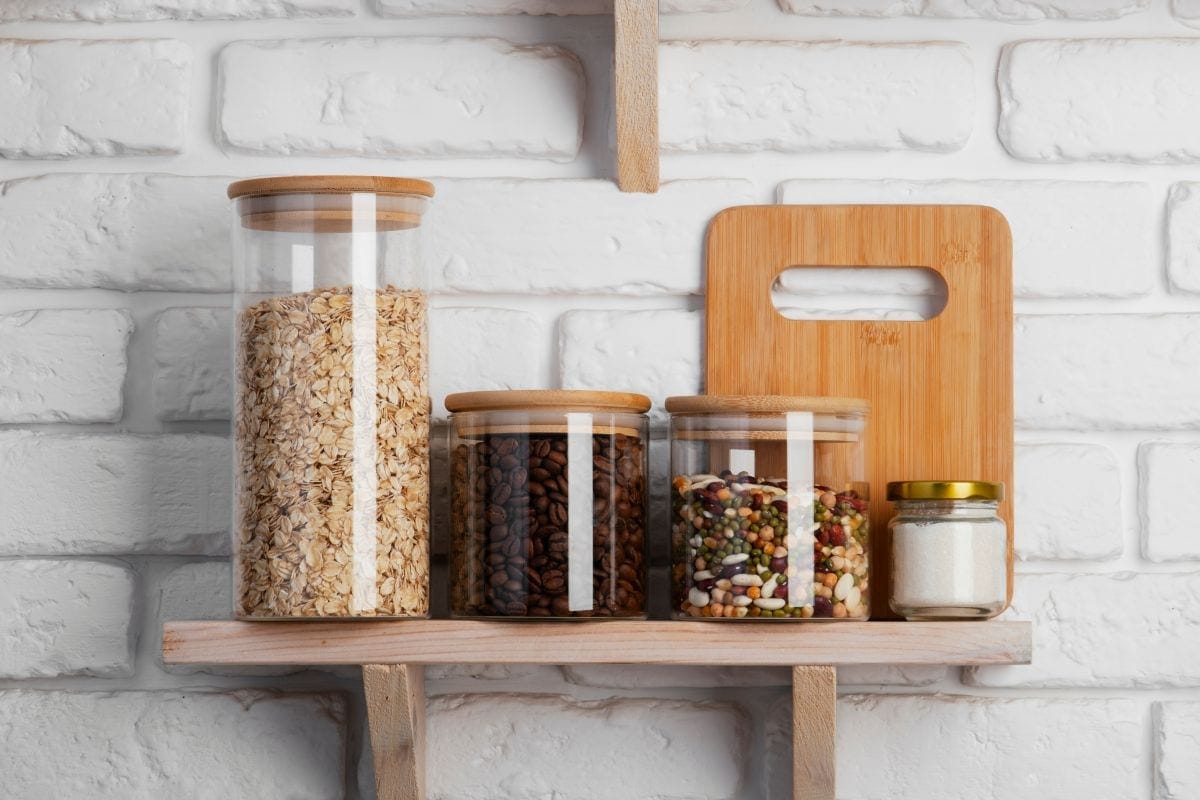
In a small kitchen, every object on display either adds to the room or clutters it. The standard is simple: if it is out on the counter, it should be used daily or look intentional. A ceramic fruit bowl, a good oil crock, a single potted herb, these add character. Random appliances, stacked mail, and odds and ends collected over years do the opposite. The swap worth making is replacing plastic or mismatched containers with uniform glass jars for dry goods, stored on a dedicated shelf or behind a glass cabinet door. It sounds minor, but a kitchen where everything visible looks considered reads as designed rather than assembled.
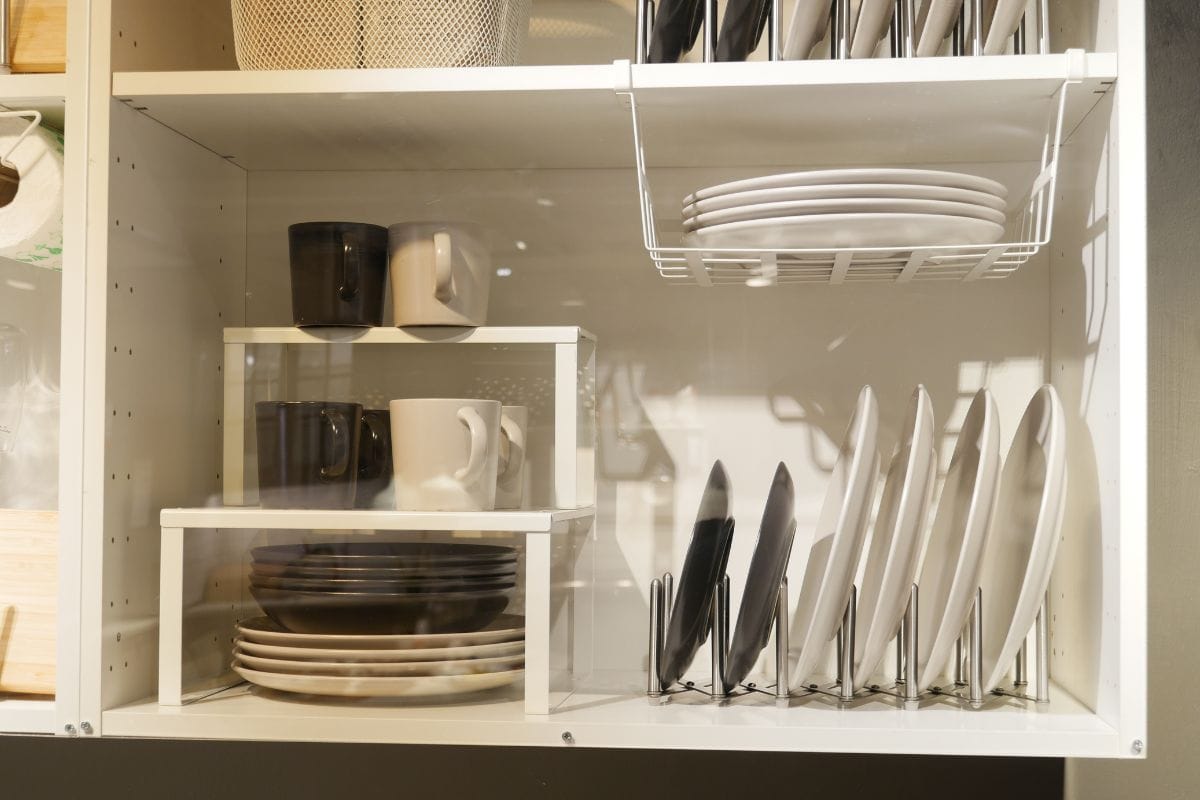
8. Organize the Inside of Your Cabinets
Interior organization is not glamorous, but it is where a lot of small-kitchen frustration lives. If you cannot find what you need, you leave it on the counter, and things on the counter make the kitchen feel smaller. The fix is specific hardware: pull-out shelves in the lowers so you reach the back without kneeling, a pull-out trash and recycling unit under the sink, deep drawer organizers for utensils, and a vertical tray divider for baking sheets and cutting boards. Carrying the uppers to the ceiling, if they do not already reach, adds a full row for the things you use twice a year and gives the run a built-in look. Most installers can do this without replacing the entire cabinet.
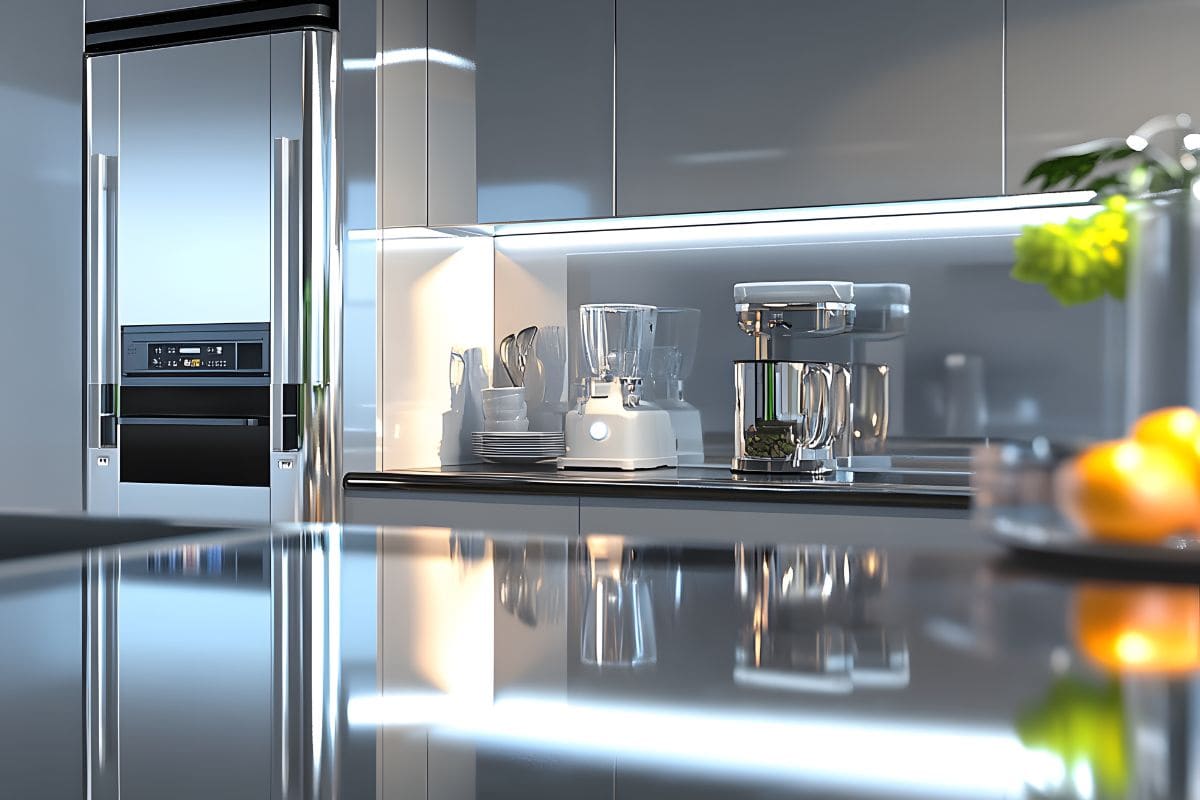
9. Add Reflective Surfaces Strategically
Glossy cabinet finishes, glass tile, polished stone, and stainless steel all bounce light around the room. In a north-facing kitchen with no direct sun, which describes a lot of Northern Virginia townhomes built with their narrow end facing east or west, that is a real difference. A glossy white subway backsplash will make the same kitchen feel noticeably brighter than a matte one. Mirrors divide opinion. On a cabinet door or as a narrow side-wall panel, a mirror can extend the perceived depth of a galley kitchen. Used too broadly, it tips into fun-house territory. One mirrored element is usually the right number.
10. Connect to the Outside Where Possible
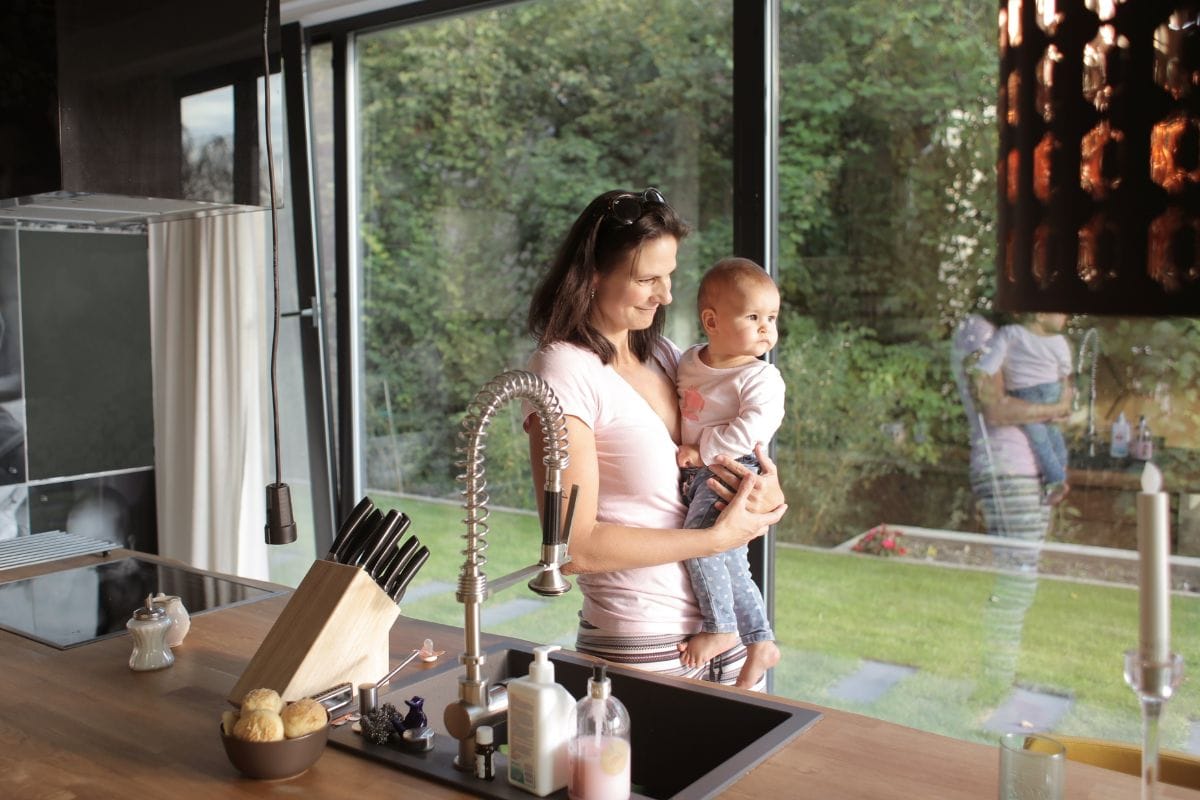
If your kitchen has a window above the sink, make the most of it. Remove the valance that blocks light, paint the trim the same white as the cabinets so it disappears, and keep the sill clear. If a deck or patio door sits nearby, pulling back the visual barrier between inside and out, even by keeping the door glazed rather than solid, adds perceived volume at no cost. For Northern Virginia homes with a deck off the kitchen or dining area, a pass-through window to an outdoor counter is a practical upgrade we install on full remodels. It does not add square footage, but it changes how the kitchen works through spring and summer.
11. Work with the 2026 Color Palette
a. Shades of green
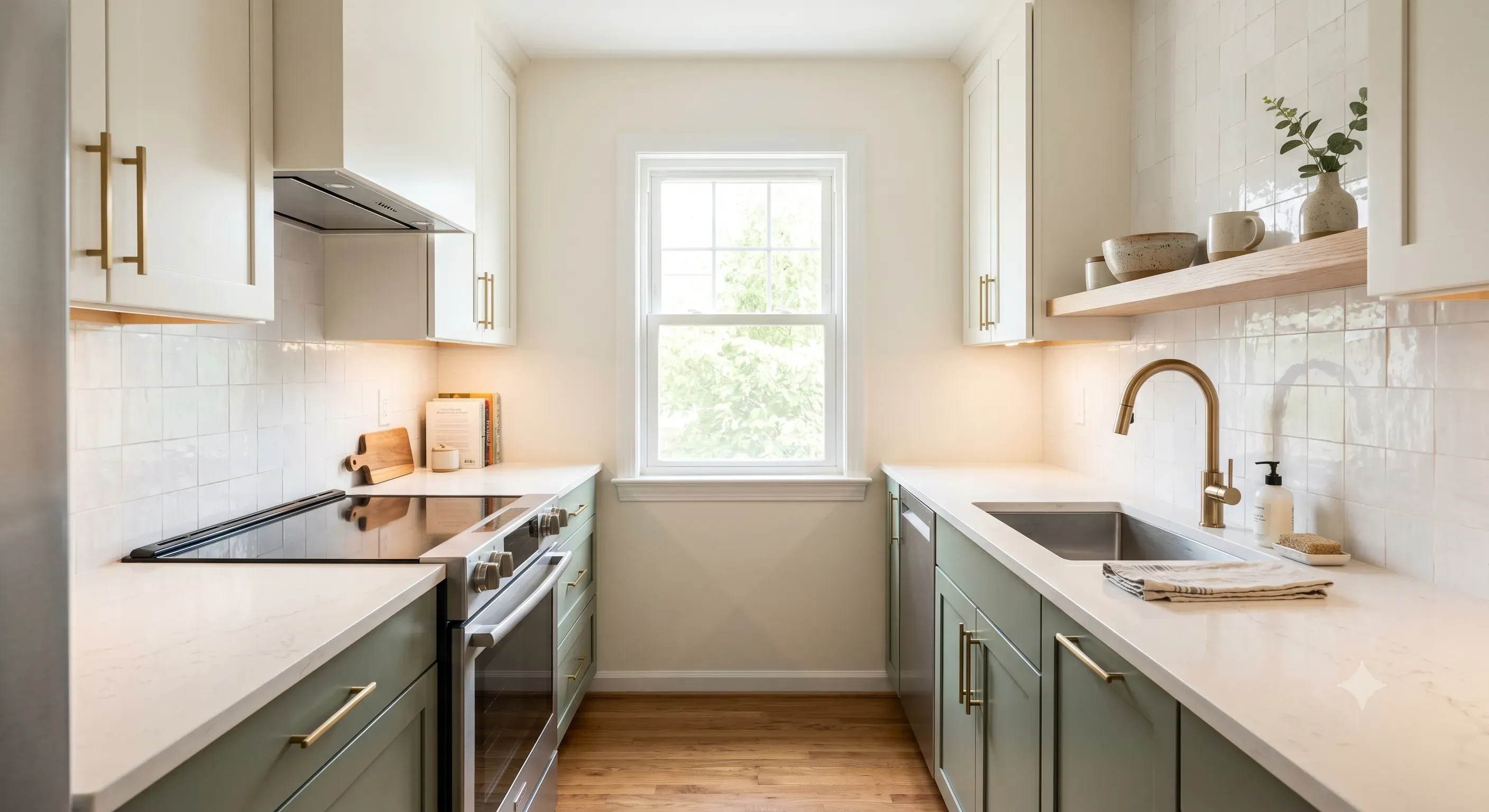
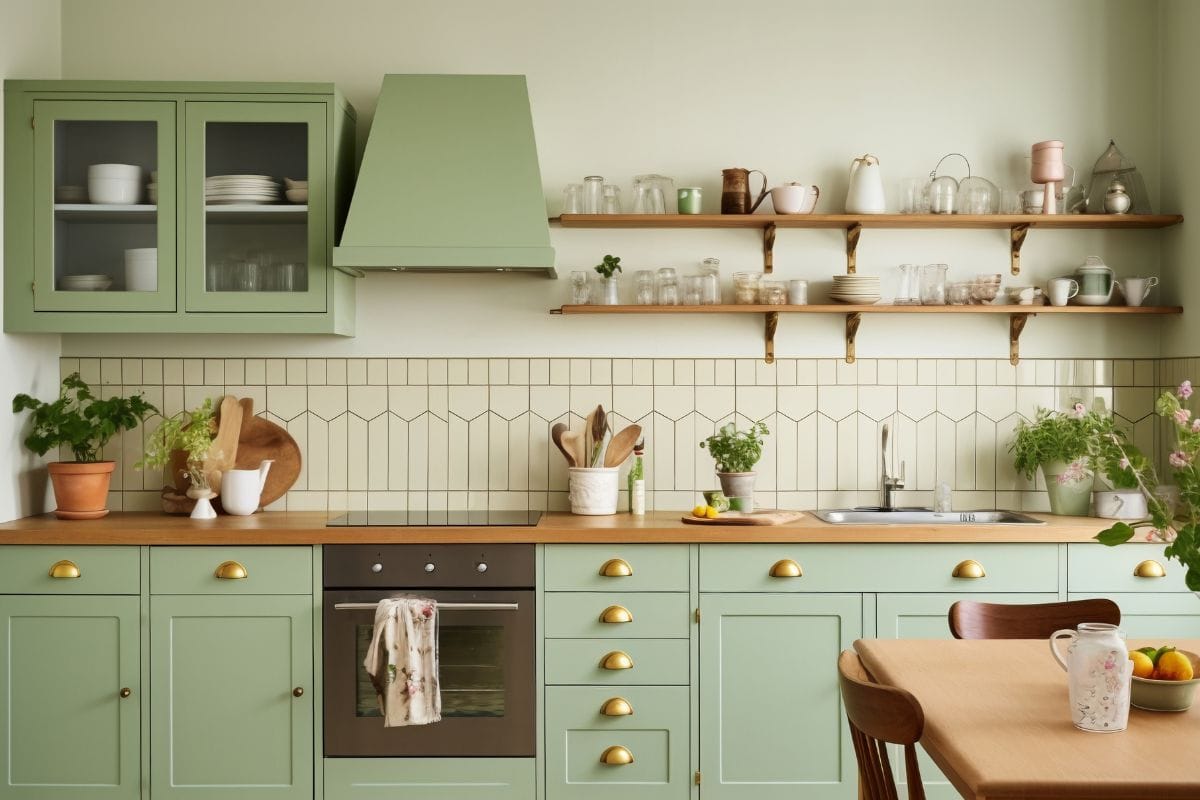
Sage and olive on the lowers, paired with white or off-white uppers, is one of the most requested finishes we are doing in 2026. It works with the warm wood floors common in Northern Virginia homes and reads as both current and timeless. Avoid saturated emerald in a small kitchen. The darker the green, the more wall space you need to balance it.
b. Shades of blue
Navy and slate blue are still popular for lower cabinets in 2026, especially in more traditional homes. Blue reads as sophisticated without being trendy. Kitchens painted navy in 2018 still look intentional, which matters when you are spending $40,000 or more. For small kitchens, keep blue to the lowers or the island and go lighter on the uppers.
c. Deep reds and burgundy
A bolder choice, but in small doses. A burgundy island or a deep-red backsplash tile reads as intentional and dramatic rather than overwhelming. Pair it with natural stone counters and brass hardware for a high-end result. This works best where there is natural light. In darker spaces it can feel heavy.
d. Warm neutrals and white
Warm white and greige are the workhorses of small-kitchen design because they reflect light, sell well when you list the house, and never date. The 2026 shift is away from pure, cool white, which can read clinical, toward warmer off-whites with a yellow or beige undertone. Benjamin Moore White Dove and Sherwin-Williams Alabaster are consistently popular in Northern Virginia homes right now.
12. Use Natural Wood Tones
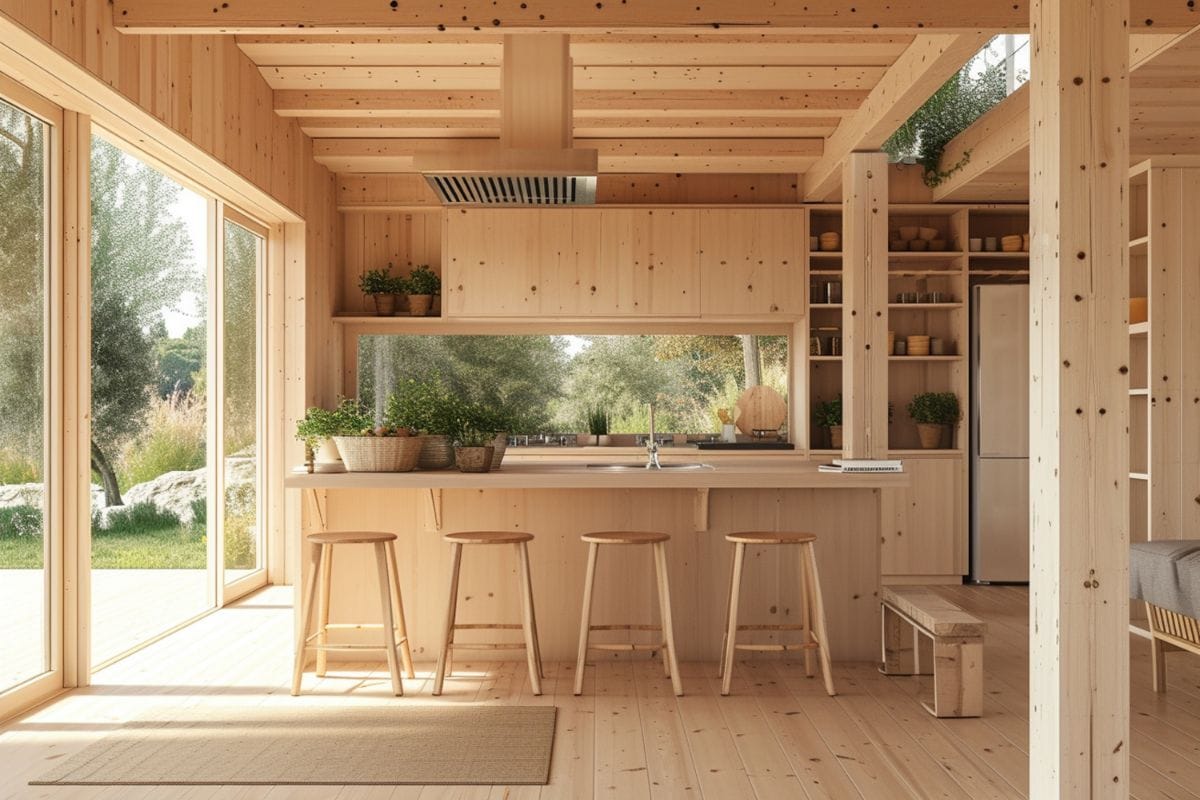
White oak and walnut are the dominant wood tones in 2026. White oak has a clean, linear grain that suits modern and transitional kitchens alike. Walnut is richer and darker, better where you want warmth and contrast. Both age well, unlike the honey-maple and cherry finishes that were everywhere in the 2000s and now read as dated. Natural wood lowers paired with painted white uppers is the two-tone combination in most demand right now. The wood grounds the kitchen and adds warmth, the white uppers keep it light. For counters, a walnut butcher block on a small island adds texture at a lower price point than stone, typically $800 to $2,000 for an island top versus $2,500 to $5,000 for quartz.
13. Add Stainless Steel Details
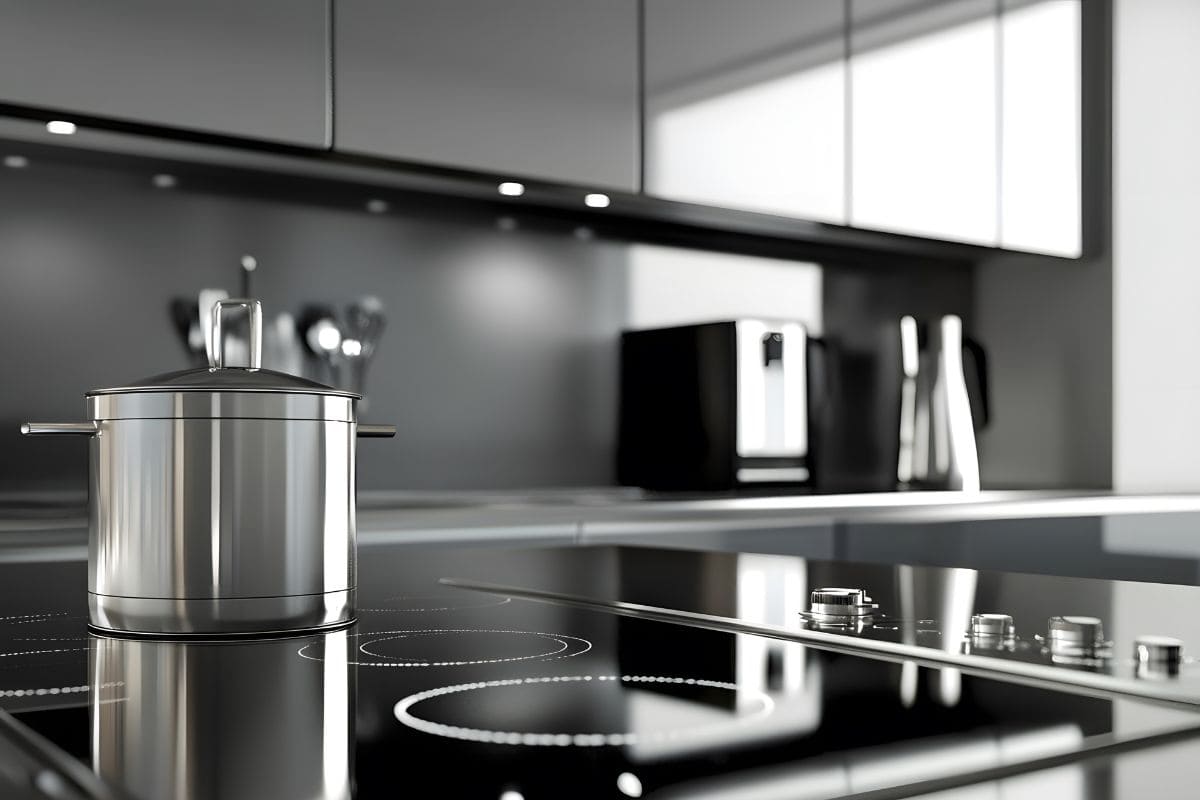
Stainless appliances are a standard now, not a trend. They are durable, hygienic, easy to clean, and they work with virtually every cabinet color. In a small kitchen, the reflective quality of stainless helps bounce light around. If the budget allows, a stainless farmhouse sink or range hood adds a professional, intentional quality that painted or laminate alternatives do not match.
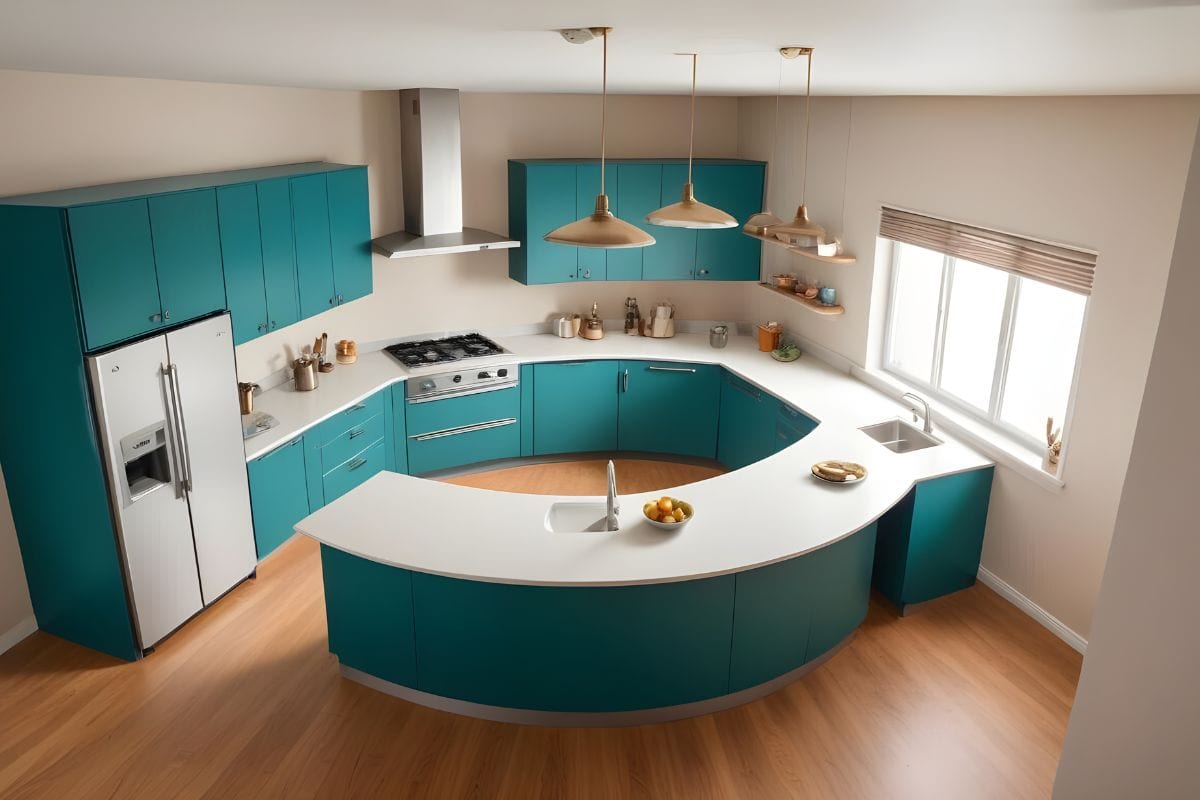
14. Try a Curved Island or Peninsula
Where a standard rectangular island would create a sharp corner that catches hips and bags, a curved or waterfall-edge island solves the problem and looks more finished. The rounded edge is also safer with young children around. Custom curved islands cost more than rectangular ones, expect to add $2,000 to $5,000 for the cabinetry and countertop fabrication, but in a tight kitchen where a standard island would feel intrusive, it is often the right call.
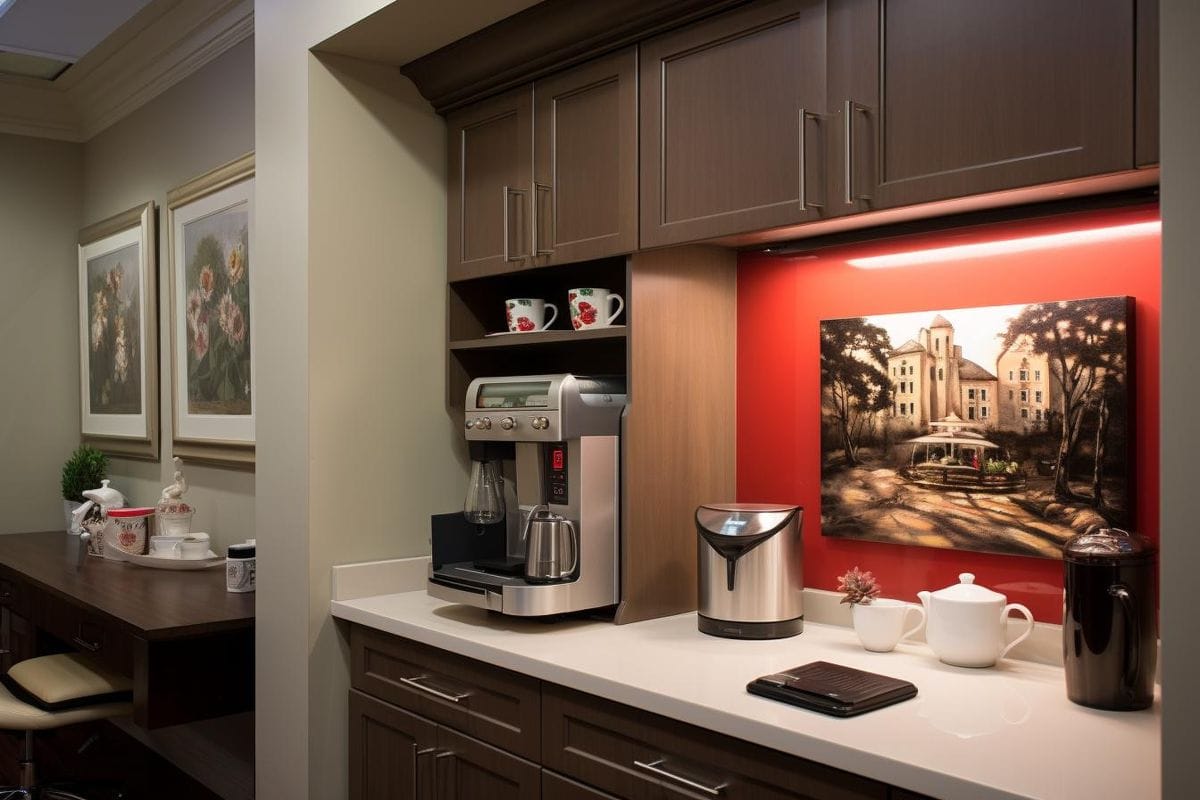
15. Create Multi-Function Zones
The coffee station is the most common version, and it works well: dedicate a 24 to 30-inch section of counter near an outlet to the coffee maker, grinder, and mugs, with a small shelf above for beans and supplies. The zone keeps the main counter clear and speeds the morning routine. The same idea works for a baking prep area or, increasingly in Northern Virginia homes, a beverage center with an undercounter wine fridge. The 2026 Houzz trends data backs this up: beverage stations are now the second most-added built-in feature behind pantry cabinets.
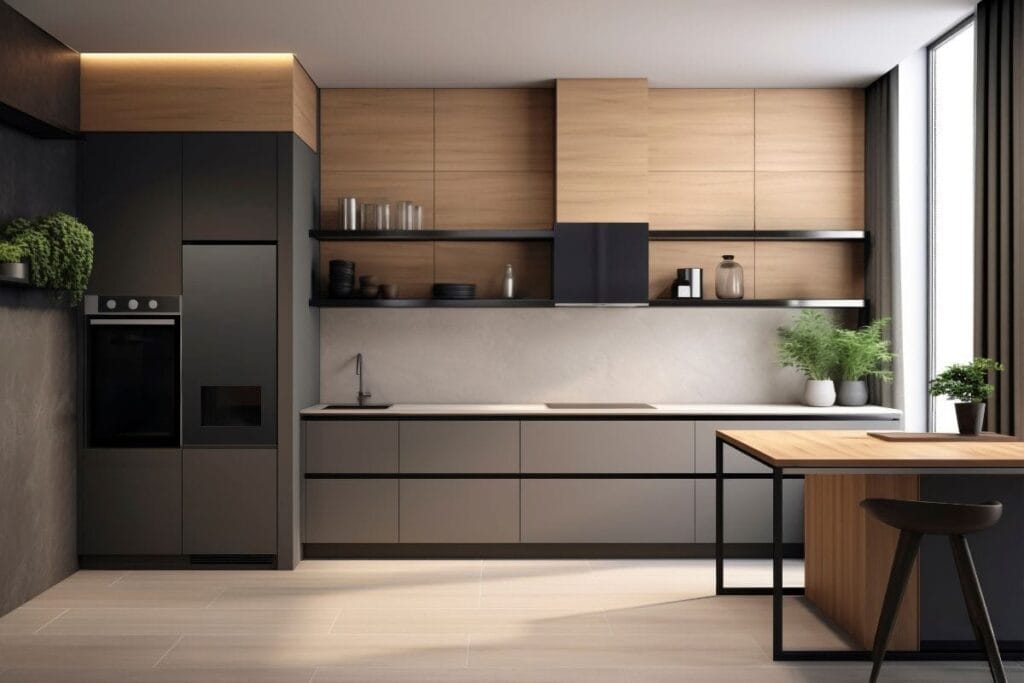
16. Install Panel and Handleless Cabinets
Push-to-open or handle-free cabinets give a small kitchen a streamlined look by removing the visual interruption of hardware across every door and drawer. They are most effective on the uppers, where hardware at eye level creates a busy field. The mechanism is either a push-to-open latch or a recessed finger pull machined into the door edge. Both work reliably and are easy to maintain. Keep hardware on the lowers and go handleless on the uppers, and you get the clean look where the kitchen is most visible while keeping the tactile pulls where you open doors with one hand full.
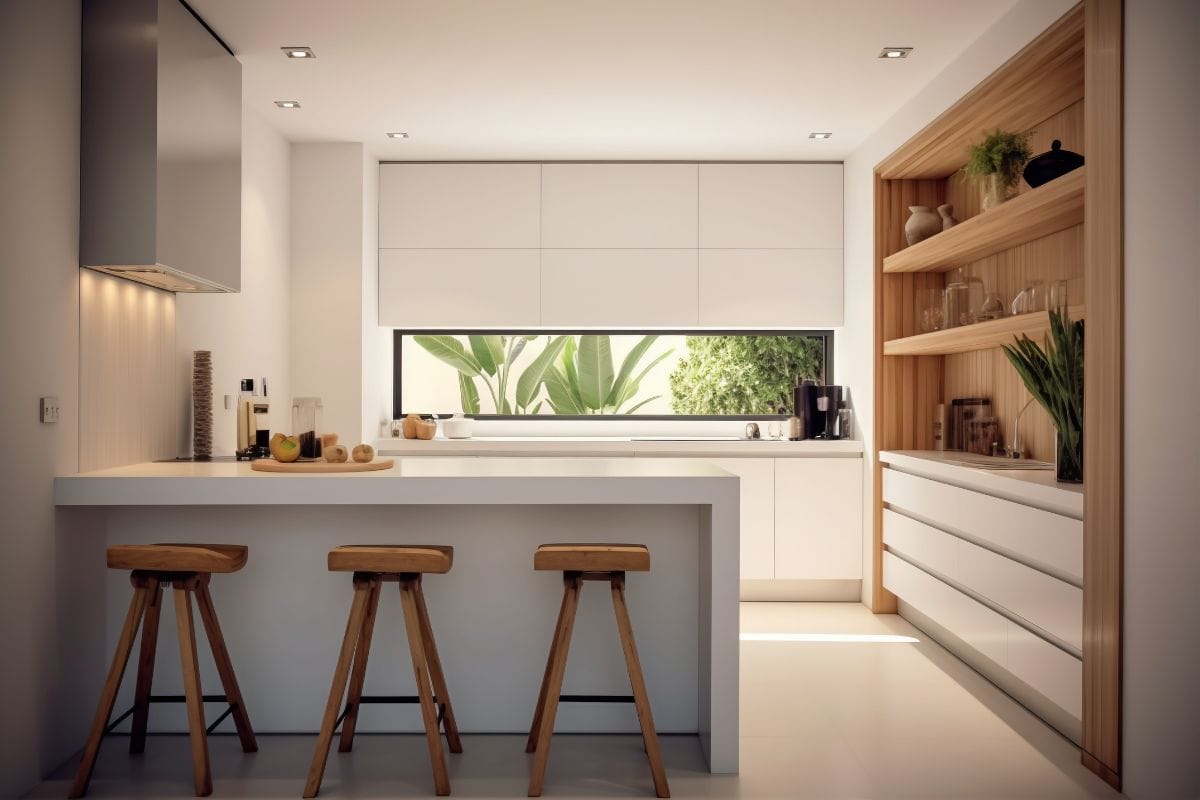
17. Choose Minimalist Countertops
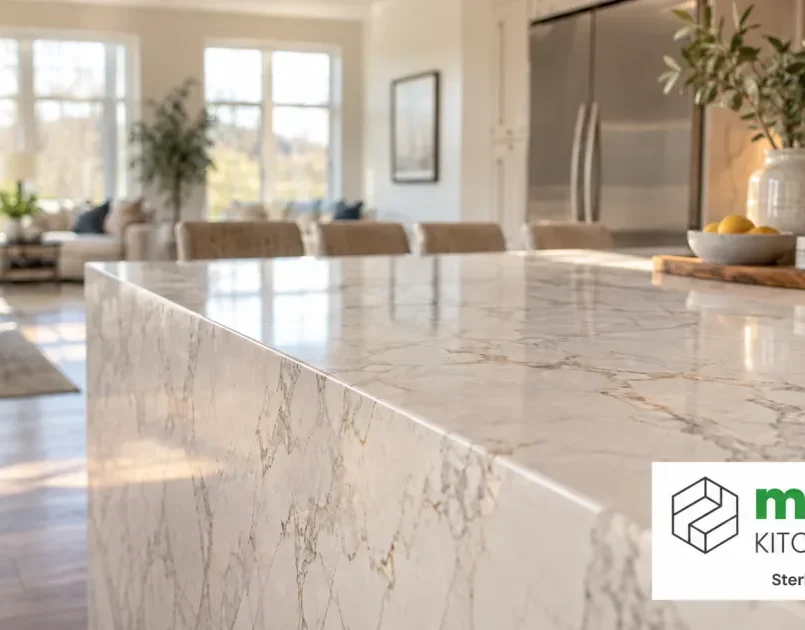
Quartz is the most popular countertop material in Northern Virginia right now for good reason: it is non-porous, needs no sealing, comes in a wide range of colors, and holds up to a working kitchen. For small kitchens, a consistent quartz color across all surfaces, including the island, creates a unified look that makes the room read larger. For a more minimal feel, an ultra-thin edge (1.2 cm, called eased or pencil edge) makes the counter look like it is floating, and the contrast with a thick waterfall island can be striking. Quartzite and marble are beautiful alternatives but ask for more upkeep, sealing once or twice a year and immediate cleanup of acidic spills.
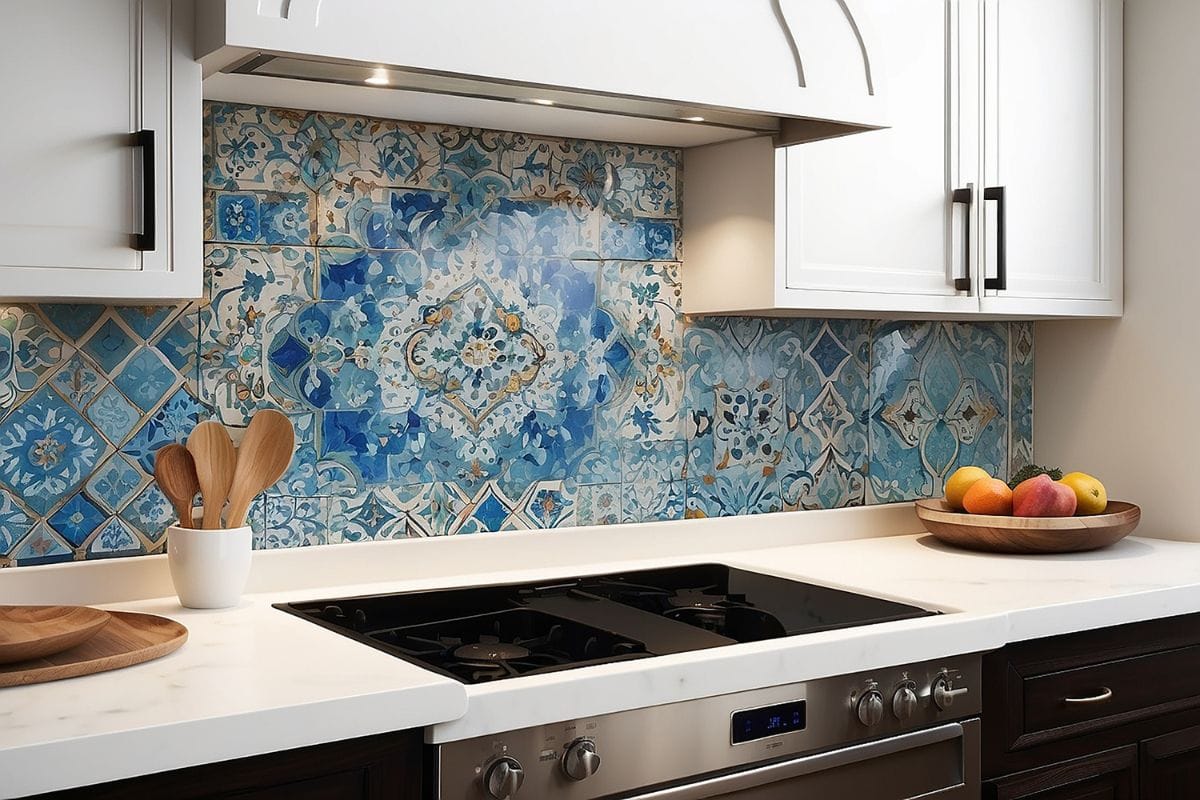
18. Use Handcrafted Ceramic Tiles
Hand-painted or handmade ceramic tiles carry slight variations in color, glaze, and texture that give a backsplash genuine depth. They look nothing like the machine-perfect tiles from a big-box store, and in a small kitchen where the backsplash is a prominent element, that difference shows. Common sizes are 3×6 subway, 4×4 square, and irregular zellige-style. Popular colors are aged white, warm cream, pale sage, and dusty terracotta. For more options, see our 2026 kitchen backsplash guide.
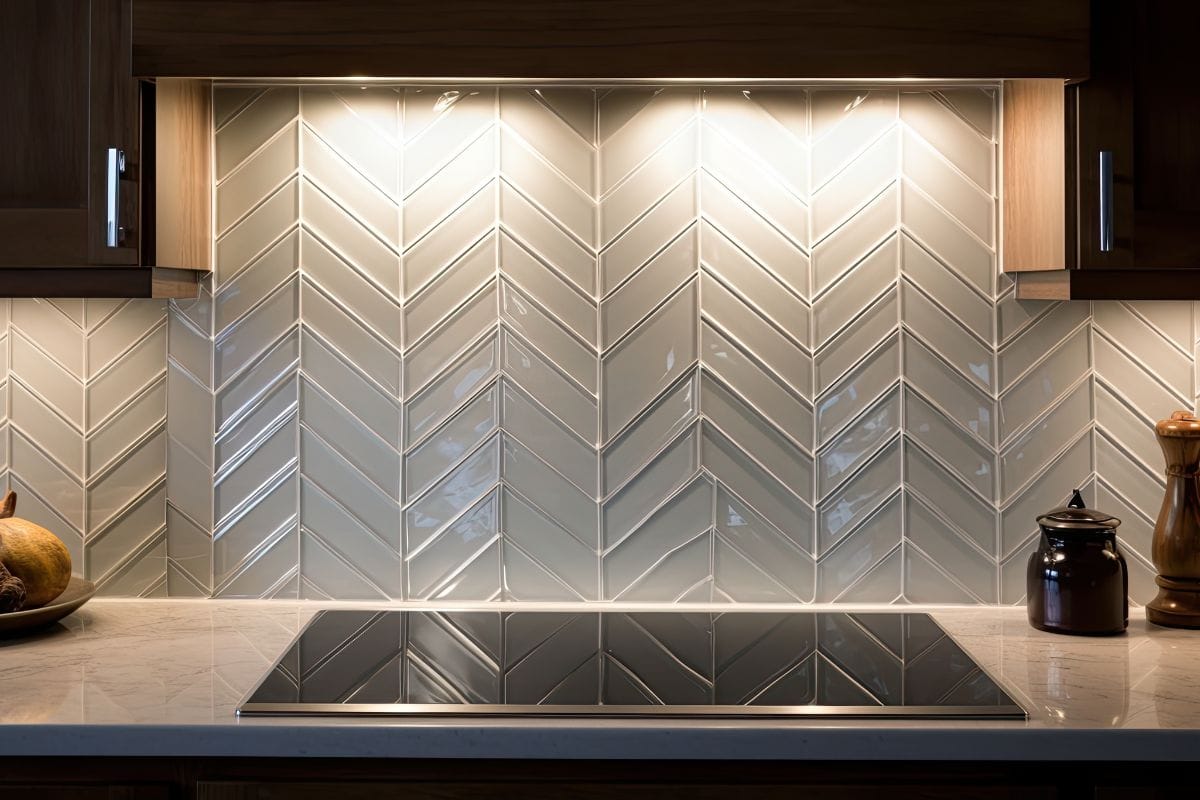
19. Try a Herringbone Pattern on the Backsplash
A herringbone pattern draws the eye horizontally, which makes a narrow kitchen appear wider. It also adds visual complexity without adding color. Even plain white subway tile in herringbone looks more considered than the same tile in a standard stack. For 2026, the pattern shows up most in white or soft gray tiles with a dark grout that makes it read clearly.
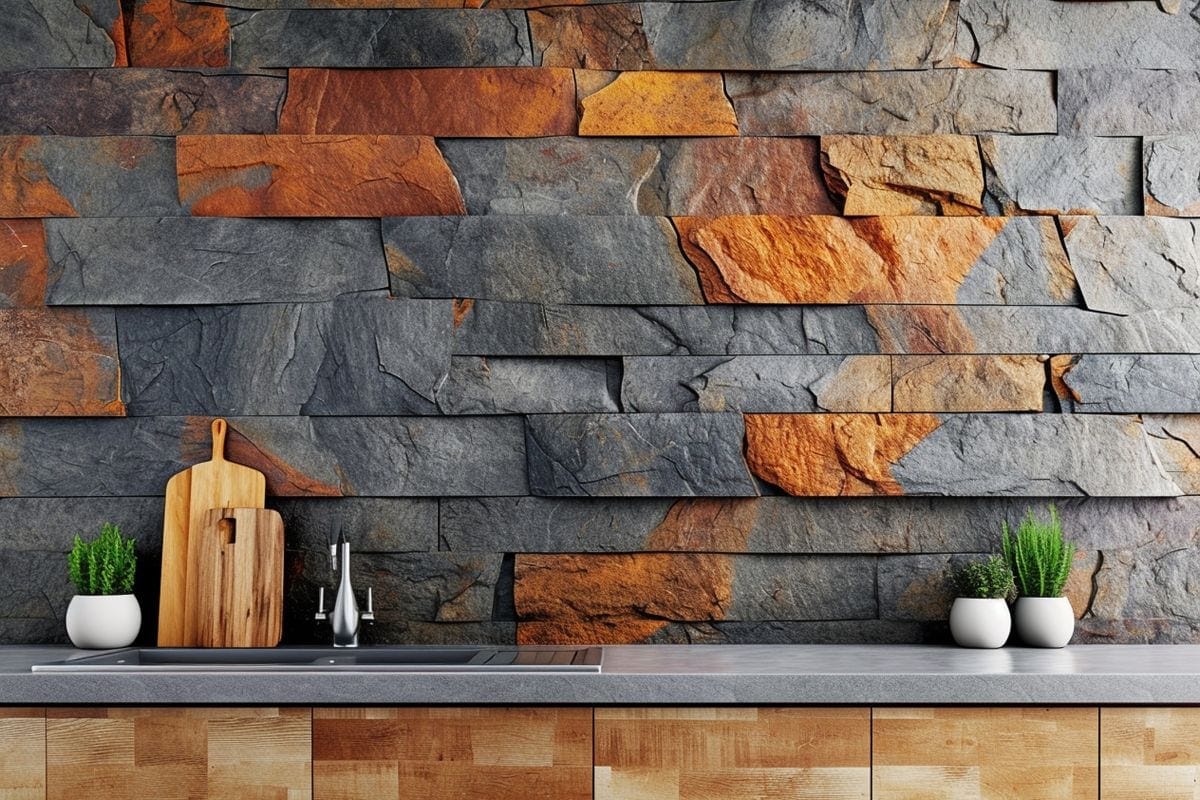
20. Use Natural Stone and 3D-Textured Tiles
Dimensional or textured tiles, whether natural stone mosaic, sculptural ceramic, or concrete-look, add depth to a flat wall. In a small kitchen, a textured backsplash on a single wall draws the eye and creates interest without overwhelming the room. Pair it with smooth, matte counters so the textures do not compete. Beige, warm gray, and off-white are the right colors for most Northern Virginia kitchens. Brighter, more saturated tones work best where there is plenty of natural light.
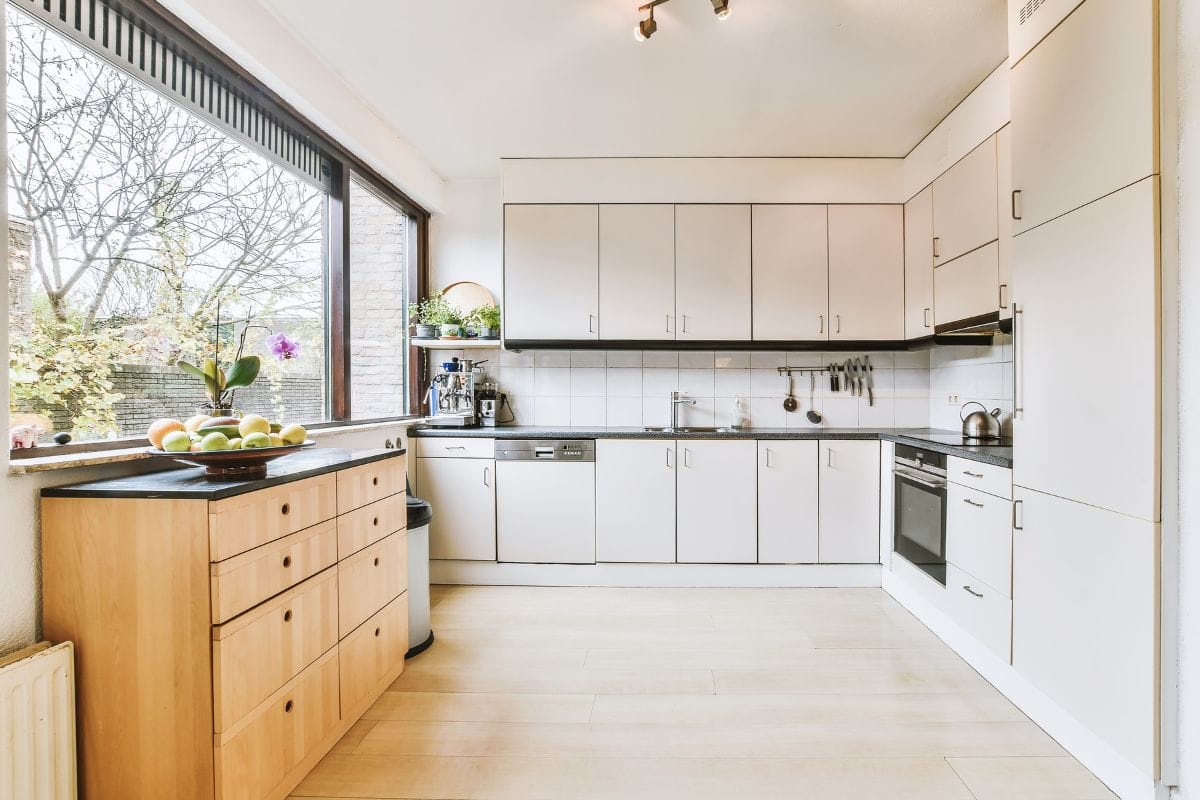
21. Go with Light-Colored Floors
Dark floors in a small kitchen are a risky choice. They look dramatic in design photography, but in a working kitchen under real light they absorb it and shrink the space. Light or medium-toned wood (natural oak, ash, or a light, warm LVP) keeps the room bright and works with more cabinet colors. Large-format tiles, 24×24 inches or bigger, suit small kitchens because fewer grout lines mean less visual fragmentation, so the floor and the room read as continuous. Warm beige or light gray in a matte or low-sheen finish is the safest choice for most NoVa homes.
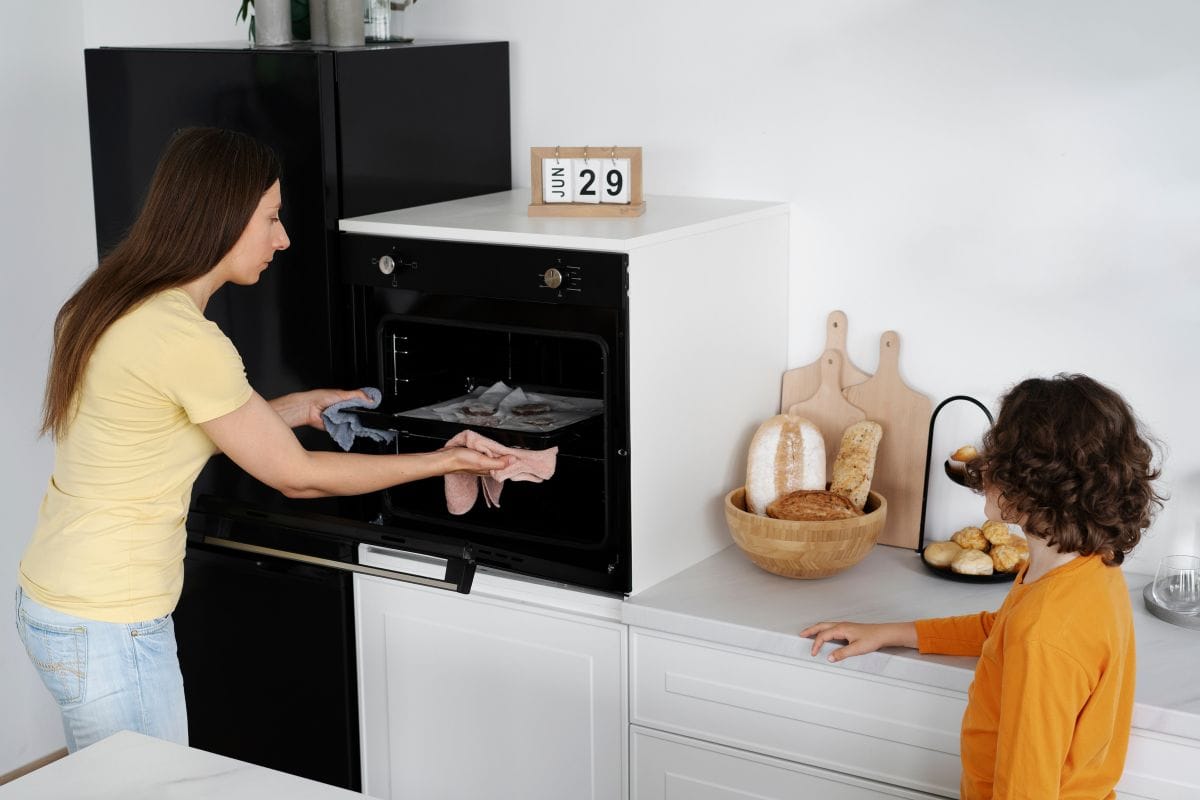
22. Choose Integrated, Panel-Ready Appliances
Panel-ready dishwashers and refrigerators accept a custom cabinet panel over the front so they blend into the run. In a small kitchen, replacing the visual break of a stainless door with a surface that matches the surrounding cabinets creates a cleaner, more spacious result. It matters most for the dishwasher, which sits at eye level when the door is open and is one of the first things you see walking in. Induction cooktops are increasingly popular in 2026 NoVa remodels too. They sit flush with the counter when off, they are faster and more efficient than gas or traditional electric, and they remove the indoor air-quality concerns of burning gas in an enclosed space. Where every counter inch counts, a flush induction surface gives you usable prep space when the burners are off.
23. Add Undercounter Refrigerator Drawers
Undercounter refrigerator drawers are a smart supplement to the main fridge in a small kitchen. Position them near the coffee station for drinks and creamers, or near the island for easy access during prep without crossing the room. They free space in the main refrigerator, cut the number of times you open the big door and lose the cold, and make a dedicated beverage zone feel intentional rather than improvised.
24. Integrate the Sink into the Countertop
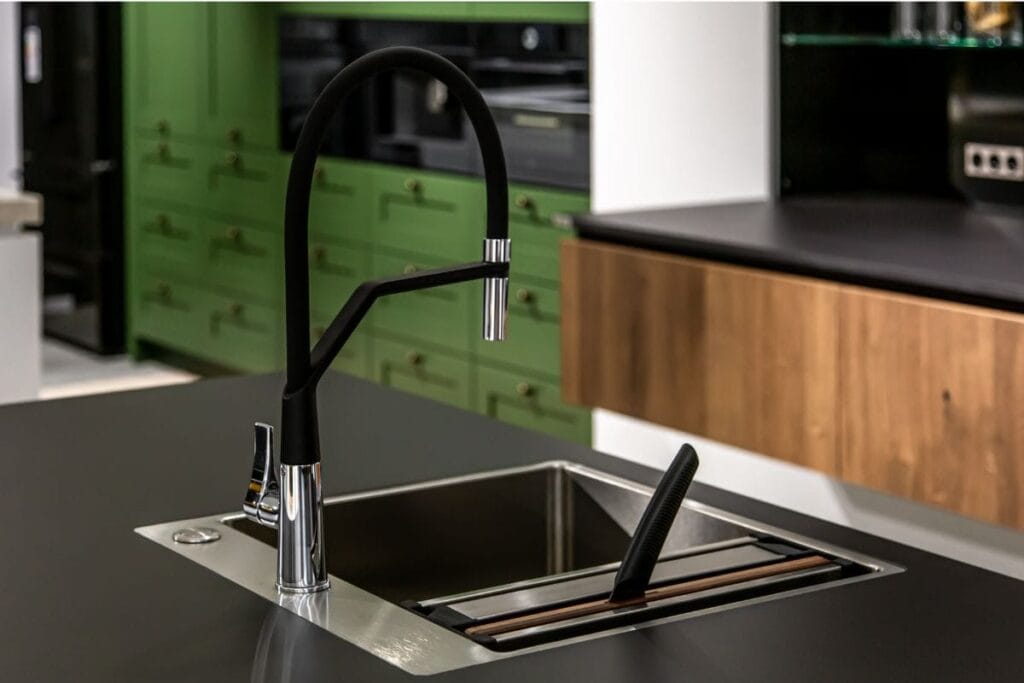
An undermount or integrated sink, mounted below the counter rather than dropped in from above, makes the surface easier to clean and looks more finished. The 2026 upgrade is the workstation sink: a deeper basin with built-in ledges that hold a fitted cutting board, drying rack, or colander. In a small kitchen with no room for a separate prep area, a workstation sink expands usable counter space considerably.
25. Try Chamfered Edge Countertops
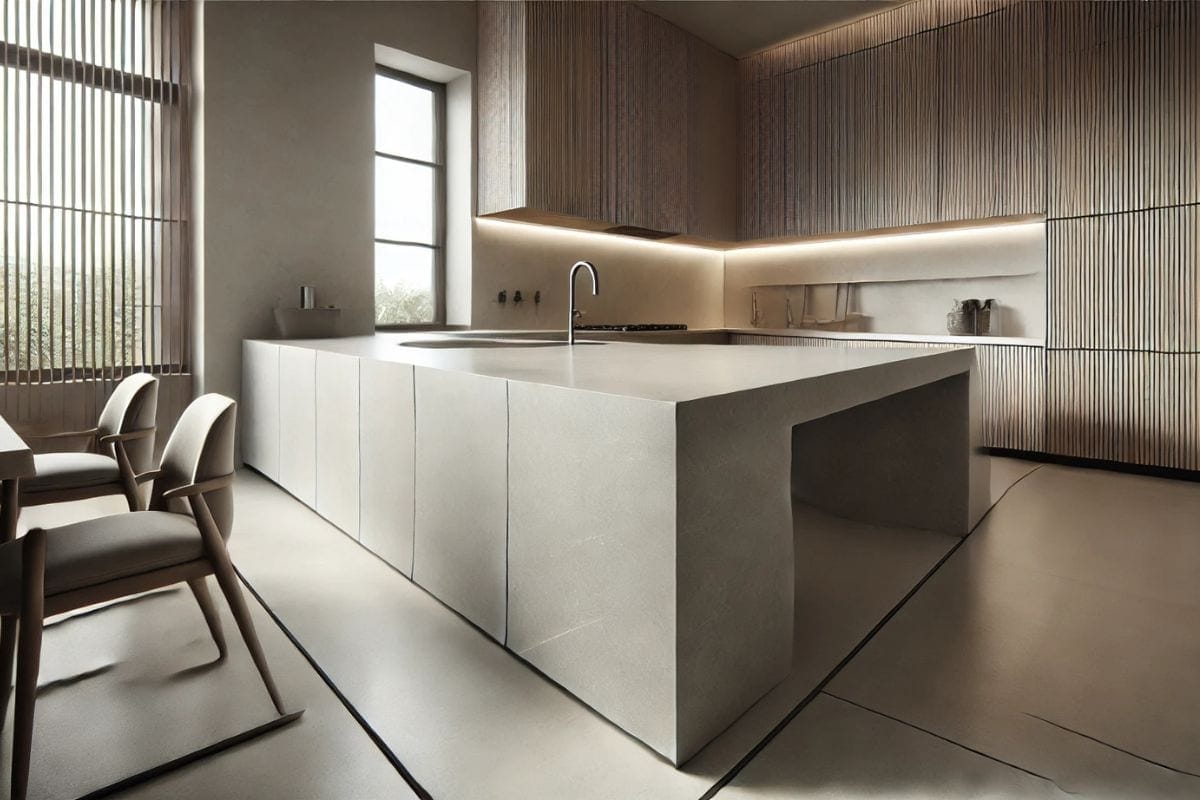
The chamfered edge, where the countertop is cut at 45 degrees and two pieces are mitered together, gives the look of a thicker, more substantial slab without the material cost of a 4-inch-thick top. It reads as more architectural than a standard eased or beveled edge and suits an industrial or minimalist kitchen. Most stone fabricators can execute it at a modest upcharge over a standard profile.
26. Install Appliance Garages and Pocket Doors
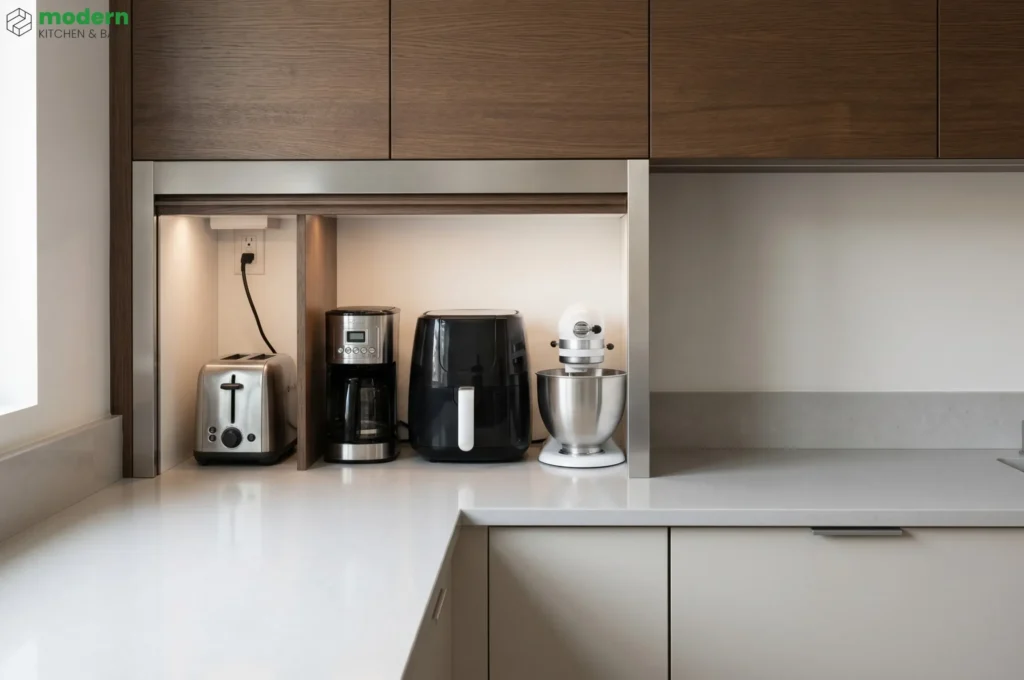
One of the strongest 2026 trends in kitchen design is concealing countertop appliances behind a dedicated garage with a lift-up or pocket door. The toaster, coffee maker, air fryer, and stand mixer all disappear when not in use, leaving the counter clear. In a small kitchen where counter space is already tight, this is a real quality-of-life upgrade. The surfaces feel larger because they are not carrying the visual weight of appliances. Garages are usually built into the section where the upper cabinet meets the counter, in the roughly 18 inches of depth there, and a good installer can add them during a cabinet refresh without replacing the whole run. Budget $800 to $2,500 depending on size and mechanism.
27. Go Two-Tone on Your Cabinets
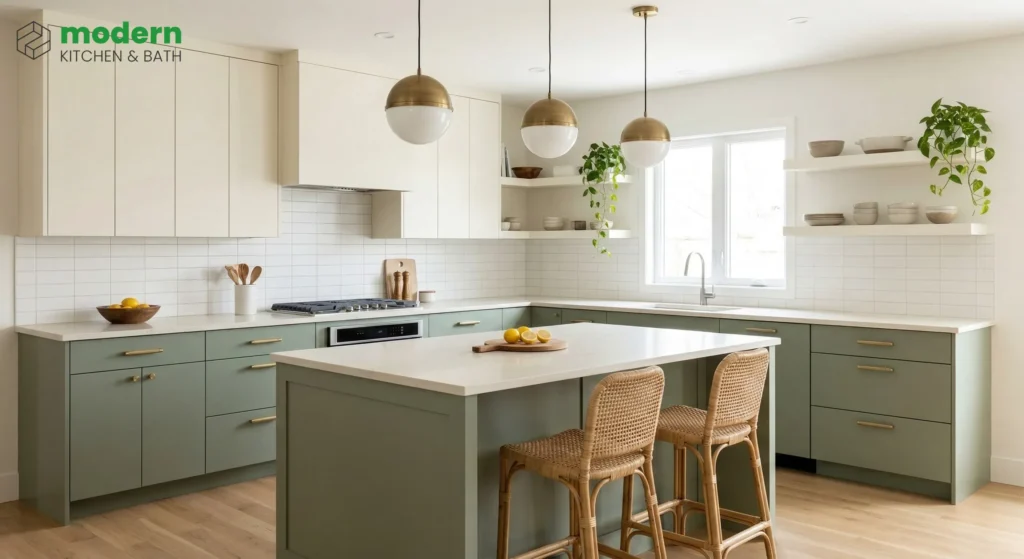
Two-tone cabinetry, different colors on uppers and lowers or on the island versus the perimeter, is one of the most popular finishes in Northern Virginia right now, and the 2026 Houzz study found contrasting cabinet colors among the top design moves nationally. It adds depth and breaks up the single-color look without adding cost. The combinations we install most are white uppers with sage, navy, or charcoal lowers, and white perimeter cabinets with a wood-toned island. In a small kitchen, two-tone works best when the uppers are lighter: the light top keeps the room open while the warmer lowers ground the design. Avoid going dark on both in a kitchen under 120 square feet, or you will spend more effort fighting the heaviness than enjoying it.
28. Add a Pantry Nook or Tall Storage Column
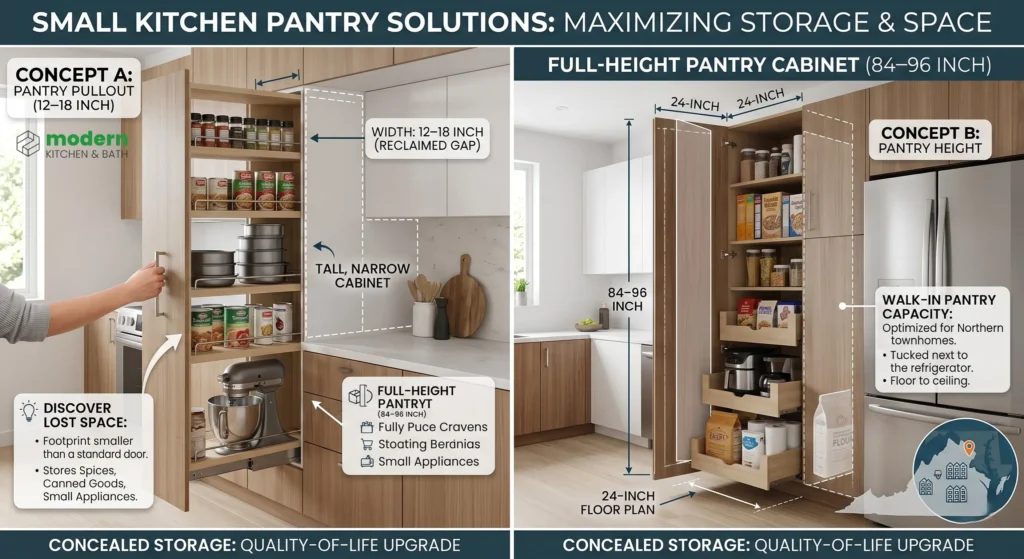
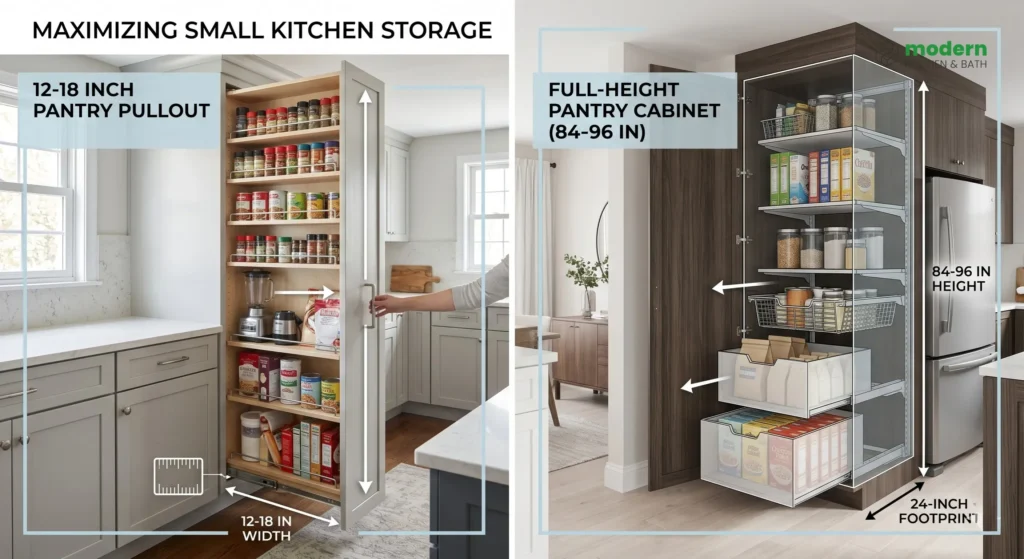
Small kitchens often trade storage for square footage. A 12 to 18-inch pantry pull-out, a tall, narrow cabinet with shelving or drawers on every level, reclaims a lot of that loss. It stores spices, canned goods, small appliances, and baking supplies in a footprint smaller than a standard cabinet door, and the pull-out means you reach everything without digging to the back. A full-height pantry cabinet, 84 to 96 inches, in a corner or beside the refrigerator adds the storage of a walk-in pantry in a 24-inch footprint. These work well in Northern Virginia townhomes where the kitchen and hallway share a wall and a built-in column can tuck against it. Pantry cabinets were the single most-added built-in feature in the 2026 Houzz study, so this is where national demand is concentrated.
29. Upgrade to an Induction Cooktop
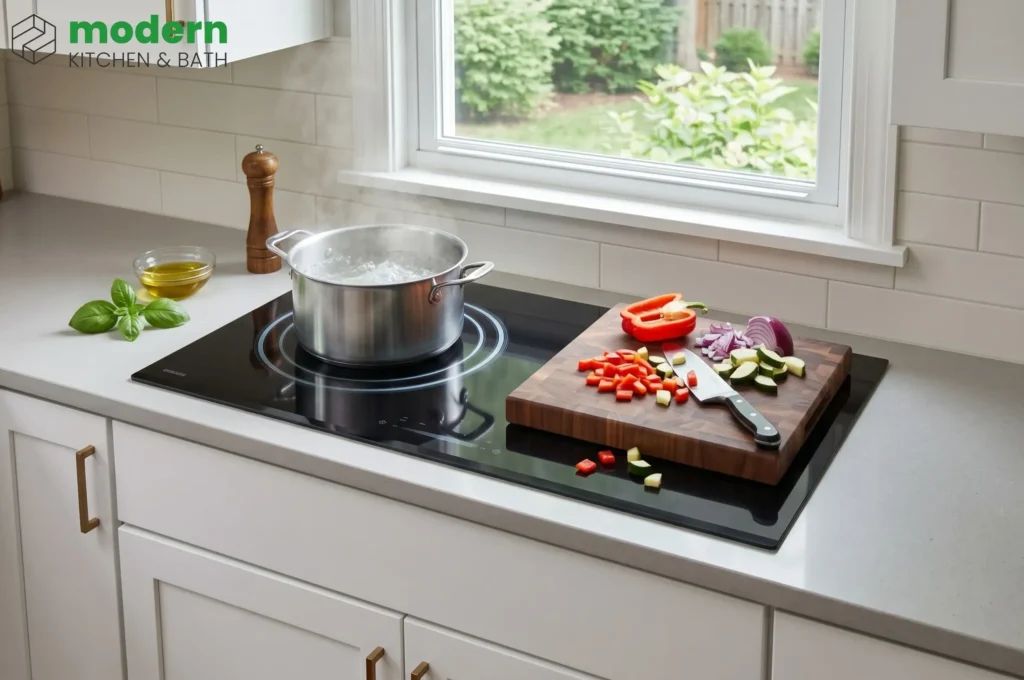
Induction is growing fast in Northern Virginia remodels, and in a small kitchen it makes particular sense. The surface sits flush with the counter, so when the burners are off it is just flat space you can use for prep. Gas and traditional electric cooktops have raised grates or coils that take up room and are awkward to work around. Beyond the counter benefit, induction heats faster than gas (a full boil in 2 to 3 minutes instead of 4 to 6), throws off less ambient heat, which helps in a small kitchen through a Virginia summer, and the flat surface wipes clean. The premium over a comparable gas cooktop is roughly $500 to $1,500, offset by lower energy costs over time. If you are weighing appliances this year, factor in the projected 18% to 19% tariff-driven price rise and buy earlier rather than later.
30. Add Toe-Kick Drawers for Hidden Storage
The toe-kick, the recessed space at the base of the lowers, usually 3 to 4 inches high and the full width of the run, is almost always dead space. Pull-out toe-kick drawers turn it into storage. The capacity is real: a standard 30-inch-wide toe-kick drawer holds a full set of baking sheets, platters, or large lids that are awkward to store anywhere else. Installation modifies the toe-kick but does not require replacing the cabinets. For kitchens where every cubic inch counts, toe-kick drawers are a smart final move once the bigger decisions are made. Nobody walks in and notices them, and that is the point. They quietly solve one of the most common storage complaints we hear from small-kitchen owners.
Small Kitchen Remodel Tips Specific to Northern Virginia Townhomes
NoVa townhome kitchens carry specific constraints worth knowing before you plan. Most were built between 1985 and 2010 in planned communities across Loudoun, Fairfax, and Prince William counties, and they share a few traits that affect what is practical to change.
The Galley Ceiling Constraint
Many Northern Virginia townhome kitchens have a soffit, a boxed-out section of ceiling above the upper cabinets, installed during construction to cover ductwork or electrical runs. Removing it opens the kitchen, but it means rerouting whatever is inside. Before planning to extend cabinets to the ceiling, have a contractor assess the soffit first. Rerouting ductwork runs $800 to $2,500, and the visual payoff is significant. It is one of the highest-return structural changes in a townhome kitchen renovation.
The Open-Plan Question
Removing the wall between the kitchen and the living or dining area is the most common structural request we get for Northern Virginia townhomes. Most of these walls are not load-bearing, they are partition walls that come out cleanly. The work involves drywall, moving outlets and switches, and usually some flooring repair where the wall sat. Budget $4,000 to $10,000 for a typical townhome wall removal. The result is a different kitchen: brighter, larger-feeling, better connected to the living space.
Permit Reality in Fairfax, Loudoun, and Arlington
Any work involving electrical, plumbing, or structural change requires a permit in Northern Virginia jurisdictions. This is not optional. Unpermitted work creates problems when you sell, and Fairfax County, Loudoun County, and Arlington all run real-estate disclosure reviews. Permit fees for kitchen projects in the region generally fall between $500 and $2,500, and a licensed contractor (which Modern Kitchen and Home Solutions is) handles that process as part of the project. If a contractor tells you permits are not necessary for the work you are describing, treat it as a red flag.
What a Small Kitchen Remodel Costs and How Long It Takes in Northern Virginia
Two questions come up on every first call: what will it cost, and how long will my kitchen be out of commission. Both are fair, and both sit behind the most common remodeling complaints in Northern Virginia: budget surprises and timelines that slip. We cannot quote your kitchen from a blog post, but we can give you honest planning ranges built on current 2026 Northern Virginia pricing, then show you what moves the numbers. Read everything below as a starting estimate, not a fixed price and not a promise. Every kitchen is different.
These are planning estimates, not a quote or a commitment. Your actual cost and timeline depend on your kitchen’s size, its condition behind the walls, and the materials you choose. The only way to get exact numbers is a free in-home estimate, and that carries no obligation.
Budget estimate by kitchen size
In the 2026 Northern Virginia market, cost tracks square footage before anything else. Small kitchens tend to land in these ranges. For the full breakdown, see our NoVa kitchen pricing guide.
| Kitchen size | Estimated cost (NoVa, 2026) |
|---|---|
| Compact, about 100 sq ft (10×10) | $15,000–$45,000 (est.) |
| Medium, about 144 sq ft (12×12) | $25,000–$50,000 (est.) |
Figured per square foot, Northern Virginia runs about $150 to $250, roughly 10 to 20 percent above national averages, and 15 to 25 percent higher in McLean, Great Falls, and North Arlington. Where you land inside the range comes down to scope: a cosmetic refresh (paint or reface, new hardware, counters, lighting) sits at the low end, a mid-range remodel with new semi-custom cabinets and quartz lands in the middle, and a full remodel that changes the layout pushes toward the top. Cabinets alone are 25 to 35 percent of the budget, the single largest line item.
Timeline estimate
Timelines are where homeowners get caught out, because most people count only the construction weeks and forget the lead time in front of them. Here is the honest breakdown, all estimates:
| Stage | Estimate |
|---|---|
| Cosmetic refresh (construction) | About 2 to 4 weeks |
| Mid-range or full small remodel (construction) | About 6 to 8 weeks |
| Permits (before work starts) | About 2 to 6 weeks |
| Cabinet lead time | Stock about 3 weeks; semi-custom 4 to 8 weeks; custom 8 to 12+ weeks |
Add it up and a small kitchen usually runs about 2 to 4 months from first measurement to the last cabinet door. The cabinets, not the labor, are what set the calendar most of the time, which is why we confirm your cabinet delivery date before any demolition starts.
Why the estimate changes from kitchen to kitchen
No two NoVa kitchens price out the same, and most of the surprises are predictable. Here is what actually moves your number:
Layout changes. Keeping the sink, stove, and fridge where they are holds the budget down. Moving plumbing or electrical typically adds $5,000 to $15,000.
Cabinet line and lead time. Stock cabinets arrive in about three weeks, semi-custom in four to eight, and custom in eight to twelve or more. Cabinets drive both the budget and the schedule, so they are the first decision, not the last.
What is behind the walls. Townhomes built between 1985 and 2010 often hide a soffit over the cabinets, dated wiring, or a wall someone wants opened up. We cannot price that honestly until we see it, which is exactly why an in-home estimate beats an online guess.
Permits. Fairfax County charges a base fee plus a per-fixture charge, and those fees rose 12.5 percent in July 2025. Arlington takes a 50 percent non-refundable filing fee upfront, and Loudoun runs about one percent of construction cost plus a plan-review fee. Inspections add calendar days on top.
Materials and 2026 pricing. Appliance prices are projected to climb about 18 to 19 percent this year on tariffs, so locking in early protects the budget. Quartz runs about $80 to $140 per square foot installed, well under marble. We put your real selections in a written estimate up front, so there is no bait and switch later.
Real Northern Virginia kitchens, real range
We have remodeled kitchens across Arlington, Falls Church, Fairfax, Vienna, Oakton, Clifton, Merrifield, Centreville, Lorton, and Ashburn. Most were full open-concept kitchens, larger and pricier than a typical small kitchen. Across that work, construction generally runs about 6 to 12 weeks, though the exact timeline depends on the size of the kitchen, the cabinets you choose, and what we find once demolition starts. A compact galley or L-shaped kitchen sits at the faster, lower-cost end of what we do, which is why the ranges above start where they do.
Book a free in-home estimate. We measure, talk through your options, and hand you a written, line-item estimate. No obligation, no pressure, and the figures above stay estimates until we have seen your space.
Book a free, no-obligation estimate →Frequently Asked Questions About Small Kitchen Remodel Ideas
How do I redesign my small kitchen?
Start with layout before you spend a dollar on finishes. In small kitchens, the biggest gains come from opening up the upper cabinets, adding under-cabinet lighting to brighten work areas, and choosing light or reflective surfaces to push the walls back. If the layout is inefficient, the fridge and stove on opposite walls, or no work surface near the range, a contractor can often reconfigure plumbing and electrical without a full gut. In Northern Virginia townhomes, moving from a closed galley to an L-shaped or open-plan layout is one of the highest-value upgrades we do.
What is the best kitchen layout for a small kitchen?
For kitchens under 150 square feet, L-shaped and galley layouts work well. The L-shape gives two walls of work surface and keeps the work triangle (sink, stove, fridge) tight. The galley, two parallel runs of cabinetry, is the most efficient layout per square foot and suits narrow townhome kitchens. A bar-height peninsula added to either layout doubles as prep space, storage, and casual seating without eating into the walkway below the 42-inch minimum.
How much does a small kitchen remodel cost in Northern Virginia?
In the 2026 market, cost tracks square footage first. A compact kitchen around 100 square feet (a 10×10) runs about $15,000 to $45,000, and a medium kitchen up to roughly 144 square feet (a 12×12) runs about $25,000 to $50,000, figured at $150 to $250 per square foot. Where you land depends on scope: a cosmetic refresh sits at the low end, a full remodel with a layout change at the top. Northern Virginia runs about 10% to 20% above national averages, and 15% to 25% higher in areas like McLean and Great Falls.
How long does a small kitchen remodel take in Northern Virginia?
It depends on scope, so treat these as estimates rather than a fixed schedule, and remember the construction weeks are only part of the calendar. A cosmetic refresh is about 2 to 4 weeks of construction, and a mid-range or full small-kitchen remodel about 6 to 8 weeks. In front of that, plan 2 to 6 weeks for permits and 4 to 8 weeks of cabinet lead time for semi-custom (stock is faster, custom slower). Added up, a small kitchen usually runs about 2 to 4 months from first measurement to the last cabinet door. Cabinets are what set the schedule most often, so we confirm the delivery date before any demolition. A free in-home estimate gives you a realistic schedule for your kitchen with no obligation.
Can you renovate a kitchen yourself?
Some cosmetic work is manageable as DIY: painting cabinets, swapping hardware, installing a backsplash, adding open shelving. Anything involving plumbing, electrical, structural change, or permit-required work should go to a licensed contractor. In Fairfax County, Loudoun County, and Arlington, permits are required for any electrical or plumbing work, and unpermitted work creates disclosure problems when you sell.
What is the biggest expense in a kitchen remodel?
Cabinetry is consistently the biggest line item, about 25% to 35% of a kitchen remodel budget. On a $40,000 small kitchen, that is roughly $10,000 to $14,000 in cabinets alone. Countertops are next, usually $3,000 to $8,000 for quartz in a small kitchen at about $80 to $140 per square foot installed. Labor and installation typically add another 20% to 25% of the total in Northern Virginia, where electrician and plumber rates run well above the national average.
Can you renovate a kitchen for $5,000?
In Northern Virginia, $5,000 covers targeted cosmetic updates: cabinet painting ($1,500 to $2,500), new hardware ($300 to $700), a basic tile backsplash ($800 to $1,500), and new light fixtures ($400 to $800). It will not stretch to new cabinets, countertops, or appliances. For bigger change on a tighter budget, cabinet refacing, replacing just the doors and drawer fronts, typically runs $4,000 to $9,000 for a small kitchen and delivers 70% to 80% of the visual impact of a full cabinet replacement.
How do you make a small kitchen look classy?
Three changes move the needle fastest: lighting, hardware, and countertops. Under-cabinet LED lighting makes even dated cabinets look intentional. New pulls and knobs are the cheapest modernization available, a full set runs $150 to $400 in materials. Quartz countertops in a neutral with some movement lift the whole space. Beyond that, clearing the counter costs nothing and has an outsized effect. Every object that earns its place should be used daily or look deliberate.
Our team at Modern Kitchen and Home Solutions specializes in kitchen renovations throughout Northern Virginia, including Sterling, Ashburn, Fairfax, Reston, Leesburg, and Herndon. Start with a free consultation. We will assess your space, walk you through your options, and give you a clear estimate with no pressure.
Get a free consultation →47100 Community Plaza #132, Sterling, VA 20164 | (571) 325-2454
Found this helpful? Make us your go-to source on Google
If our content has been useful, you can tell Google to show more of it when you search. Click below, then check the box next to Modern Kitchen and Bath on the page that opens. It takes about five seconds.

You'll need to be signed in to your Google account. One click, then tick the box next to our name.