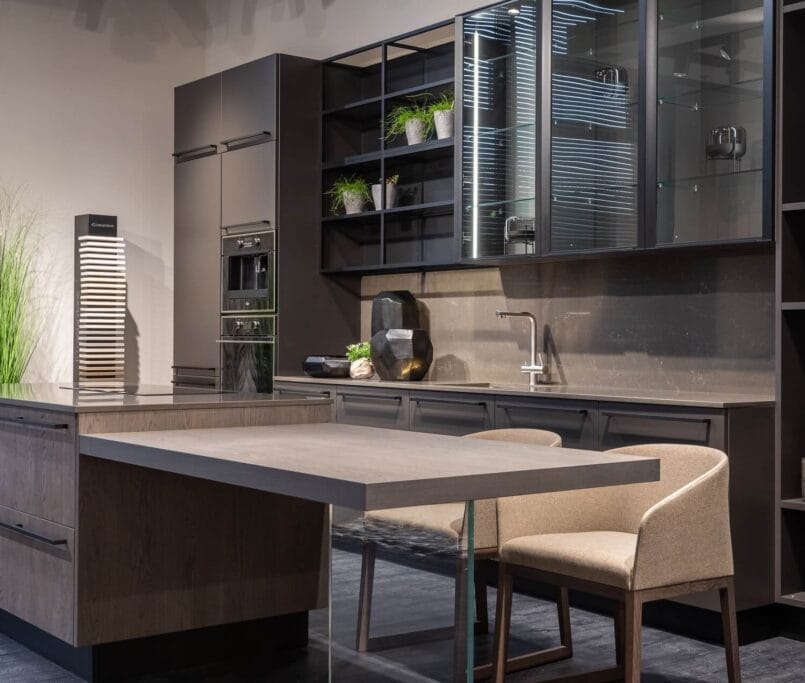
Types of kitchen countertops play an important role in kitchen design in achieving aesthetics and functionality. At this point, countertop types of different materials such as granite, marble, quartz, wood, laminate, and concrete offer options suitable for every kitchen style and need. You can get information about the products that appeal to you by examining the 21 kitchen countertop types suggestions below:
Your kitchen countertop is one of the hardest-working surfaces in your home — and one of the most visible. It anchors your kitchen’s design, handles everything from meal prep to homework sessions, and significantly influences your home’s resale value. With material options ranging from natural stone to engineered composites, the right choice depends on how you actually use your kitchen, your maintenance tolerance, your design aesthetic, and your budget.
This guide covers 17 countertop materials in detail, with accurate 2026 pricing, durability ratings, maintenance requirements, and real-world advice drawn from homeowner forums, contractor insights, and industry reports. Whether you’re planning a full kitchen remodel or simply upgrading your surfaces, this resource will help you make a confident, informed decision.
21 Types of Kitchen Countertops
The complete cost, durability & maintenance comparison guide
Updated for 2026 • Modern Kitchen & Home Solutions
Installed Cost Per Sq Ft — All 21 Materials
Top 6 Most Popular Materials
No sealingStain-proofNon-porousNot heat-proof
Heat-proofUnique slabsHigh resaleNeeds sealing
Timeless beautyStains easilyHigh maintenance
Ultra-hardHeat-safeNatural veiningExpensive
Scratch-proofUV-stableZero maintenancePremium price
Most affordableNo sealingHuge varietyNot heat-safe
2026: What’s Out vs. What’s Timeless
• High-gloss polished finishes
• Cool gray color schemes
• Dark gray heavy-veined marble
• Pixelated faux-veined quartz
• Neutral-tone granite
• Quartzite (Taj Mahal, Calacatta)
• Soapstone
• Quartz in soft warm neutrals
Countertop Colors Trending in 2026
How Countertops Fit Into Your Total Remodel Budget
kitchen-remodeling-cost
Durability & Maintenance Scorecard
| Material | Heat | Scratch | Stain | Sealing |
|---|---|---|---|---|
| Quartz | ~ | ✓ | ✓ | None |
| Granite | ✓ | ✓ | ~ | Yearly |
| Marble | ✓ | ✗ | ✗ | 3–6 mo |
| Quartzite | ✓ | ✓ | ~ | 1–2 yr |
| Sintered Stone | ✓ | ✓ | ✓ | None |
| Lava Stone | ✓ | ✓ | ✓ | None |
| Concrete | ✓ | ~ | ✗ | Regular |
| Soapstone | ✓ | ✗ | ✓ | Optional |
| Stainless Steel | ✓ | ✗ | ✓ | None |
| Butcher Block | ✗ | ✗ | ✗ | Monthly Oil |
| Laminate | ✗ | ✗ | ✓ | None |
| Vinyl | ✗ | ✗ | ~ | None |
Ready to Choose Your Perfect Countertop?
Visit our Sterling, VA showroom for full slabs, expert advice & a free estimate.
Modern Kitchen & Home Solutions
(571) 325-2454 • modernkitchenva.com
Full guide: modernkitchenva.com/21-types-of-kitchen-countertops
Key Factors to Evaluate Before Choosing a Countertop
Durability: How well does the material resist scratches, heat, stains, and impact? Households with children or heavy cooking need tougher surfaces.
Maintenance: Does it need sealing, oiling, or special cleaners? Quartz and sintered stone need almost nothing; marble and concrete require regular attention.
Aesthetics: Does the material complement your cabinet color, flooring, backsplash, and overall design vision? Always view full slabs or large samples in your kitchen’s lighting before committing.
Budget: Consider total installed cost (material + fabrication + labor), not just per-square-foot material price. Budget for edge profiles, cutouts, and demolition of existing counters. Countertops typically represent 10–15% of a full kitchen remodel budget, so understanding overall kitchen remodeling cost helps you allocate wisely across cabinets, appliances, flooring, and surfaces.
Resale Value: Granite and quartz consistently rank highest for resale appeal. Avoid overly niche or trendy materials if you plan to sell within 5–10 years.
Lifestyle Match: Match the material to how you live. Heavy home cooks benefit from heat-resistant granite. Busy families thrive with low-maintenance quartz. Design enthusiasts may embrace marble’s patina.
How Countertop Costs Fit Into Your Overall Kitchen Remodeling Budget
Countertops are a major visual and functional element of any kitchen, but they represent just one piece of the total kitchen remodeling cost. According to 2026 industry data, countertop materials and installation typically account for 10–15% of your overall remodel budget. For a mid-range kitchen renovation averaging $27,000–$75,000 nationally, that translates to roughly $2,700–$11,250 allocated to countertops alone.
In high-cost markets like Northern Virginia, where the average kitchen remodel runs approximately $75,000 (about 40% above the national average), countertop budgets scale accordingly. Premium materials like quartzite or marble on a large island can easily reach $8,000–$15,000+ for material and fabrication alone.
When planning your countertop investment, it’s essential to understand how the total kitchen remodeling cost breaks down across all components — cabinets (25–35%), appliances (15–20%), labor (35–50%), flooring, backsplash, plumbing, electrical, and countertops. For a comprehensive 2026 breakdown of kitchen remodeling costs by project scope, kitchen size, and region, we recommend the detailed kitchen remodel cost guide, which covers everything from minor cosmetic refreshes to full luxury gut renovations with real project data.
Smart budget allocation tips for countertops within a full remodel: if countertops are your top design priority, consider saving on cabinetry with refacing (\$4,000–\$9,000 vs. \$15,000+ for full replacement) and redirecting those savings toward a premium surface. Conversely, if cabinetry or appliance upgrades take priority, laminate or mid-range quartz can deliver excellent aesthetics at 50–70% less than natural stone.
Kitchen Countertop Comparison at a Glance
Use this quick-reference table to compare the most popular countertop materials across key performance dimensions.
| Material | Cost/SqFt | Durability | Maintenance | Resale Value | Lifespan |
| Granite | $80–$200 | Very High | Moderate | Excellent | 30+ years |
| Quartz | $70–$200 | Very High | Very Low | Excellent | 25–50 years |
| Marble | $100–$250 | Moderate | High | Excellent | 20+ years |
| Quartzite | $80–$210 | Very High | Moderate | Excellent | 30+ years |
| Laminate | $20–$60 | Low | Very Low | Low | 10–15 years |
| Butcher Block | $55–$200 | Moderate | High | Good | 10–20 years |
| Solid Surface | $60–$130 | Moderate | Low | Good | 15–25 years |
| Concrete | $70–$150 | High | High | Good | 25+ years |
| Stainless Steel | $80–$225 | Very High | Low | Good | 30+ years |
| Sintered Stone | $70–$175 | Extremely High | Very Low | Excellent | 25+ years |
| Porcelain Slab | $60–$150 | Very High | Very Low | Good | 25+ years |
| Limestone | $60–$130 | Moderate | High | Good | 20+ years |
| Lava Stone | $150–$300 | Very High | Very Low | Excellent | 30+ years |
| Vinyl | $15–$40 | Low | Very Low | Low | 5–10 years |
| Glass Ceramic | $80–$160 | High | Very Low | Good | 20+ years |
Detailed Countertop Material Profiles
Below you’ll find in-depth profiles for each countertop material, including real-world pricing, maintenance details, and honest pros and cons based on industry data and homeowner experiences.
Granite Kitchen Countertops
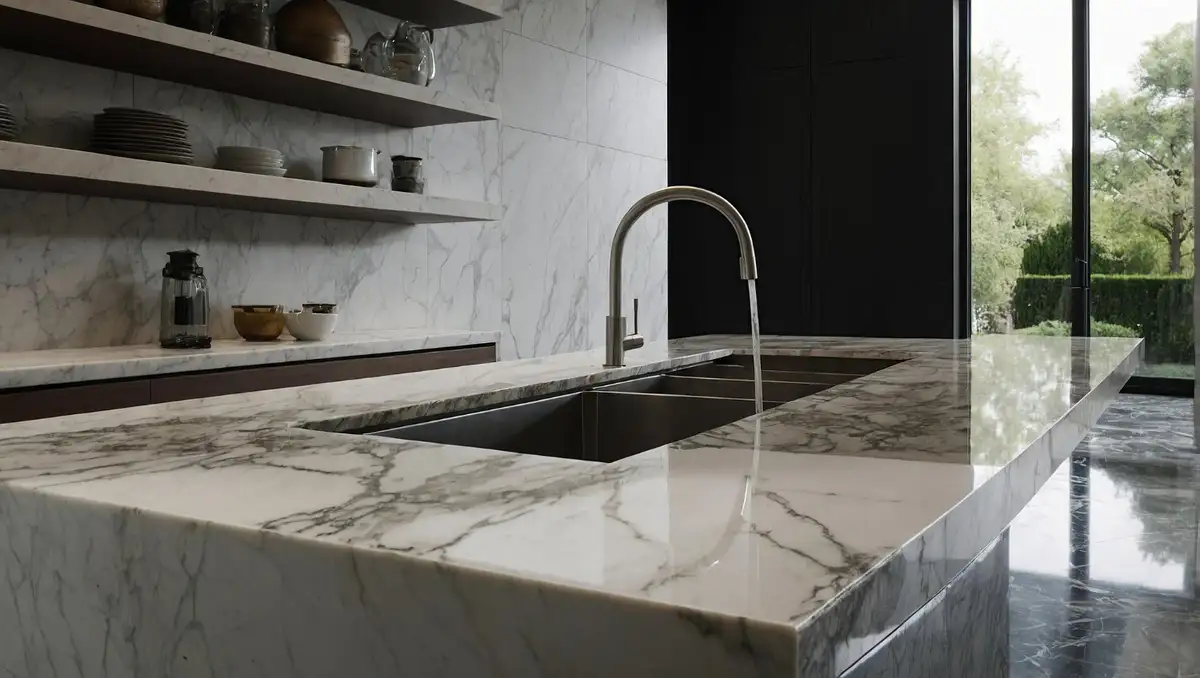
Granite remains one of the most sought-after natural stone countertop materials, valued for its one-of-a-kind patterns, exceptional hardness, and proven longevity. Each slab is geologically unique, meaning no two kitchens will ever look the same. Granite handles heat from pots and pans with ease, and when properly sealed once a year, it resists stains and bacterial growth. It pairs beautifully with both traditional and transitional kitchen designs, and real estate experts consistently rank it as a top material for boosting resale value.
| Cost | $80–$200 per sq ft installed |
| Durability | Extremely high — heat-proof, scratch-resistant, 30+ year lifespan |
| Maintenance | Requires annual sealing; clean with pH-neutral stone cleaner |
| Best For | Heavy-cooking households, homeowners seeking natural beauty and long-term value |
✅ Pros
- Outstanding heat resistance — safe for hot pots and pans
- Every slab is unique with natural veining and patterns
- Adds significant resale value to the home
- Lasts 30+ years with proper care
❌ Cons
- Porous surface needs annual sealing to prevent stains
- Heavy slabs may require reinforced cabinetry
- Visible seams on larger countertop runs
- Premium colors and exotic patterns are expensive
Quartz Countertops (Engineered Stone)
Quartz countertops are engineered by combining roughly 90–94% ground natural quartz crystals with polymer resins and pigments. This manufacturing process produces a non-porous, consistent surface that never needs sealing. Consumer Reports rated quartz as the best overall countertop material in 2025, citing excellent stain resistance and scratch durability. The design options are vast, ranging from solid contemporary colors to remarkably realistic marble and granite mimics. It’s the top choice for busy families who want a beautiful surface without ongoing maintenance.
| Cost | $70–$200 per sq ft installed |
| Durability | Very high — scratch-resistant, stain-proof, non-porous; 25–50 year lifespan |
| Maintenance | Near zero — wipe with mild soap and water; no sealing required |
| Best For | Busy families, low-maintenance lifestyles, modern and transitional kitchens |
✅ Pros
- Non-porous — resists stains, bacteria, and moisture without sealing
- Massive range of colors and patterns including realistic marble looks
- Consistent appearance — what you see in the sample is what you get
- Rated #1 by Consumer Reports for everyday performance
❌ Cons
- Not as heat-resistant as granite — trivets recommended for hot cookware
- Heavy slabs require professional installation
- Can show seams on long countertop runs
- Higher-end options approach natural stone pricing
Marble Kitchen Countertops
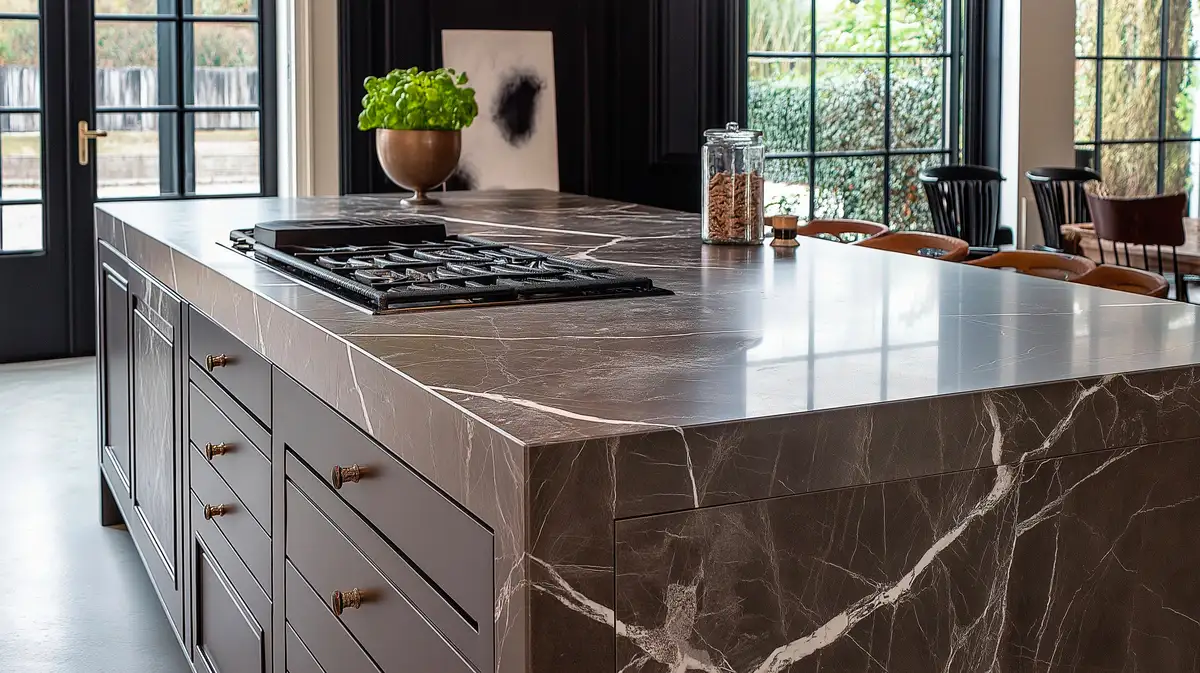
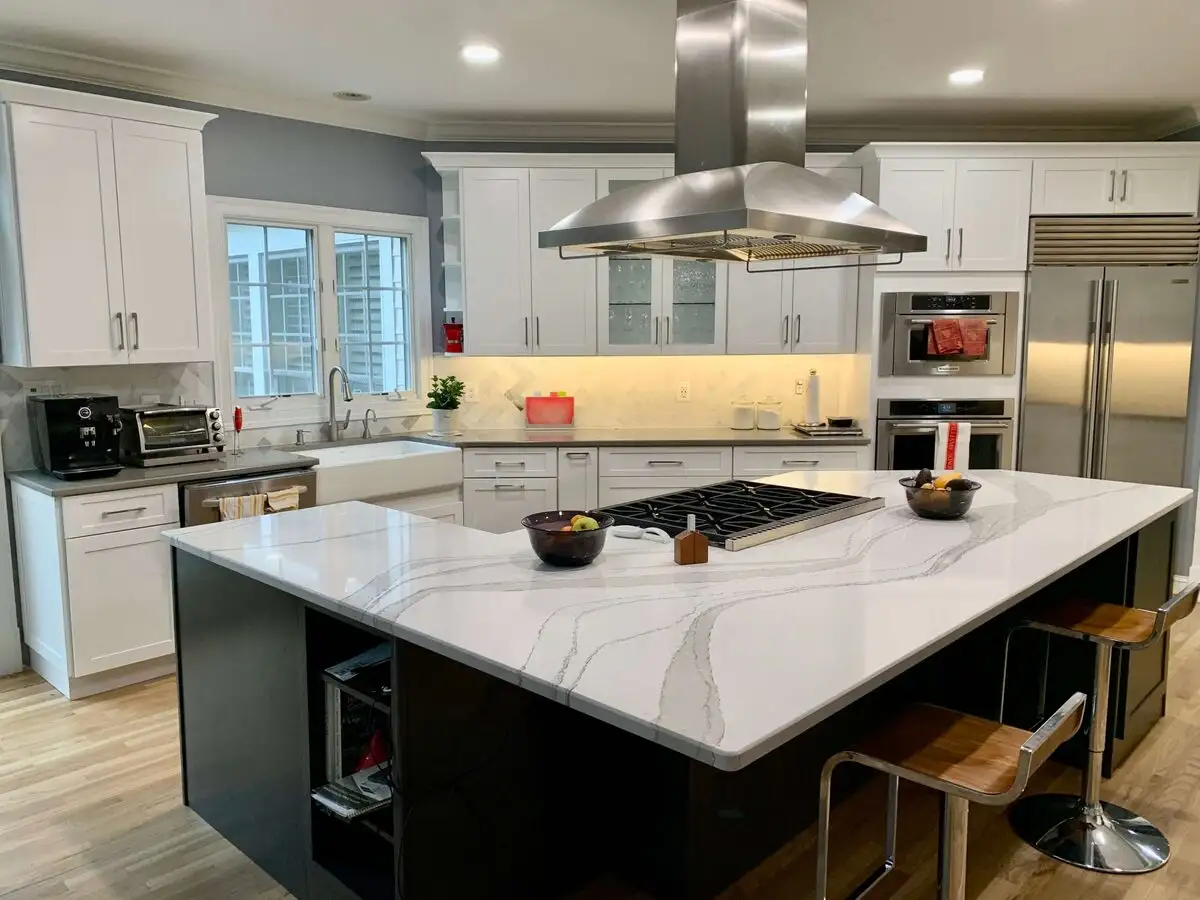
Marble is the gold standard for luxury kitchen design, known for its soft veining, cool-to-the-touch feel, and timeless elegance. Varieties like Carrara (subtle gray veining) and Calacatta (dramatic bold veining) transform any kitchen into a statement space. However, marble is porous and softer than granite or quartz, making it vulnerable to etching from acidic foods like lemon juice or wine. Reddit users frequently flag white marble staining as a common regret, so it’s best suited for light-use areas, dedicated baking stations, or homeowners who embrace natural patina over time.
| Cost | $100–$250 per sq ft installed |
| Durability | Moderate — heat-resistant but vulnerable to etching, scratching, and staining |
| Maintenance | High — requires sealing every 3–6 months; avoid acidic cleaners |
| Best For | Luxury kitchens, light-use areas, baking stations, and homeowners who love natural patina |
✅ Pros
- Unmatched elegance and visual impact — the ultimate luxury surface
- Naturally cool surface — ideal for pastry and baking work
- Each slab is a one-of-a-kind work of natural art
- Strong heat resistance from its metamorphic rock composition
❌ Cons
- Porous — stains easily from wine, coffee, oils, and acidic foods
- Softer stone etches from citrus, vinegar, and common kitchen substances
- Most expensive countertop material on the market
- High maintenance demands frequent sealing and careful daily use
Quartzite Countertops
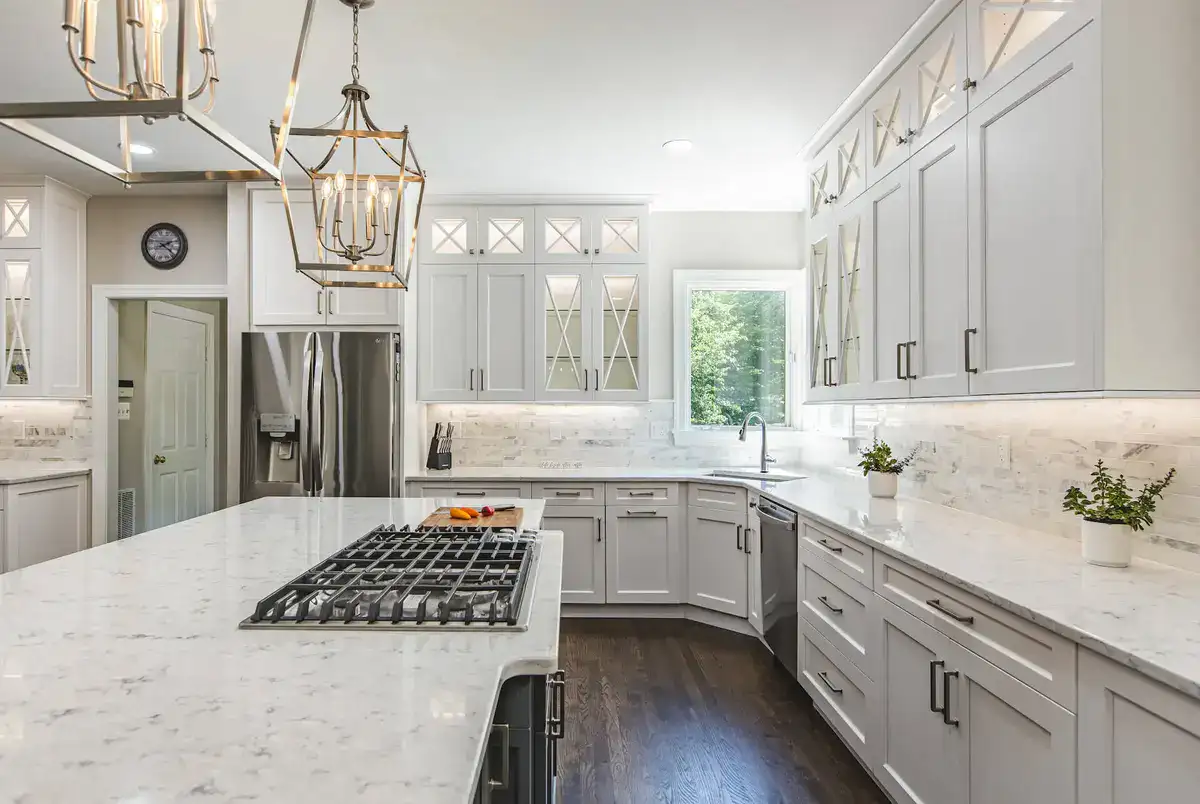
Quartzite is a naturally occurring metamorphic stone that forms when sandstone is subjected to intense heat and pressure. It offers the visual elegance of marble with the hardness and durability that rivals granite. Quartzite is gaining rapid popularity among homeowners who want a natural stone look without marble’s maintenance headaches. It handles heat exceptionally well and resists scratching, though it still needs periodic sealing as a natural stone. The 2026 trend reports position quartzite as a top choice for premium kitchen remodels.
| Cost | $80–$210 per sq ft installed |
| Durability | Very high — extremely hard, heat-resistant, scratch-resistant |
| Maintenance | Moderate — requires sealing every 1–2 years; clean with stone-safe products |
| Best For | Homeowners who love marble’s look but need greater durability |
✅ Pros
- Exceptional hardness — one of the toughest natural stones available
- Beautiful natural veining similar to marble without the fragility
- Superior heat resistance — safe for direct contact with hot cookware
- Growing demand increases home resale appeal
❌ Cons
- Expensive — among the priciest natural stone options
- Very heavy slabs require reinforced cabinets and professional installation
- Needs periodic sealing despite its density
- Natural variation means you must select slabs carefully in person
Butcher Block (Wood) Countertops
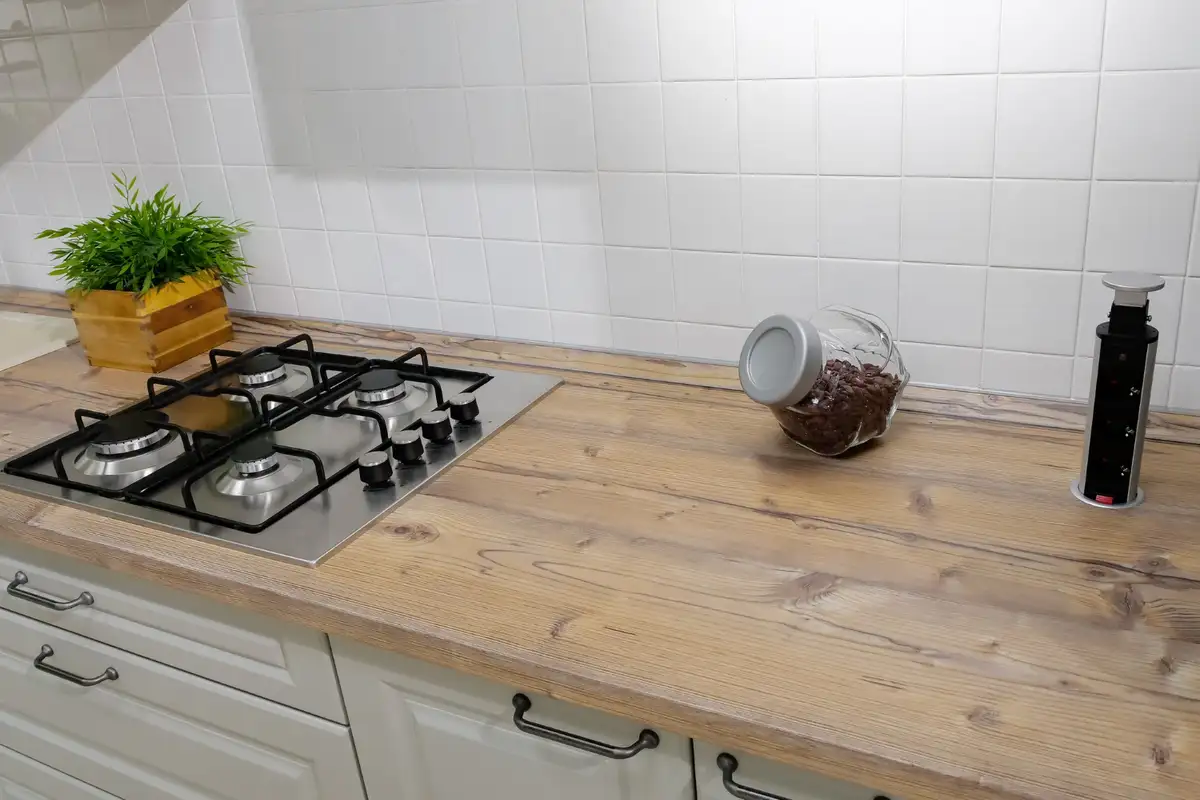
Butcher block countertops bring natural warmth, texture, and a farmhouse-inspired character to any kitchen. Hardwood species like maple, walnut, and oak are the most popular choices, offering excellent knife-friendly work surfaces that can be sanded and refinished multiple times. They’re one of the most “forgiving” countertop materials in terms of repair — scratches and nicks can be sanded out, which is a major advantage over stone. The tradeoff is that wood requires regular oiling and careful moisture management, as prolonged water exposure can cause warping and bacterial growth.
| Cost | $55–$200 per sq ft installed |
| Durability | Moderate — can be sanded and refinished; 10–20 year lifespan before resurfacing |
| Maintenance | High — requires monthly mineral oil treatment and careful moisture management |
| Best For | Farmhouse or rustic kitchens, dedicated prep zones, mixed-material island designs |
✅ Pros
- Warm, natural aesthetic that softens modern kitchens beautifully
- Self-healing surface — scratches and knife marks can be sanded smooth
- Ideal cutting and prep surface with antimicrobial hardwood properties
- Works beautifully in mixed-material designs paired with stone
❌ Cons
- Sensitive to moisture — standing water causes swelling, warping, and mold
- Requires consistent oiling and sealing maintenance
- Not heat-resistant — hot pans will scorch the surface
- Can harbor bacteria if finish is compromised
Laminate Countertops
Modern laminate countertops bear little resemblance to the cheap, peeling surfaces of decades past. Today’s options from brands like Formica and Wilsonart feature high-definition printing technology that convincingly mimics granite, marble, and even concrete — at a fraction of the cost. Laminate is the most budget-friendly countertop material available, making it an excellent choice for rental properties, starter homes, quick kitchen refreshes, and budget-conscious remodels. It doesn’t require sealing, installs quickly, and comes in hundreds of colors and patterns.
| Cost | $20–$60 per sq ft installed |
| Durability | Low to moderate — resistant to stains but vulnerable to heat, deep scratches, and moisture at seams |
| Maintenance | Very low — wipe clean with mild soap; no sealing needed |
| Best For | Budget remodels, rental properties, quick refreshes, and anyone wanting variety at low cost |
✅ Pros
- Most affordable countertop option by a wide margin
- Enormous selection of colors, patterns, and textures
- Zero maintenance — no sealing, no special cleaners required
- Lightweight and easy to install — even DIY-friendly
❌ Cons
- Cannot withstand direct heat from pots or pans
- Deep cuts and scratches are not repairable
- Moisture penetration at seams can cause swelling
- Lower perceived value compared to stone or quartz
Solid Surface Countertops (Corian)
Solid surface countertops, commonly known by the brand name Corian, are manufactured from a blend of acrylic and polyester resins. Their standout feature is seamless installation — pieces can be chemically bonded together to create long countertop runs with no visible seams or joints. They also allow for integrated sinks, creating a sleek, hygienic design with no crevices for bacteria or food particles to hide. Minor scratches can be buffed out with fine sandpaper, making them one of the most repairable countertop options on the market.
| Cost | $60–$130 per sq ft installed |
| Durability | Moderate — repairable surface, but susceptible to heat damage and deep gouges |
| Maintenance | Low — non-porous; clean with soap and water; buff scratches with fine grit sandpaper |
| Best For | Modern kitchens, minimalist design, families who value seamless looks and repairability |
✅ Pros
- Seamless joints — can be bonded into one continuous surface
- Integrated sinks create a clean, hygienic design
- Scratches and minor burns can be sanded and buffed out
- Non-porous — resists stains and bacteria without sealing
❌ Cons
- Not heat-resistant — hot pans will melt or discolor the surface
- Less luxurious look compared to natural stone
- Deep cuts or gouges may require professional repair
- Can yellow over time with prolonged UV exposure
Concrete Countertops
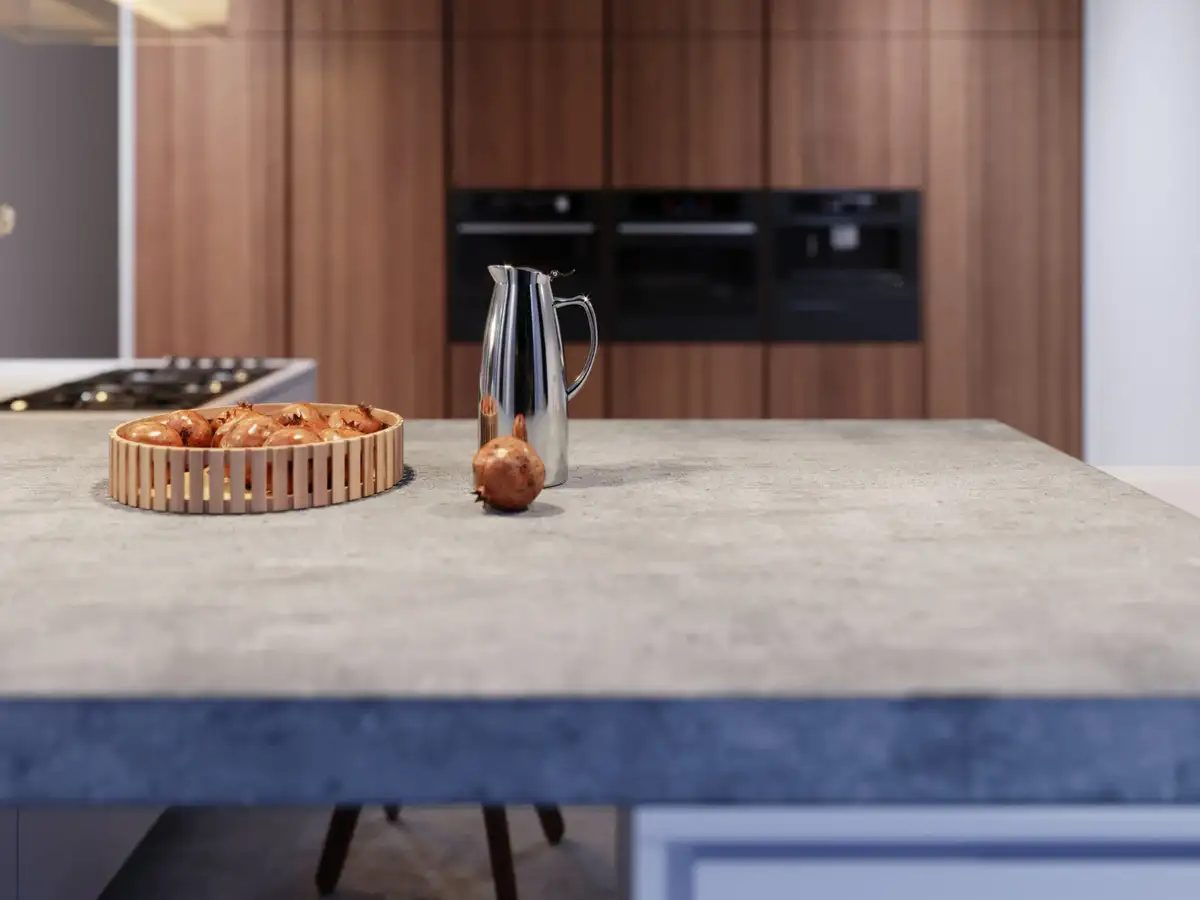
Concrete countertops deliver a bold industrial-modern aesthetic that’s completely customizable in terms of shape, color, texture, and embedded elements. They can be poured in-place or precast, tinted any color, and even embedded with decorative aggregates, fiber optics, or integrated drainage grooves. High-end concrete installations in 2026 are incorporating wireless charging pads, temperature-controlled zones, and LED backlighting. The tradeoff is that concrete requires professional sealing, can develop hairline cracks over time, and is one of the heaviest countertop materials.
| Cost | $70–$150 per sq ft installed |
| Durability | High structural strength, but prone to hairline cracking and surface staining if not sealed |
| Maintenance | High — requires periodic sealing; wax coating recommended; avoid acidic cleaners |
| Best For | Industrial-modern kitchens, custom designs, tech-forward homeowners |
✅ Pros
- Fully customizable — any shape, color, or embedded feature is possible
- Strong industrial-modern aesthetic that makes a design statement
- Can integrate smart features like charging pads and LED lighting
- Excellent heat resistance from its mineral composition
❌ Cons
- Prone to hairline cracks, especially in larger spans
- Very heavy — requires reinforced cabinet support
- Must be sealed regularly to prevent staining
- Professional installation is essential — not a DIY project
Soapstone Countertops
Soapstone is a naturally dense, non-porous metamorphic rock that has been used in kitchens for centuries. It’s inherently resistant to stains, bacteria, heat, and chemicals without any sealing required. Over time, soapstone develops a beautiful dark patina that many homeowners find adds warmth and character — though mineral oil application can accelerate or control this process. Its soft, matte texture makes it distinct from the polished look of granite, giving kitchens a timeless, old-world European feel.
| Cost | $70–$150 per sq ft installed |
| Durability | High against heat and stains; softer stone means scratches are more likely |
| Maintenance | Low to moderate — optional mineral oil for patina; scratches can be sanded |
| Best For | Traditional and farmhouse kitchens, chemistry labs, homeowners who love natural aging |
✅ Pros
- Naturally non-porous — no sealing ever needed
- Exceptional heat and chemical resistance
- Develops a beautiful patina over time that adds character
- Scratches can be sanded out with fine-grit sandpaper
❌ Cons
- Softer than granite — more prone to nicks and scratches
- Limited color range — primarily gray, green, and charcoal tones
- Can chip or crack on edges if struck with force
- Fewer suppliers compared to granite or quartz
Sintered Stone Countertops (Dekton / Neolith)
Sintered stone is an ultra-compact surface created by fusing raw minerals under extreme heat and pressure, mimicking thousands of years of natural stone formation in hours. Brands like Dekton and Neolith are leading this category, producing surfaces that are virtually scratch-proof, stain-proof, UV-resistant, and heat-resistant up to 600°F. Sintered stone is the breakout countertop trend of 2025–2026, especially for homeowners who want a premium surface that works both indoors and outdoors with zero maintenance.
| Cost | $70–$175 per sq ft installed |
| Durability | Extremely high — scratch-proof, UV-stable, heat-resistant, stain-proof |
| Maintenance | Near zero — wipe clean with any standard household cleaner |
| Best For | Indoor and outdoor kitchens, high-traffic spaces, low-maintenance luxury |
✅ Pros
- Ultra-durable — resists scratches, stains, UV, and extreme heat
- Zero porosity means no sealing, no bacteria, no moisture absorption
- UV-stable — won’t fade or discolor in outdoor kitchen applications
- Available in large-format slabs for seamless countertop runs
❌ Cons
- Premium pricing — among the most expensive engineered surfaces
- Requires specialized fabrication and professional installation
- Can crack or chip under extreme point impact
- Limited availability compared to quartz and granite
Porcelain Slab Countertops
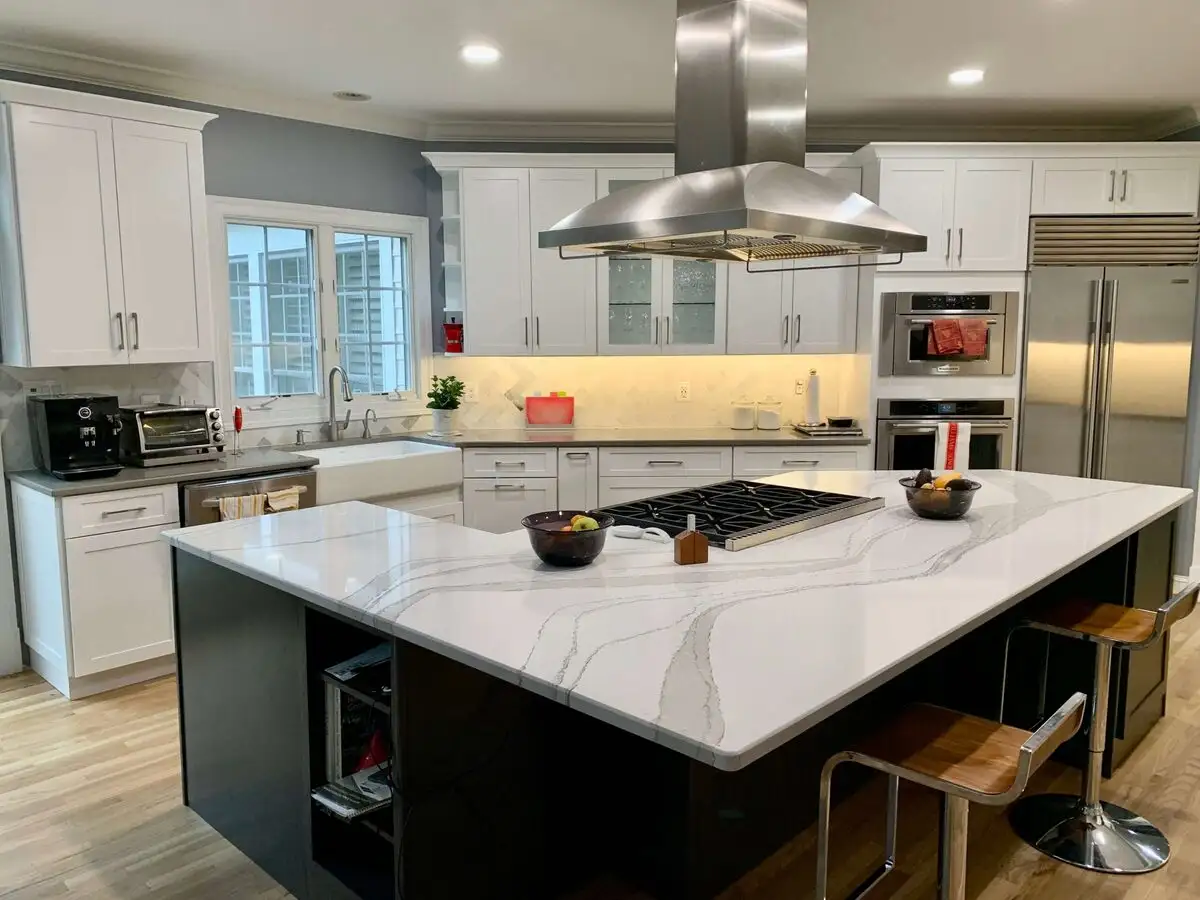
Porcelain slab countertops represent a newer entry in the premium countertop market, offering ultra-thin, large-format surfaces that can mimic marble, concrete, wood, and other natural materials with stunning realism. They are incredibly hard, scratch-resistant, UV-stable, and completely non-porous. Porcelain is rapidly gaining favor for both indoor and outdoor kitchen installations, and design experts consider it one of the most exciting countertop developments of the 2025–2026 period.
| Cost | $60–$150 per sq ft installed |
| Durability | Very high — extremely hard, scratch-proof, UV-resistant, and non-porous |
| Maintenance | Very low — clean with any standard cleaner; no sealing required |
| Best For | Modern and contemporary kitchens, outdoor kitchens, large-format slab designs |
✅ Pros
- Ultra-thin and lightweight compared to natural stone
- UV-stable and weather-resistant for outdoor use
- Realistic finishes that mimic marble, wood, or concrete
- Completely non-porous — hygienic and stain-resistant
❌ Cons
- Can crack or chip on edges during installation
- Requires highly specialized fabrication tools
- Fewer edge profile options due to thin format
- Still emerging — fewer suppliers and installers available
Recycled Glass Countertops
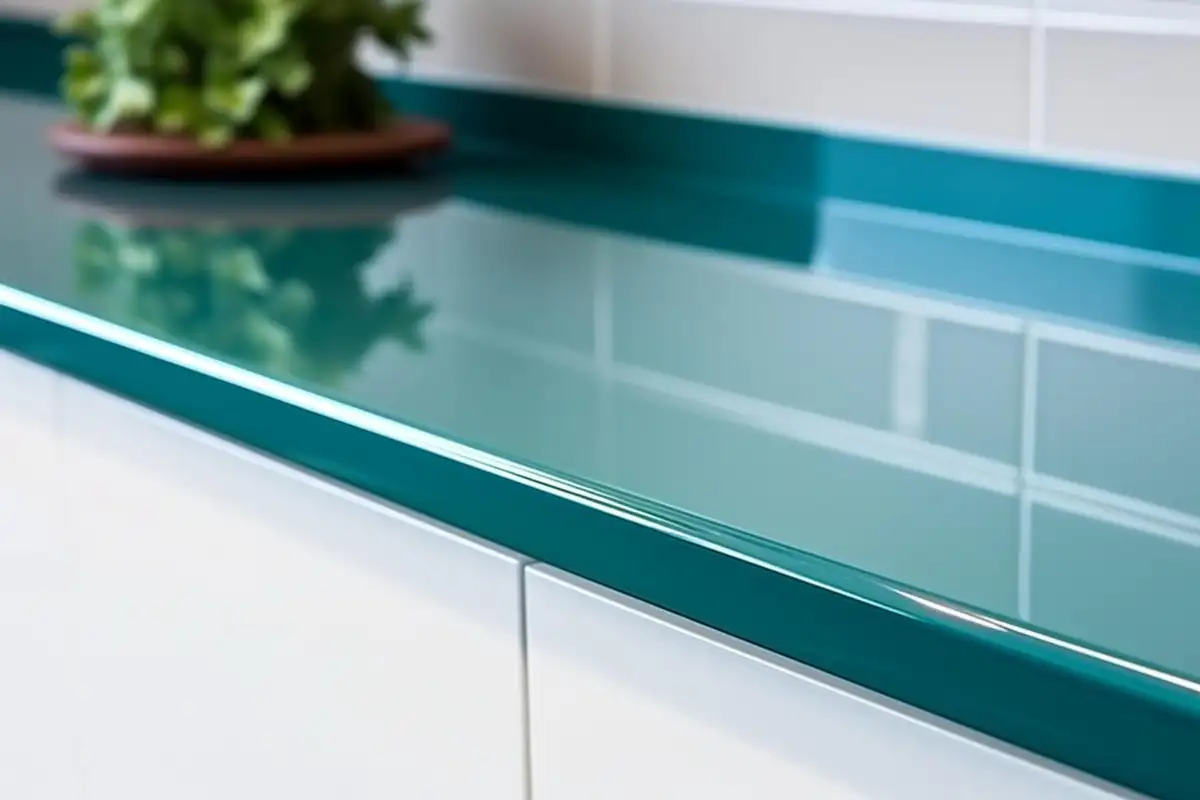
Recycled glass countertops embed colorful glass fragments into a cement or resin binder, creating vibrant, eco-friendly surfaces that are as functional as they are beautiful. They are a favorite among environmentally conscious homeowners looking to reduce their carbon footprint without sacrificing design. The glass itself is non-porous and heat-resistant, though the binder material determines the overall durability and care requirements. This material works especially well as an accent surface or island feature.
| Cost | $50–$120 per sq ft installed |
| Durability | Moderate to high — depends on binder; glass fragments are heat and stain resistant |
| Maintenance | Moderate — cement-based versions need periodic sealing; resin-based do not |
| Best For | Eco-conscious homeowners, colorful accent counters, contemporary kitchens |
✅ Pros
- Eco-friendly — made from post-consumer recycled materials
- Unique, colorful aesthetic unlike any other countertop surface
- Non-porous glass elements resist stains and bacteria
- Available in countless color combinations and transparency levels
❌ Cons
- Resin-based versions can be sensitive to heat
- Cement-based versions require sealing similar to concrete
- Can be difficult to find local fabricators
- Surface texture can feel rough compared to polished stone
Bamboo Countertops
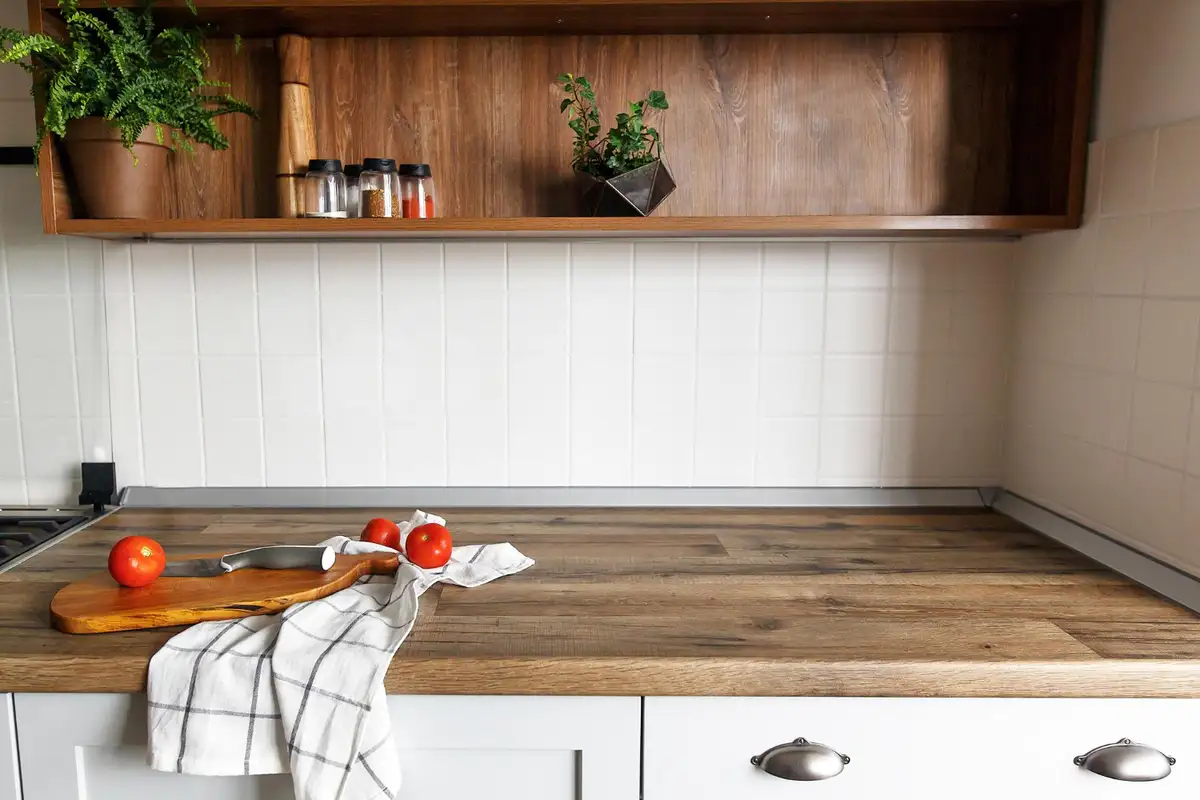
Bamboo countertops are a sustainable, renewable alternative to traditional hardwood surfaces. Bamboo grows to harvestable size in just 3–5 years versus 20+ years for hardwoods, making it one of the most eco-friendly countertop choices available. It delivers the same warm, natural look as wood butcher block but with slightly better hardness in strand-woven varieties. Like all wood surfaces, bamboo requires careful moisture management and regular oiling to maintain its appearance and prevent warping.
| Cost | $40–$100 per sq ft installed |
| Durability | Moderate — harder than many softwoods; strand-woven varieties rival hardwoods |
| Maintenance | Moderate to high — requires regular oiling; avoid prolonged moisture exposure |
| Best For | Green-minded homeowners, modern-organic kitchens, budget-friendly natural surfaces |
✅ Pros
- Highly sustainable — rapid renewable growth cycle
- Lighter weight than traditional hardwoods
- Warm, natural aesthetic with unique grain patterns
- Strand-woven varieties offer excellent hardness
❌ Cons
- Sensitive to standing water and high humidity
- Scratches more easily than stone or engineered surfaces
- Requires consistent oiling and maintenance routine
- Quality varies significantly between manufacturers
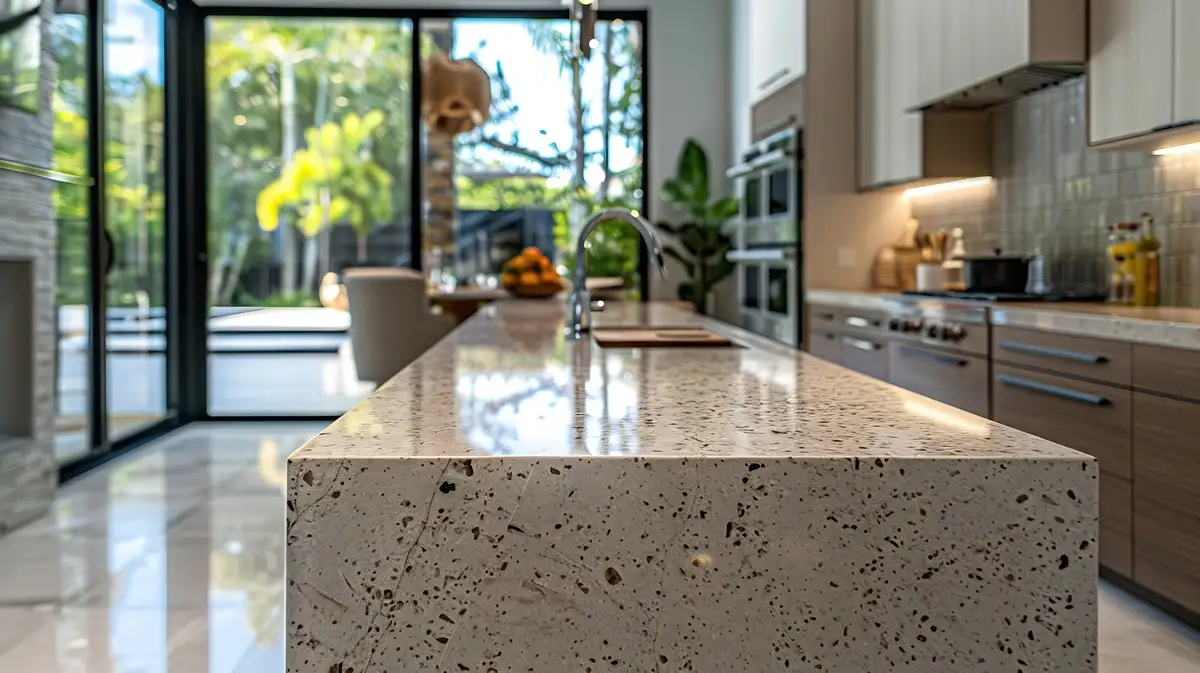
Terrazzo Countertops
Terrazzo is a composite material made from chips of marble, quartz, granite, glass, or shell set in a cement or epoxy binder. Once used primarily for commercial flooring, terrazzo has surged in popularity for kitchen countertops thanks to its retro-modern appeal and remarkable durability. The speckled, mosaic-like surface creates a playful yet sophisticated look that works across multiple design styles — from mid-century modern to contemporary eclectic.
| Cost | $50–$130 per sq ft installed |
| Durability | High — extremely hard-wearing and long-lasting when properly sealed |
| Maintenance | Low to moderate — seal periodically; daily cleaning with mild soap |
| Best For | Mid-century modern kitchens, eclectic designs, commercial-grade residential kitchens |
✅ Pros
- Incredibly durable — holds up to heavy daily use
- Distinctive speckled appearance with endless color options
- Can incorporate recycled aggregates for eco-friendly appeal
- Low day-to-day maintenance requirements
❌ Cons
- Can develop hairline cracks in cement-based versions
- Professional installation is required
- Heavy material that may need reinforced supports
- Repair of chips or cracks requires skilled craftwork
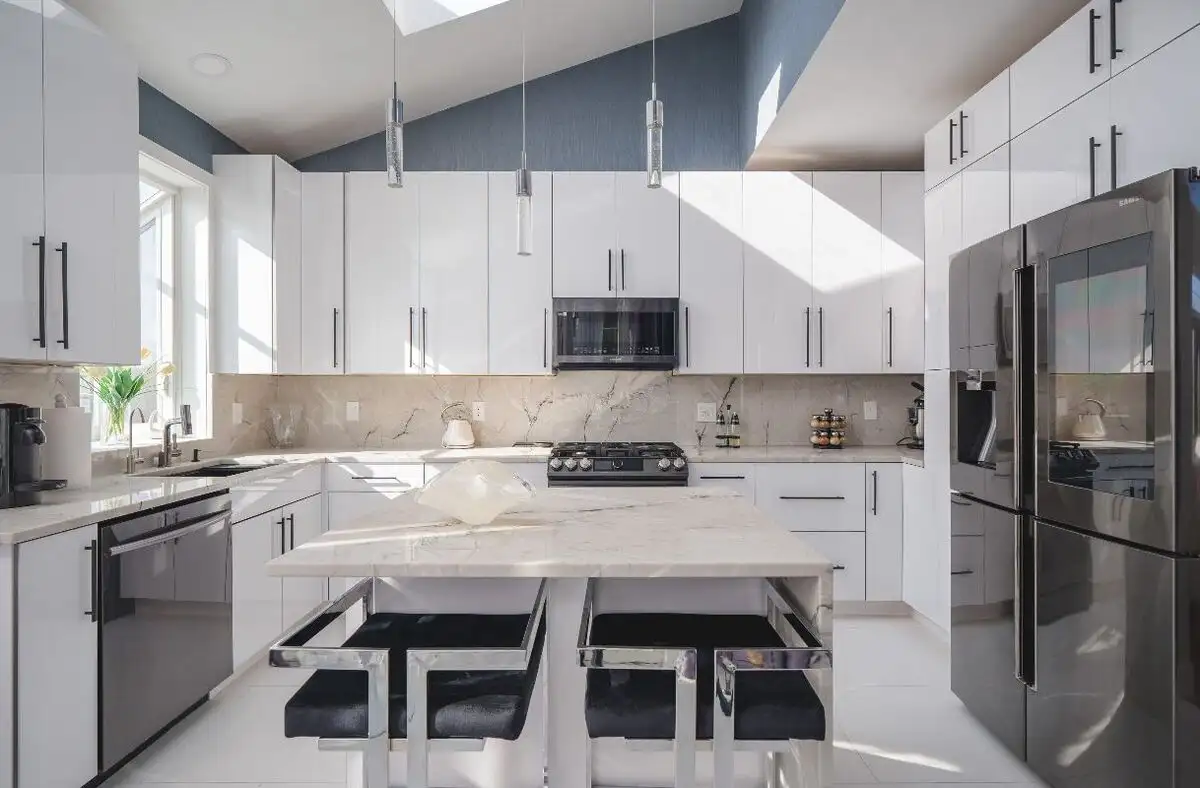
Glass Countertops
Glass countertops bring a sleek, contemporary feel to kitchens with their light-transmitting properties and smooth, reflective surfaces. They can be back-painted in virtually any color, textured for a frosted look, or produced in clear panels that allow under-lighting effects. Tempered glass is used for safety and impact resistance. While stunningly beautiful, glass surfaces are best suited for bar tops, islands, and light-use zones rather than heavy-duty cooking areas.
| Cost | $100–$200 per sq ft installed |
| Durability | Moderate — tempered glass is strong but can chip or crack under heavy impact |
| Maintenance | Low — non-porous surface; clean with glass cleaner |
| Best For | Modern bars, accent islands, design-forward kitchens with controlled use |
✅ Pros
- Stunning contemporary aesthetic with light-transmitting properties
- Completely non-porous — hygienic and stain-resistant
- Can be back-painted any color or backlit for dramatic effect
- Simple daily cleaning with standard glass cleaner
❌ Cons
- Scratches are visible and difficult to repair
- Expensive compared to most alternatives
- Can crack or chip under heavy impact or point loads
- Limited practical use for high-traffic cooking zones
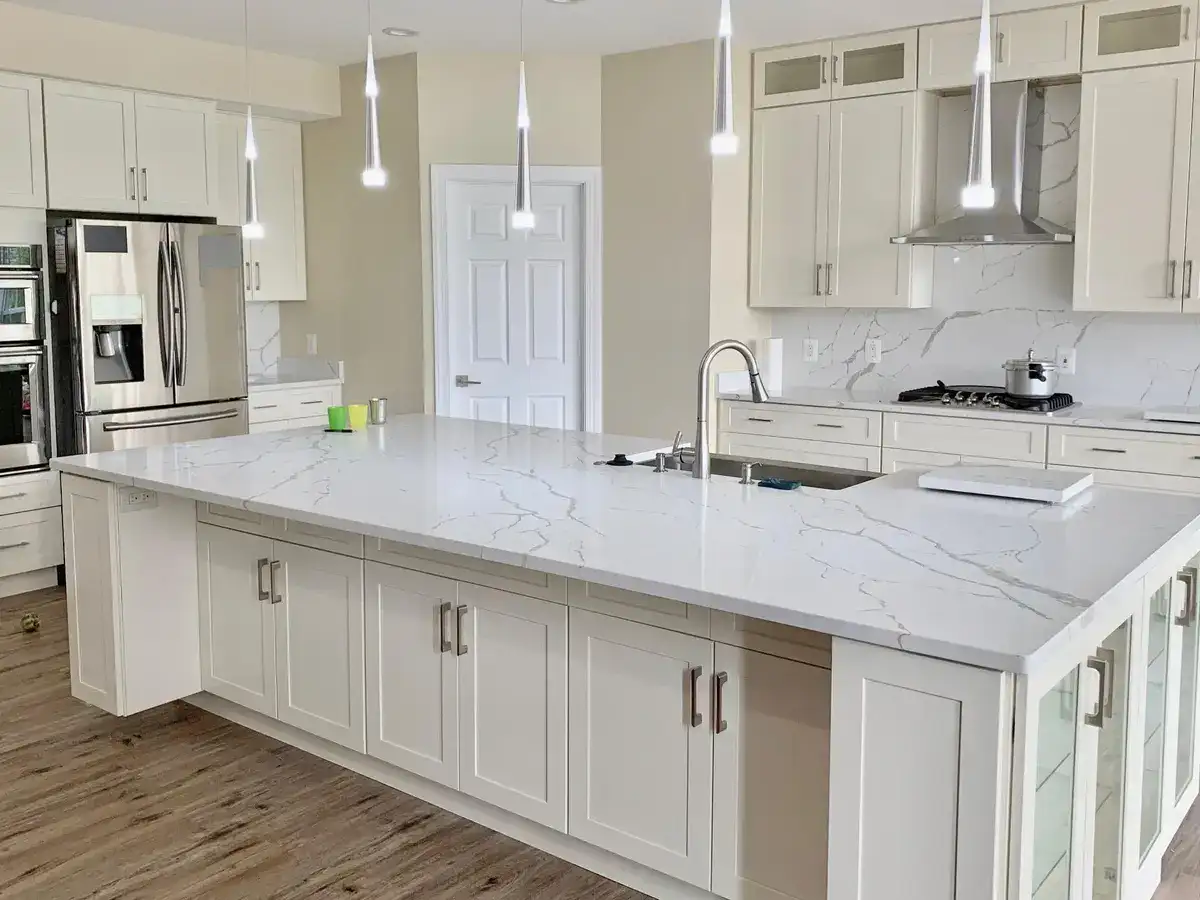
Tile Countertops
Tile countertops offer affordable creative freedom for homeowners who want a unique look without spending a fortune. Ceramic and porcelain tiles come in thousands of patterns, sizes, and textures, and the grout lines between tiles add a distinctive visual texture. Tile is heat-resistant and allows for creative personalization — including mixing patterns and creating custom mosaic designs. The major downside is grout maintenance: grout lines are porous, trap food particles, and need regular sealing and cleaning to stay hygienic and attractive.
| Cost | $30–$60 per sq ft installed |
| Durability | Moderate — individual tiles resist heat and stains, but grout lines are vulnerable |
| Maintenance | Moderate to high — grout requires regular sealing and scrubbing |
| Best For | Budget renovations, creative DIY projects, backsplash-to-counter continuity |
✅ Pros
- Very affordable with thousands of design options
- Heat-resistant tile surface handles hot cookware
- Creative freedom for custom patterns and mosaic designs
- Easy to replace individual damaged tiles
❌ Cons
- Grout lines trap food, stains, and bacteria
- Uneven surface makes rolling dough or placing items difficult
- Grout requires regular sealing and maintenance
- Can feel outdated compared to slab countertop trends
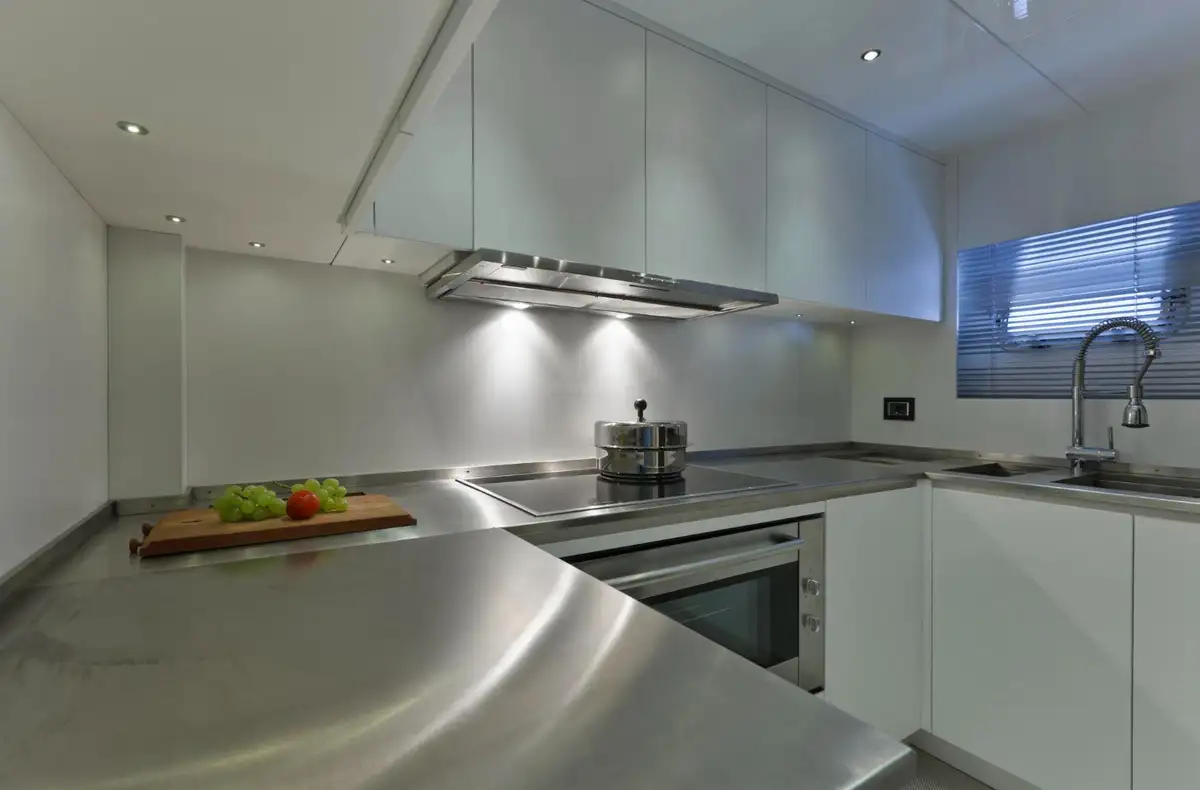
Stainless Steel Countertops
Stainless steel countertops bring professional-grade performance into residential kitchens. Favored in commercial and restaurant settings for their unmatched hygiene, stainless steel is non-porous, completely waterproof, heat-resistant, and impervious to bacterial growth. It pairs naturally with professional-grade appliances and contemporary kitchen designs. The main drawback is susceptibility to visible scratches and fingerprints, though many homeowners find that the patina of use adds character over time.
| Cost | $80–$225 per sq ft installed |
| Durability | Very high — heat-proof, waterproof, non-porous; virtually indestructible |
| Maintenance | Low — wipe with stainless steel cleaner; no sealing needed |
| Best For | Professional home chefs, contemporary kitchens, ultra-hygienic environments |
✅ Pros
- 100% non-porous and hygienic — the cleanest countertop surface
- Completely heat-resistant — safe for direct hot pan placement
- Waterproof and rust-resistant with proper grade (304 or 316)
- Perfect pairing with professional appliances
❌ Cons
- Shows scratches, fingerprints, and smudges readily
- Can feel cold and industrial in traditional kitchen settings
- Denting is possible with heavy impact
- Higher cost than most engineered alternatives
Limestone Countertops
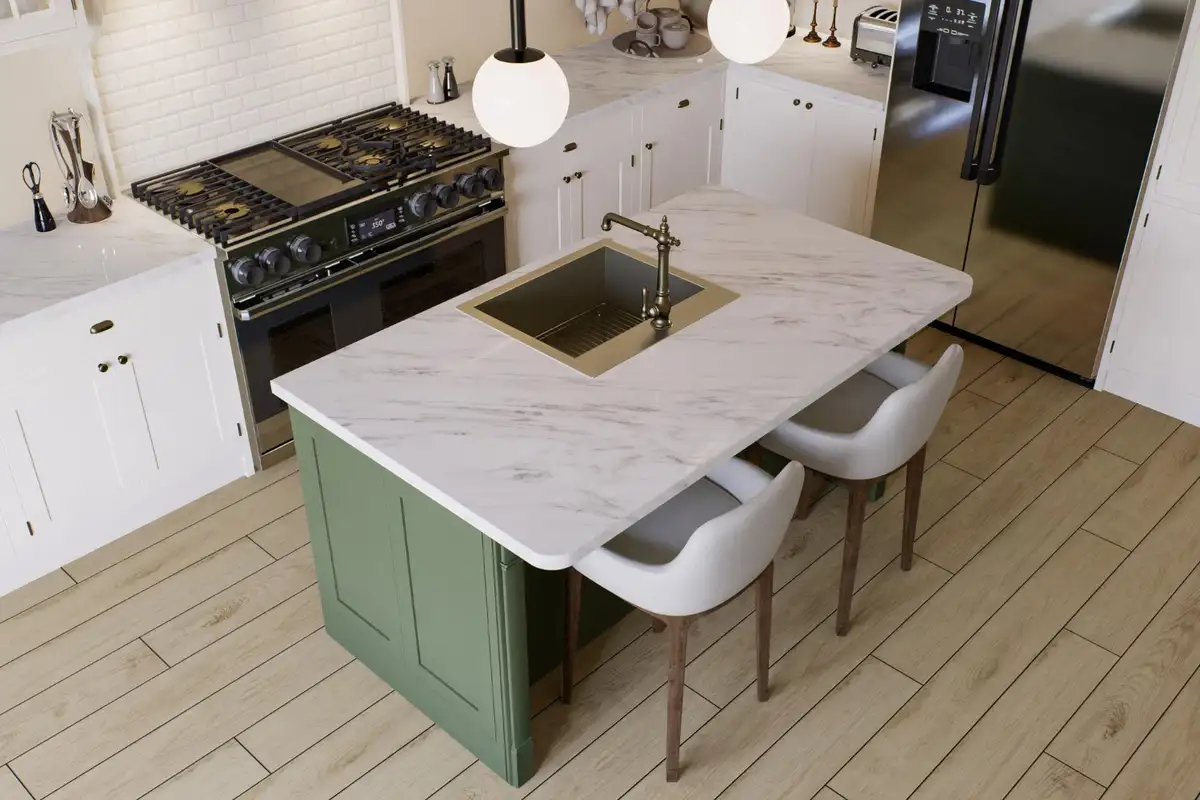
Limestone is a sedimentary natural stone known for its soft, warm tones and subtle organic texture. It brings an understated elegance to traditional, Mediterranean, and transitional kitchens that polished granite or bright quartz simply can’t replicate. Popular shades include cream, beige, taupe, and soft gold. However, limestone is one of the softer and more porous natural stones — it reacts to acidic substances like lemon juice and vinegar, and requires diligent sealing to prevent staining. It’s best suited for low-traffic areas or homeowners who prioritize natural beauty and accept some patina over time.
| Cost | $60–$130 per sq ft installed |
| Durability | Moderate — softer than granite; vulnerable to etching from acids and scratching |
| Maintenance | High — requires sealing every 6–12 months; avoid acidic cleaners entirely |
| Best For | Mediterranean and traditional kitchens, light-use areas, homeowners who love natural patina |
✅ Pros
- Warm, earthy tones create a naturally elegant aesthetic
- Each slab has unique fossil patterns and organic texturing
- Softer color palette blends beautifully with warm cabinet tones
- Cooler surface temperature makes it pleasant for baking
❌ Cons
- Highly porous — absorbs liquids and stains readily without proper sealing
- Etches easily from citrus, vinegar, wine, and acidic foods
- Softer than granite — scratches and chips are more common
- Requires frequent sealing and careful daily maintenance
Lava Stone Countertops
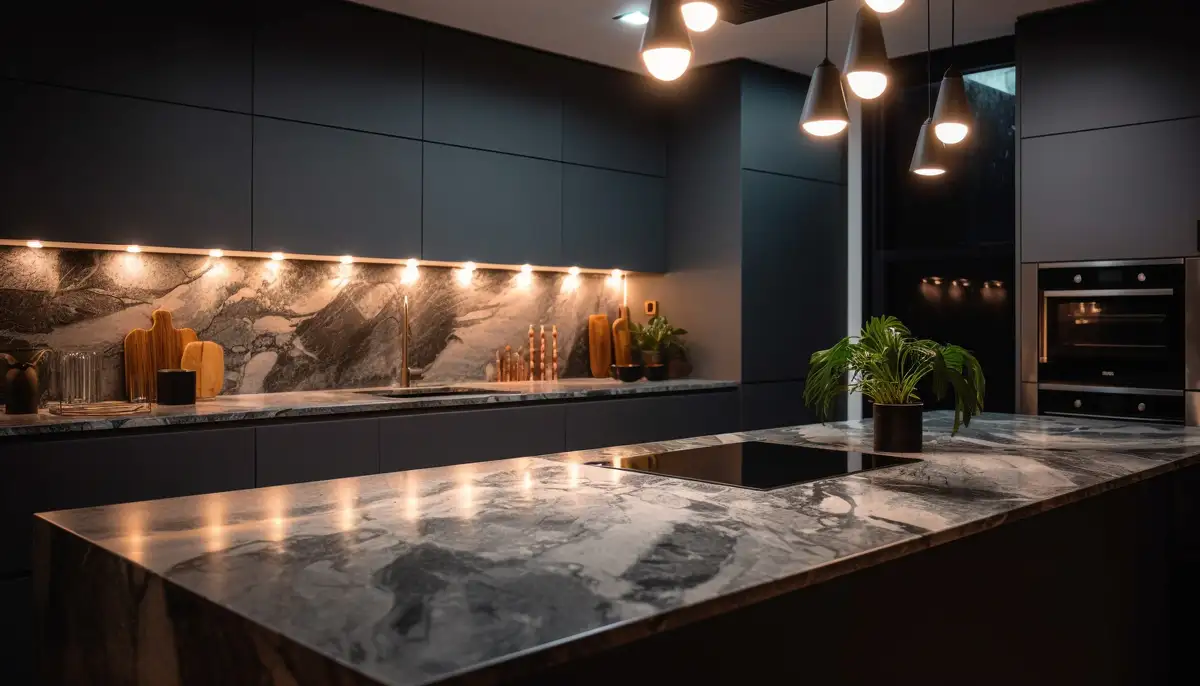
Lava stone (also called enameled lava or porphyrite) is a volcanic basalt material that undergoes high-temperature kiln firing and is then coated with a colored enamel glaze. The result is a strikingly unique surface that is virtually impervious to heat, stains, UV light, and scratching. Originally popular in European luxury kitchens, lava stone is gaining attention in the U.S. market for its artisanal quality and the ability to be glazed in any color imaginable — from deep black to vibrant cobalt blue. Each piece is handcrafted, making it a true statement surface.
| Cost | $150–$300 per sq ft installed |
| Durability | Very high — heat-proof (safe to 1000°F+), scratch-resistant, UV-stable, stain-proof |
| Maintenance | Very low — non-porous enamel surface; wipe clean with any household cleaner |
| Best For | Luxury custom kitchens, design-forward homeowners, outdoor kitchen applications |
✅ Pros
- Virtually indestructible — withstands extreme heat, scratches, and UV exposure
- Unlimited custom color options through enamel glazing process
- Handcrafted artisanal quality — each slab is unique
- Non-porous surface requires zero sealing or special care
❌ Cons
- Among the most expensive countertop materials available
- Limited availability in the U.S. — mostly imported from European artisans
- Very heavy — requires reinforced cabinetry and professional installation
- Long lead times for custom orders (8–16 weeks typical)
Vinyl Countertops
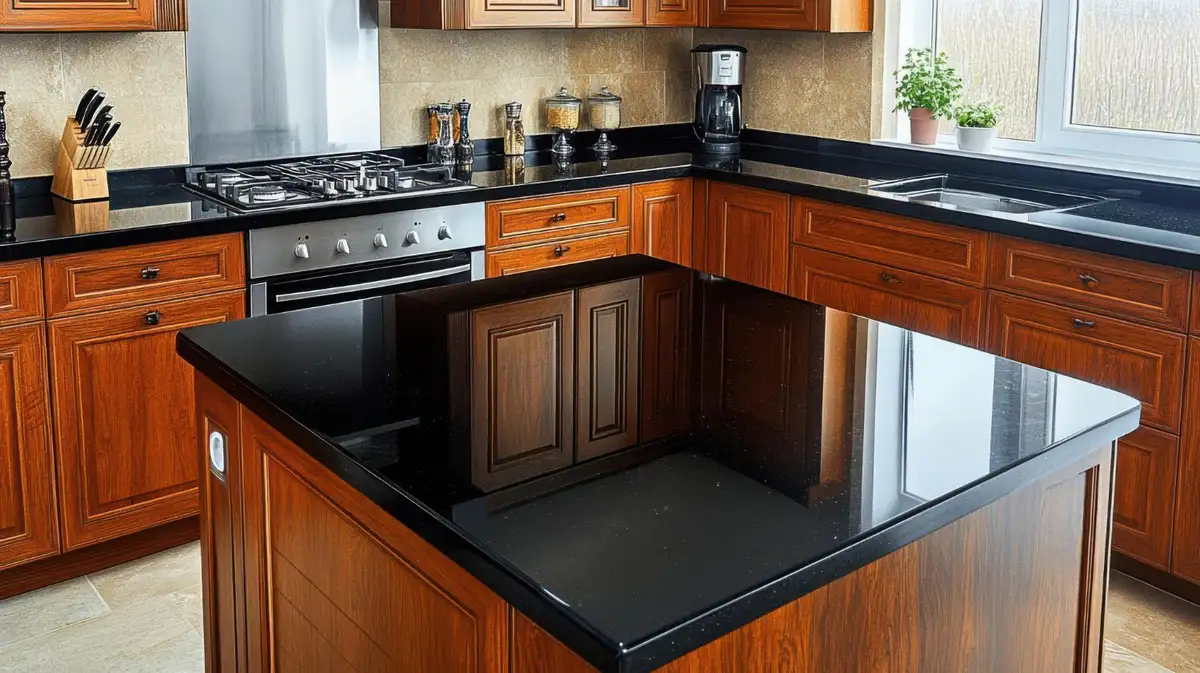
Vinyl countertops are the most budget-conscious option for homeowners who need a functional surface without a significant investment. Available in sheet or plank form, modern vinyl surfaces can mimic the appearance of stone, wood, and concrete at a fraction of the cost. They’re lightweight, easy to install (often DIY-friendly), and come in hundreds of colors and patterns. Vinyl is best suited for rental properties, temporary kitchens, laundry rooms, and utility spaces where cost savings outweigh long-term durability. The tradeoff is limited heat tolerance and a shorter lifespan compared to any stone or engineered material.
| Cost | $15–$40 per sq ft installed |
| Durability | Low — vulnerable to heat damage, deep scratches, and fading; 5–10 year lifespan |
| Maintenance | Very low — wipe with mild soap; no sealing required |
| Best For | Rental properties, utility spaces, temporary kitchens, ultra-tight budgets |
✅ Pros
- Lowest-cost countertop material on the market
- Lightweight and easy to install — fully DIY-friendly
- Large selection of colors and patterns at every price point
- Moisture-resistant surface works well in laundry and utility rooms
❌ Cons
- Cannot withstand direct heat — hot pans will melt or warp the surface
- Scratches, cuts, and dents are permanent and not repairable
- Shortest lifespan of any countertop material (5–10 years)
- Low perceived value — not recommended if resale is a consideration
Glass Ceramic Countertops
Glass ceramic countertops fuse the visual clarity of glass with the structural toughness of ceramic through a specialized high-temperature manufacturing process. The result is a sleek, ultra-modern surface that resists scratches, stains, and heat far better than standard glass. Glass ceramic can be produced in large, seamless panels with a smooth matte or glossy finish, making it a favorite for minimalist and high-design contemporary kitchens. While still a niche product, it’s growing in popularity as fabrication technology improves and more suppliers enter the market.
| Cost | $80–$160 per sq ft installed |
| Durability | High — excellent scratch and stain resistance; moderate impact resistance |
| Maintenance | Very low — non-porous; clean with standard glass or all-purpose cleaner |
| Best For | Modern and minimalist kitchens, design-focused renovations, high-end commercial spaces |
✅ Pros
- Sleek contemporary aesthetic with glass-like transparency options
- Strong scratch and stain resistance from ceramic reinforcement
- Non-porous surface is hygienic and easy to maintain
- Available in large seamless panels for clean, modern installations
❌ Cons
- Can crack or shatter under heavy point-impact (dropped cast iron, etc.)
- Premium pricing puts it in the luxury material category
- Limited pattern and color options compared to quartz or porcelain
- Fewer fabricators and installers experienced with the material
FAQs About Types of Kitchen Countertops
What is the best countertop material for a busy family kitchen?
Quartz is widely recommended as the best all-around countertop for active households. It’s non-porous, never needs sealing, resists stains from food and drink, and holds up to daily wear and tear. Consumer Reports rated it the top-performing kitchen countertop material overall. If you prefer natural stone, granite is the next best option for durability.
Is quartz really better than granite?
It depends on your priorities. Quartz is easier to maintain (no sealing required), offers more consistent color/pattern options, and is slightly more stain-resistant. Granite wins on heat resistance (it can handle direct hot pan contact), offers a truly one-of-a-kind natural look, and some homeowners prefer its organic character. Both are excellent long-term investments — neither is objectively “better” across the board.
What is the most affordable kitchen countertop material?
Laminate is the most budget-friendly option, starting around $20–$60 per square foot installed. Modern laminate products convincingly mimic granite, marble, and concrete at a fraction of the cost. For slightly more durability, tile countertops ($30–$60/sq ft) and bamboo ($40–$100/sq ft) are also affordable choices.
Will marble countertops stain easily? Is marble a bad idea for kitchens?
Marble is porous and does absorb liquids more readily than quartz or granite. Wine, coffee, citrus, and acidic foods can etch or stain the surface. However, marble is not a bad choice if you seal it regularly (every 3–6 months), use it primarily for baking or light-use areas, and accept that it will develop a lived-in patina over time. Many homeowners love how marble ages. The key is matching your expectations to the material’s behavior.
How much do new kitchen countertops cost in 2026?
Total countertop replacement for an average kitchen (30–55 sq ft) typically costs between $1,800 and $6,000 depending on material. Budget options like laminate run $20–$60/sq ft installed, mid-range materials like granite and quartz fall in the $70–$200/sq ft range, and premium options like marble and quartzite can exceed $200/sq ft. Professional installation labor typically adds $30–$50/sq ft on top of material costs. Keep in mind that countertops are just one component of a broader kitchen renovation — for a complete breakdown of all kitchen remodeling costs in 2026, including cabinets, appliances, labor, and regional pricing, see the detailed guide at usacabinetstore.com/kitchen-remodeling-cost.
What is the most durable kitchen countertop that requires no maintenance?
Sintered stone (brands like Dekton and Neolith) and porcelain slabs are the most durable zero-maintenance options currently available. They’re scratch-proof, stain-proof, UV-stable, heat-resistant, and never need sealing. Quartz is the next closest — it’s nearly maintenance-free and doesn’t need sealing, though it has slightly lower heat tolerance.
What countertop material adds the most resale value to a home?
Granite and quartz consistently top the list for resale value. Both signal quality to potential buyers, are universally appealing, and hold up for decades. Quartzite is emerging as a premium resale driver for luxury homes. Real estate experts recommend avoiding overly trendy or eclectic countertop choices if resale is a priority.
Can I put hot pans directly on my countertop?
It depends on the material. Granite, quartzite, soapstone, stainless steel, and sintered stone can handle direct heat from hot cookware. Quartz, marble, solid surface, laminate, and butcher block can be damaged by direct heat — always use trivets or hot pads with these materials.
What are the biggest countertop mistakes homeowners regret?
Based on forums and homeowner surveys, the most common regrets include: (1) choosing white marble without understanding staining risks, (2) selecting a trendy material that quickly dated the kitchen, (3) skimping on installation quality, (4) not testing samples in their actual kitchen lighting before committing, and (5) ignoring the maintenance requirements of natural stone.
What are the newest trending countertop materials in 2025–2026?
Sintered stone (Dekton, Neolith) and large-format porcelain slabs are the breakout materials for 2025–2026. Honed and matte finishes are replacing high-gloss polished surfaces. Mixed-material designs (pairing stone with wood on the same island) are gaining popularity. Sustainability-focused options like recycled glass and low-CO2 concrete are also trending.
What is the most popular countertop right now?
Quartz (engineered stone) is the most popular countertop material heading into 2026. It dominates the market thanks to its non-porous surface, stain resistance, zero-sealing maintenance, and enormous range of colors and patterns. Modern quartz manufacturing now produces remarkably realistic marble and quartzite looks, giving homeowners the elegance of natural stone without the upkeep. Quartzite is the fastest-growing natural stone choice for homeowners who want authentic stone character with better performance than marble. Granite remains a strong third, especially for heavy-cooking households that value heat resistance.
What is the least expensive countertop material?
Vinyl is the absolute cheapest countertop material, starting around $15–$40 per square foot installed, though it has the shortest lifespan (5–10 years) and the lowest durability. For a better balance of affordability and quality, laminate ($20–$60/sq ft installed) is the most popular budget option — modern laminate convincingly mimics stone and requires zero maintenance. Tile ($30–$60/sq ft) is another affordable choice, especially for DIY installations. Bamboo ($40–$100/sq ft) rounds out the budget-friendly natural material options.
What is the best type of countertop for a kitchen?
There is no single “best” countertop — the right choice depends on your lifestyle, budget, and design goals. For the best overall balance of durability, aesthetics, and low maintenance, quartz is the top pick for most homeowners in 2026. For heavy home cooks who need maximum heat resistance, granite is ideal. For luxury kitchens where appearance is the top priority, marble or quartzite deliver unmatched elegance. For budget-friendly remodels, laminate offers excellent value. And for zero-maintenance performance in both indoor and outdoor kitchens, sintered stone (Dekton, Neolith) is the most advanced option available.
What countertops are going out of style?
According to interior designers surveyed for 2026 trend reports, several countertop styles are falling out of favor. Speckled or “busy” granite with small repetitive patterns feels dated compared to today’s preference for natural movement and clean veining. High-gloss, super-polished finishes are losing ground to honed and matte surfaces that hide fingerprints and feel more organic. Dark gray marble with heavy veining is being replaced by warmer tones. And highly engineered quartz with obvious, pixelated faux-veining is giving way to more realistic, natural-looking patterns. Cool gray color schemes overall are being phased out in favor of warm neutrals like cream, taupe, and soft brown.
What countertops never go out of style?
Natural stones with organic character are the most timeless countertop choices. White or light Carrara marble has been a design staple for centuries and remains perpetually elegant. Granite in neutral tones (black, white, or warm earth tones) with natural veining has endured decades of trend cycles. Quartzite, especially varieties like Taj Mahal and Calacatta, offers timeless marble-like beauty with superior durability. Soapstone has been used in kitchens for over 200 years and still feels fresh. Among engineered options, quartz in soft neutral tones with subtle veining is widely considered a safe, enduring choice that appeals to current and future buyers alike.
What color countertops are in for 2026?
The 2026 countertop color palette is shifting decisively from cool grays toward warm, earthy tones. The leading colors include: warm whites and creamy off-whites (replacing stark bright white), soft beige and taupe, warm greige (gray-beige blends), subtle brown and caramel tones, and rich charcoal with warm undertones. Veining trends favor organic, sweeping movement with gold, honey, and taupe veins over the high-contrast gray-on-white veining of previous years. Deep moody tones like olive, forest green, and navy are emerging as bold accent colors, particularly on islands. Matte and honed finishes are preferred over high-polish for a more relaxed, natural look.
Ready to Choose Your Perfect Countertop?
Visit our Sterling, VA showroom to see full slabs, get expert advice, and receive a free estimate for your kitchen remodel.
Modern Kitchen & Home Solutions | (571) 325-2454 | modernkitchenva.com
Found this helpful? Make us your go-to source on Google
If our content has been useful, you can tell Google to show more of it when you search. Click below, then check the box next to Modern Kitchen and Bath on the page that opens. It takes about five seconds.

You'll need to be signed in to your Google account. One click, then tick the box next to our name.