Northern Virginia asks a lot of an outdoor structure. Our summers are hot, humid, and punctuated by severe thunderstorms; fall brings the tail end of tropical systems up the coast; winter swings between wet snow, ice storms, and repeated freeze-thaw; and spring layers heavy pollen on top of more storms. A pergola built and covered for one of those seasons often struggles in another. Protecting one properly here means designing for the specific weather that Sterling, Ashburn, Loudoun, and Fairfax actually see across the year, not weather in general. Here’s how to do that, with the local figures that matter.
This pairs with our guides on pergola orientation for shade and airflow and common maintenance pitfalls. This one is about defending the structure.
Northern Virginia’s Climate, in Short
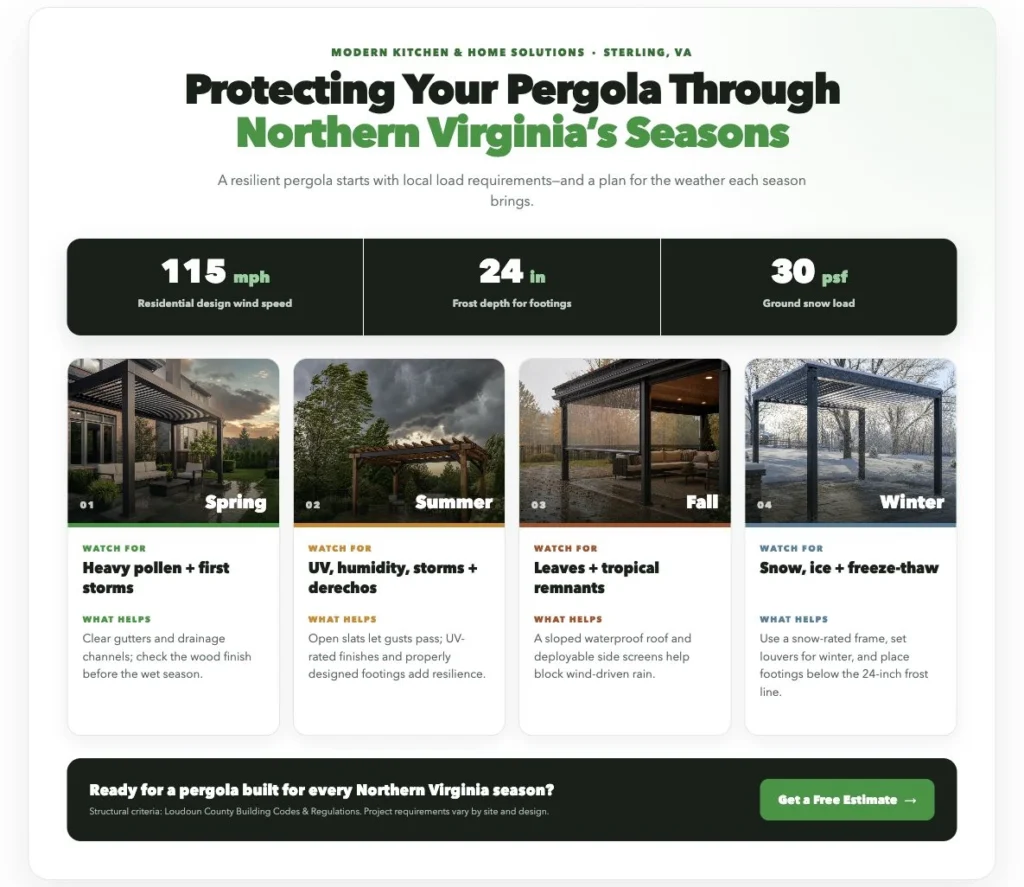
Northern Virginia sits in a humid subtropical climate and mostly in USDA hardiness zone 7. In practice that means four genuinely distinct seasons, each with its own way of working on an outdoor structure: heat and humidity in summer, freeze-thaw cycling in winter, and meaningful precipitation year-round in the form of rain, snow, and ice. A pergola here has to handle moisture and UV in the warm months and load and freezing in the cold ones, which is why weatherproofing is less about a single cover and more about matching the whole structure to the full calendar.
Season by Season: What Your Pergola Faces
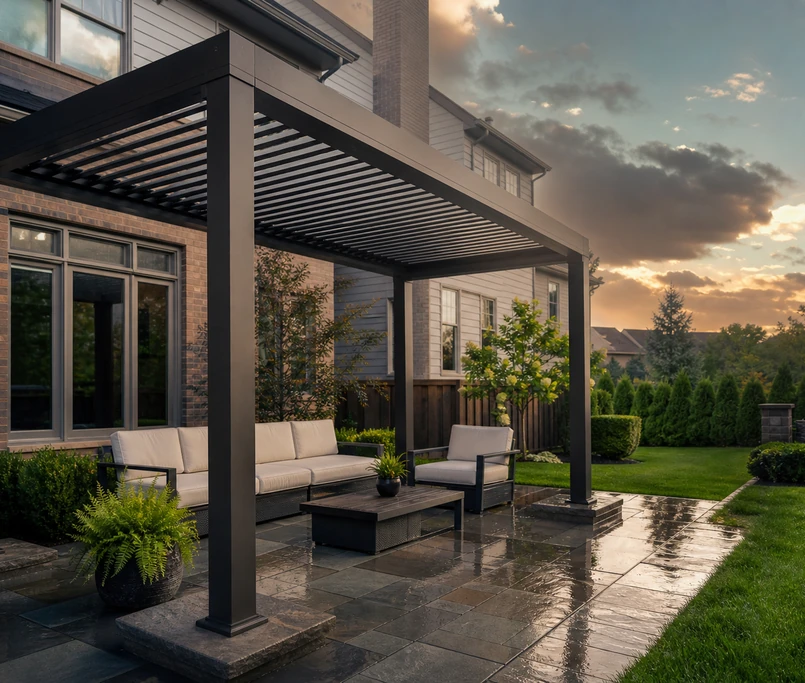
Spring: Pollen and the First Storms
Spring in the DMV is defined by two things a pergola owner feels directly: an enormous pollen load and the return of thunderstorms. Pollen isn’t just cosmetic. It settles into louver channels, gutters, and the joints of the frame, where combined with spring rain it holds moisture against the wood and clogs any built-in drainage. A spring cleaning pass, clearing pollen and debris off the top and out of the gutters, is the single most useful seasonal habit here. It’s also the right time to confirm the wood’s finish came through winter intact before the wet season ramps up.
Summer: Heat, Humidity, and Severe Thunderstorms
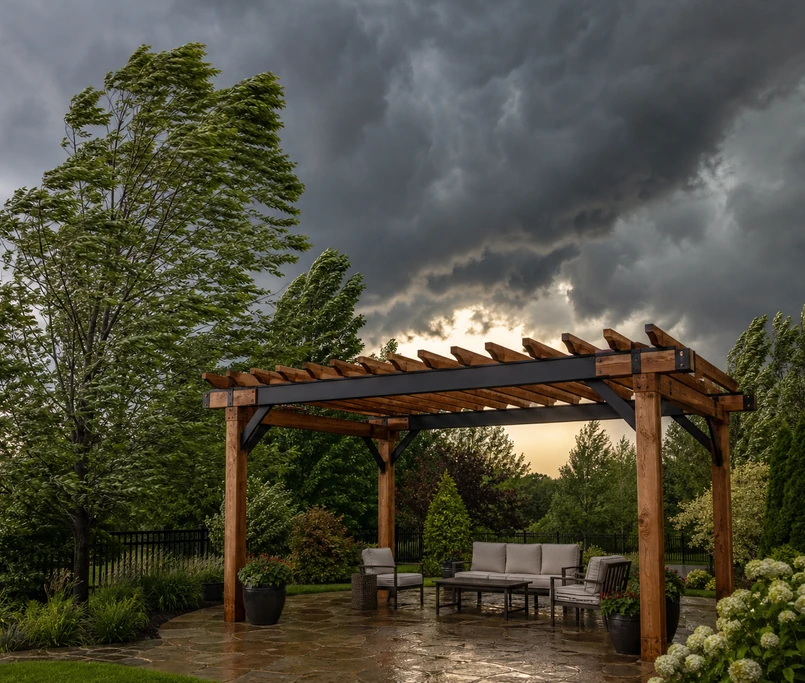
Summer brings intense UV, high humidity, and the region’s most violent weather. The sun fades finishes and dries out unsealed wood, while the humidity feeds mildew on shaded, slow-drying surfaces. On top of that, Northern Virginia summers produce sudden severe thunderstorms and occasional derechos, straight-line wind events that can hit like a brief hurricane. Those gusts, not steady wind, are what most threaten a covered pergola here, which shapes the wind strategy below.
Fall: Leaves and Tropical Remnants
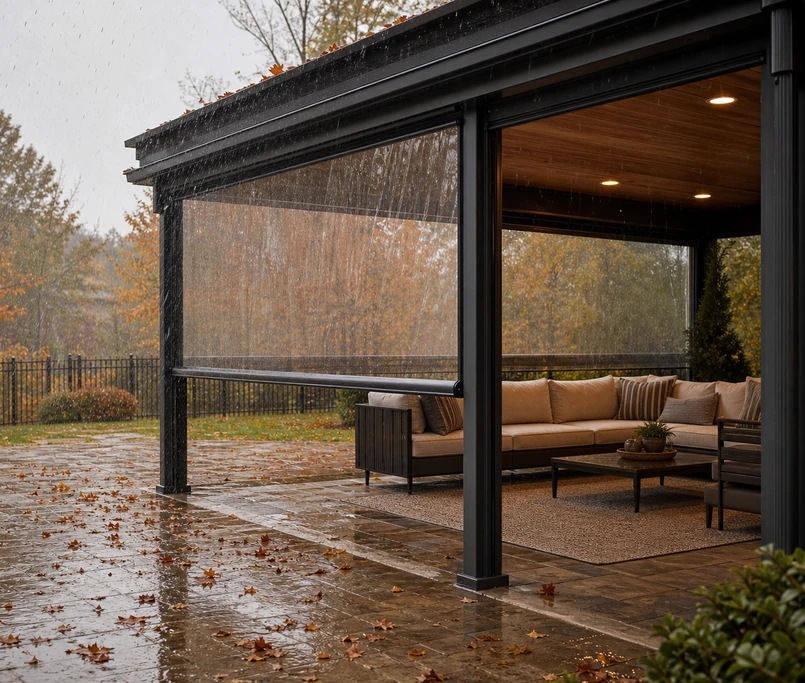
Fall is deceptively hard on a pergola. Falling leaves pile into gutters and roof channels, and the season regularly catches the remnants of Atlantic tropical systems moving inland, which arrive as sustained wind and heavy, wind-driven rain rather than a passing storm. That combination, clogged drainage plus an extended soaking blown in from the side, is exactly what overwhelms a cover that drains poorly or has no side protection. Clearing leaves and confirming drainage before late-season storms is fall’s version of the spring cleanup.
Winter: Snow, Ice, and Freeze-Thaw
Winter is where the region is genuinely tougher on structures than its mild reputation suggests. Northern Virginia gets both snow and ice, and freezing rain is arguably the bigger hazard: ice accumulates as a heavy, clinging load on any solid surface and weighs down nearby tree limbs that can fall onto a structure. Underneath it all, the repeated freeze-thaw cycle is constantly working on the footings and any trapped moisture in the wood, expanding and contracting through the season. Protecting a pergola through a NoVA winter means planning for load, for ice, and for that freeze-thaw movement, covered in the sections that follow.
Rain: Cover Options From Simple to Permanent
A traditional open-slat pergola is not waterproof, and no amount of sealing changes that. If you want to sit under it during a summer storm, you’re adding a cover, and the options run from removable to permanent.
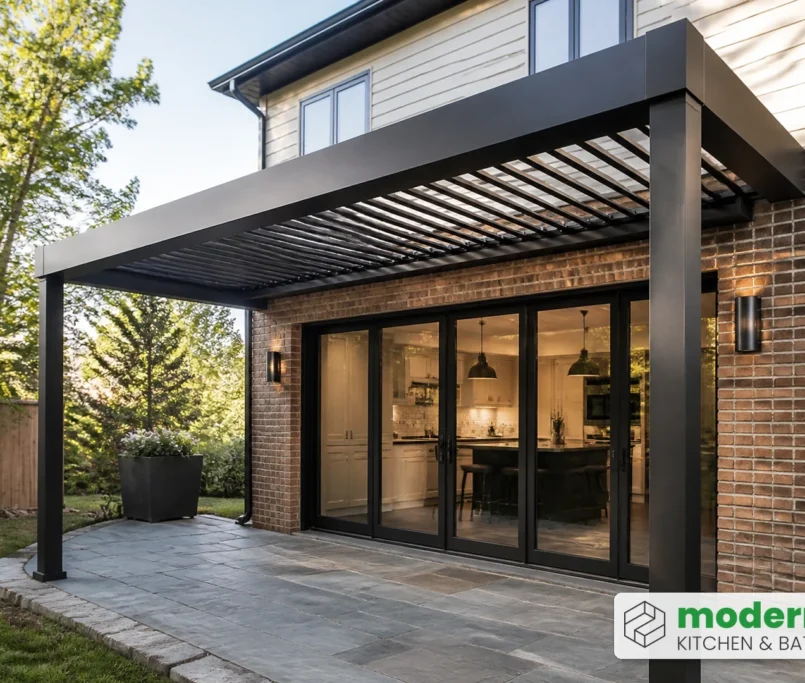
The simplest is a waterproof fabric canopy: heavy polyester or vinyl treated with a water-blocking coating, strapped over the frame. It’s easy to put up and take down, but it has to be installed with a slope so water sheds, and it can’t carry a winter snow or ice load. A step up is rigid polycarbonate paneling, clear or tinted sheets that screw to the top beams and block rain while still passing light, though it can yellow after many years of our summer sun. The premium option is a motorized louvered aluminum roof: slats that close into a solid surface and channel water into gutters built into the frame and posts, then open again for airflow once the storm passes.
Whatever the cover, drainage is what makes it work through our storm seasons. A waterproof roof needs a minimum slope of about one inch of drop per foot so water runs off rather than pooling, and on an attached pergola the ledger connection to the house has to be flashed properly so runoff sheds away from the siding, not behind it. That flashing detail matters even more here given how much wind-driven rain arrives in fall.
Wind: Why an Open Pergola Is Often the Safer One
Residential structures in Northern Virginia are engineered to a design wind speed of 115 mph under the Virginia building code, and the wind that actually tests a pergola here is the sudden thunderstorm gust or derecho, not steady breeze. That reality flips a common assumption: the open pergola people think of as “unprotected” is usually the one that handles wind best. Open slats let air pass straight through. A solid roof, a closed louver panel, or a stretched canopy does the opposite, catching wind like a sail and driving that force into the posts and footings. It’s why adding a solid cover to a frame that wasn’t engineered for it is risky, and why louvered and retractable systems should be opened, not sealed, when a storm is coming in.
If wind is a priority for your site, the defense is in the frame, not the cover: properly sized posts, footings set below our frost line, solid anchoring hardware, and knee braces in the upper corners to resist racking. For privacy or side protection, wind-permeable mesh handles gusts far better than solid walls, and orienting the open sides away from the prevailing storm direction reduces the load the structure fights. Our orientation guide covers reading your site’s winds in more detail.
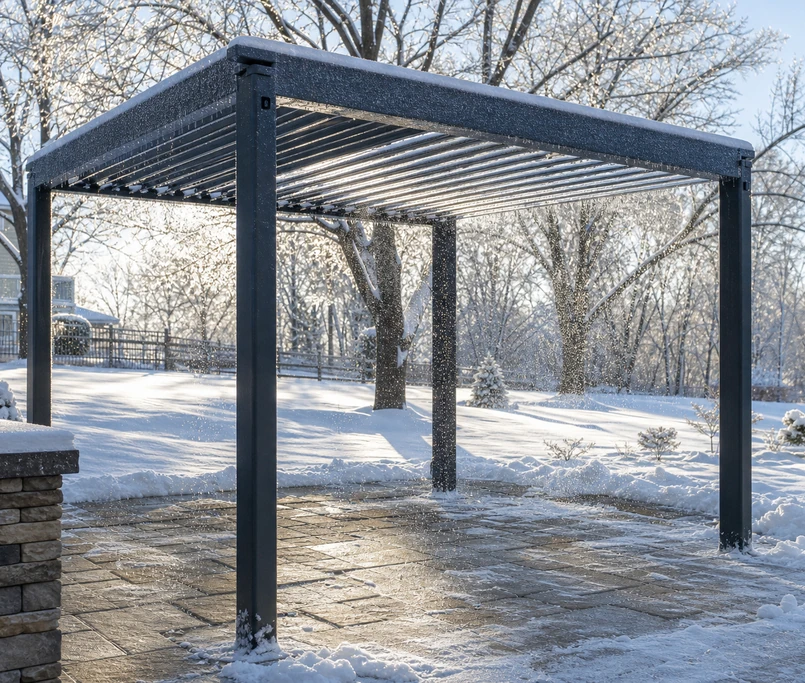
Snow and Ice: The Loads Most Covers Aren’t Built For
This is where a rain-only weatherproofing job fails a NoVA winter. A fabric canopy will sag and then tear or collapse under wet snow. Polycarbonate and solid panels add a fixed surface that collects snow and, worse, ice, which an open frame never would. Before committing to any solid or fabric cover, the structure needs to be rated for the region’s ground snow load, typically around 25 to 30 pounds per square foot, and ideally for the extra clinging weight of an ice storm on top of that.
If you have a louvered roof, the winter move is simple: set the slats to the manufacturer’s designated snow position, or open them so snow and sleet fall through rather than piling on top. If you have a removable fabric canopy, take it down before the first real snow or ice event. And if you’re weighing a permanent solid roof, treat snow and ice load as a structural question answered during design, covered in our design metrics guide, not something discovered the first hard winter after the panels go up.
Anchoring for Our Frost Line
Weather protection starts underground. In Loudoun and the surrounding counties, the frost depth is 24 inches, and footings need to extend below that line so the winter freeze-thaw cycle can’t heave and shift the posts over successive seasons. This matters more for a weatherproofed pergola than an open one: a structure carrying a solid or louvered roof, and the wind and snow loads that come with it, transfers far more force into those footings. Shallow footings that seem fine under an open frame can start to lift or lean once a cover is added and the first freeze-thaw winter works on them. Getting the footing depth right for our frost line is part of weatherproofing, not separate from it.
A Permit Note Before You Add a Roof
Turning an open pergola into a covered one can change it enough, structurally and by square footage of solid roof, to require a permit in Northern Virginia jurisdictions, and HOA rules may weigh in on the roofing material and appearance separately. Because a solid or louvered roof adds real wind and snow load to the structure, the permitting question is also a safety question, not just paperwork. It’s worth confirming requirements with your county and HOA before adding a roof, the same way you would for the original build. Our pergola dimensions guide covers local permit and setback basics in more depth.
Weather Protection at a Glance
| NoVA Season / Threat | Best Defenses | Watch Out For |
|---|---|---|
| Spring pollen and rain | Clear gutters and channels; confirm wood finish | Pollen holds moisture and clogs drainage |
| Summer UV and mildew | UV-rated finishes, powder-coated aluminum, shade sails | Faded finishes, mildew on slow-drying wood |
| Summer thunderstorms and derechos | Open slats, deep footings, knee braces | Solid covers act like a sail in sudden gusts |
| Fall tropical remnants | Sloped waterproof roof, deployable side screens | Wind-driven rain from open sides; clogged drainage |
| Winter snow and ice | Snow-rated frame, louvers in winter position | Fabric collapses; ice adds clinging load |
| Freeze-thaw (all winter) | Footings below the 24-in frost line | Shallow footings heave and lean under a roof |
Frequently Asked Questions for Protect Your Pergola from Harsh Weather
How much wind can a pergola withstand in Northern Virginia?
Residential structures in Northern Virginia are built to a design wind speed of 115 mph under the Virginia building code, and a properly engineered pergola with adequately sized posts, deep footings, and solid anchoring is built to that standard. The bigger variable is the cover: an open pergola lets wind pass through, while a solid or closed roof catches it like a sail and puts far more load on the frame, which is why covered systems should be opened during severe thunderstorm or derecho gusts.
What can you put on top of a pergola to keep the rain out?
The three main options are rigid polycarbonate panels that block rain while passing light, a waterproof fabric canopy installed with a slope so water sheds, or an adjustable louvered roof whose slats close into a solid, gutter-drained surface. For Northern Virginia, remember that fabric can’t carry a winter snow or ice load, so polycarbonate or a louvered aluminum roof is the more durable year-round choice.
Should a pergola be open or closed during high winds?
Open. Retractable and louvered pergolas should be moved to the open position during the sudden gusts our summer thunderstorms and derechos produce, so air passes through rather than pushing against a sealed surface. Leaving a roof closed or a canopy stretched in a strong wind event turns the structure into a sail and risks damage to the roof, frame, or anchoring.
Will a pergola hold up to snow and ice in Virginia?
A pergola engineered for the region’s roughly 25 to 30 pounds per square foot ground snow load will, but many open-frame kits are not rated to carry a solid or fabric cover loaded with snow, and ice adds clinging weight on top of that. If your pergola has a louvered roof, set it to the winter position or open the slats so snow and sleet fall through; if it has a fabric canopy, remove it before the first real snow or ice.
Do I need a permit to add a roof to my pergola in Northern Virginia?
Often, yes. Adding a solid or louvered roof can change the structure and its load enough to trigger a permit in local jurisdictions, and HOA rules may separately govern the roofing material and appearance. Because the roof adds real wind and snow load, it’s a safety matter as much as a paperwork one, so confirm requirements with your county and HOA before adding one.
How do you winterize a pergola?
Clear leaves and debris off the top and out of any gutters, wash the structure and let it dry, and tighten loose hardware. Reseal wood if the finish is due, or wipe and lightly lubricate the moving parts on an aluminum louvered system. Set a louvered roof to its winter position, and retract or remove any fabric canopy so snow and ice can’t collect and collapse it. In our climate, doing this before the first freeze protects both the finish and the footings through the freeze-thaw season.
Built and Prepared for Our Climate
The pergolas that stay usable and intact through a Northern Virginia year are the ones where the whole structure, from footing depth to roof choice to drainage, was matched to our actual seasons rather than weather in the abstract. Humid summers, fall storm remnants, and a winter of snow, ice, and freeze-thaw each ask something different, and a pergola planned for all four holds up where a rain-only solution fails. At Modern Kitchen, we design and build outdoor structures for Sterling and the surrounding Northern Virginia communities with our climate and local code figures built in from the first drawing.
Want a pergola that’s ready for every Northern Virginia season, or protection added to the one you have?
Get a Free Estimate
Found this helpful? Make us your go-to source on Google
If our content has been useful, you can tell Google to show more of it when you search. Click below, then check the box next to Modern Kitchen and Bath on the page that opens. It takes about five seconds.

You'll need to be signed in to your Google account. One click, then tick the box next to our name.