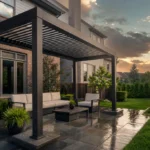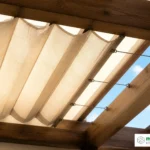
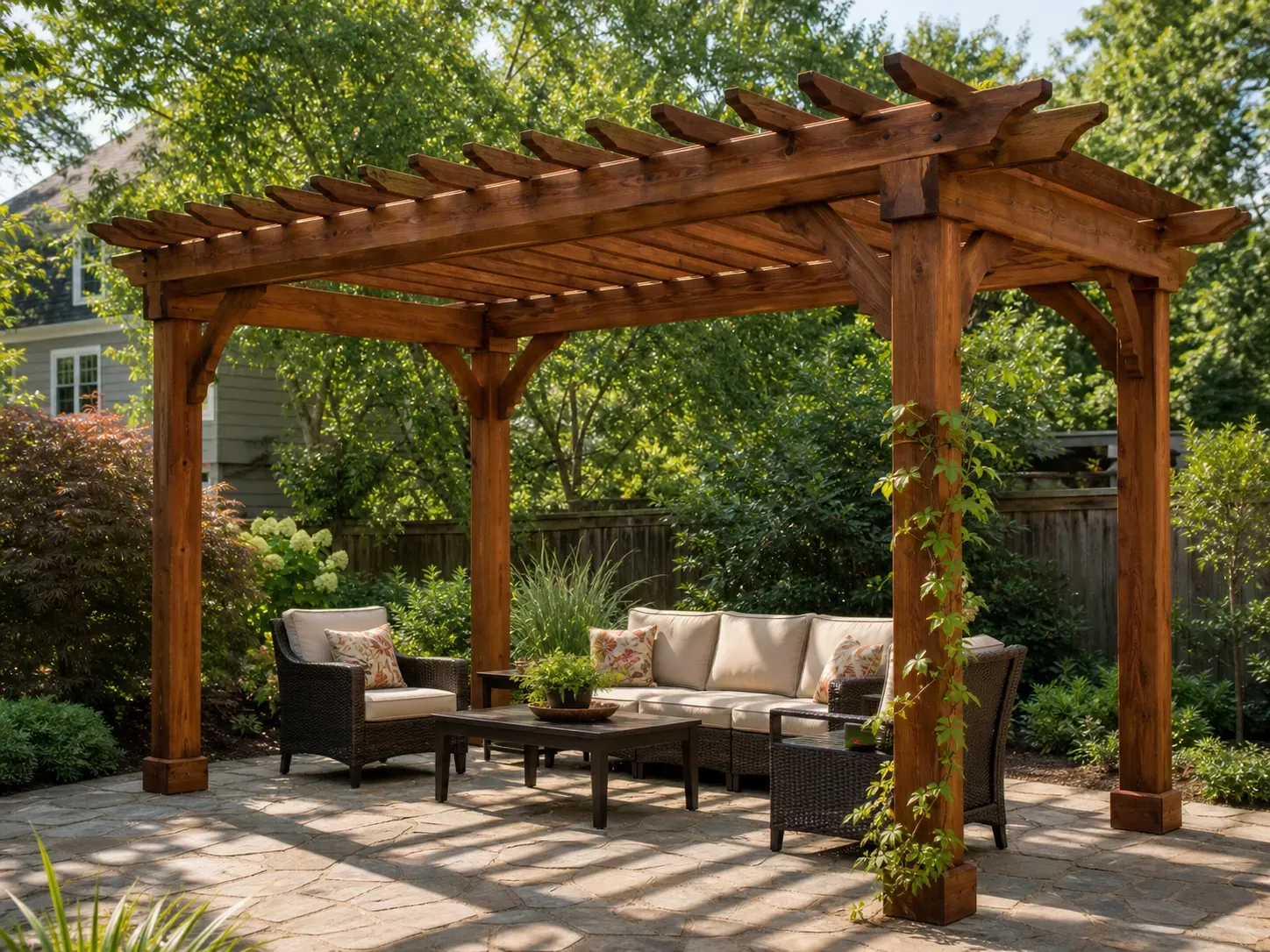
Material is the decision that shapes every other one. It sets how long your pergola lasts, how much upkeep it demands, what it costs upfront, whether it can carry a louvered roof, and how it handles a humid Sterling summer and an icy January. Homeowners tend to start with a look and back into the material, but here the smarter path is the reverse: understand how wood, vinyl, and aluminum actually behave in our climate, then choose the look within the one that fits your life. Here's the honest comparison for Northern Virginia.
This is the material companion to our guides on pergola design metrics, maintenance pitfalls, and protecting a pergola from harsh weather. Once you've picked a material, those cover how to size, maintain, and weatherproof it.
The Short Version
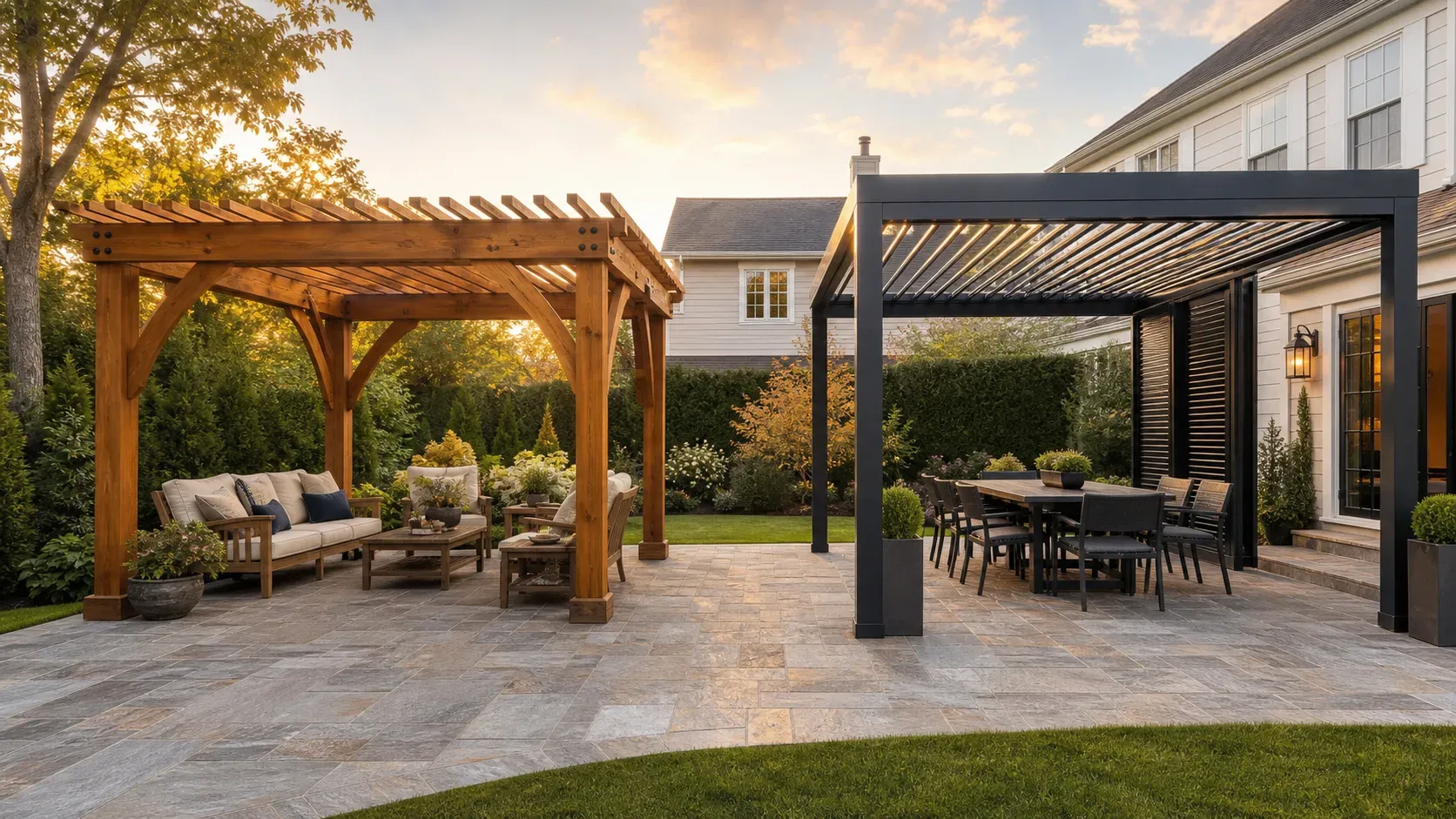
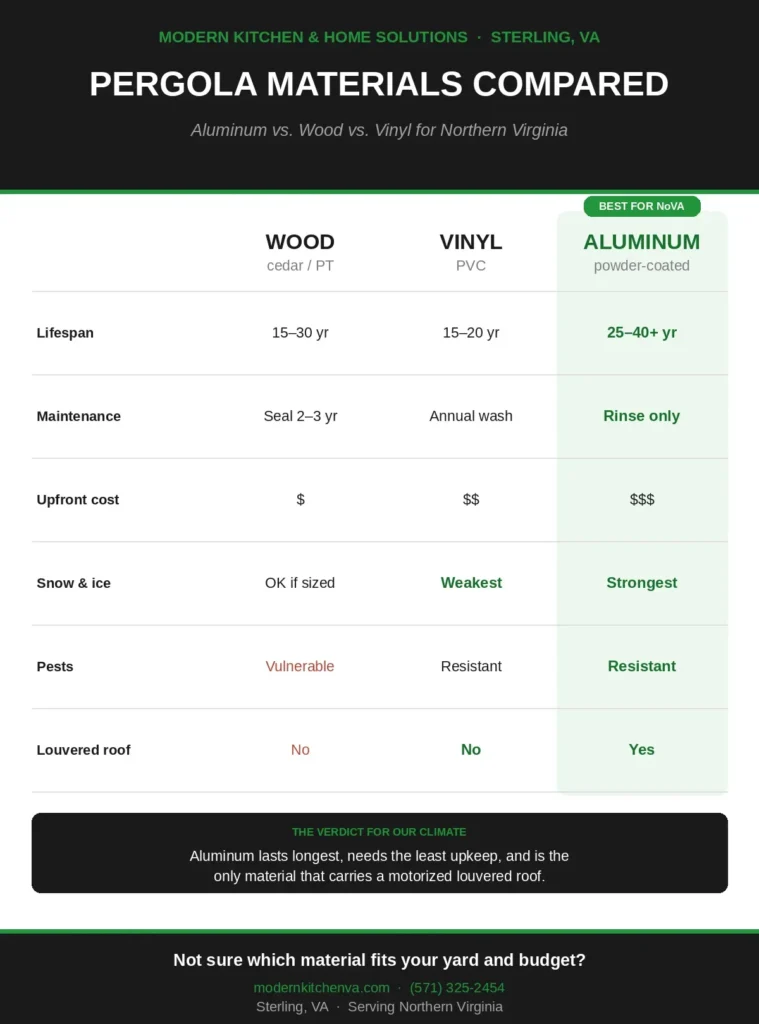
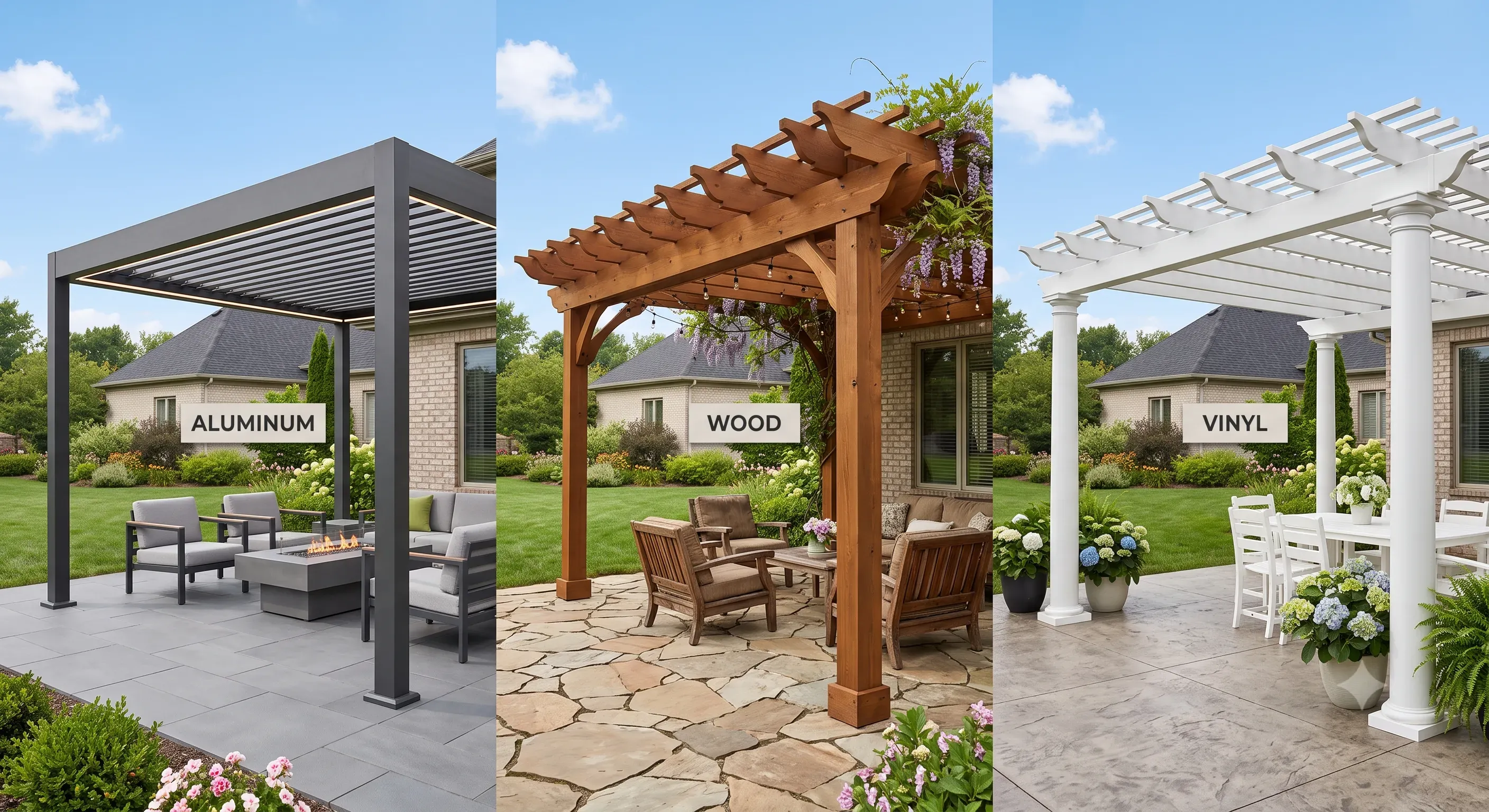
If you want the quick read: wood is the lowest upfront cost and the warmest look, but it asks for regular sealing and is the most vulnerable to our humidity, freeze-thaw, and pests. Vinyl is low-maintenance and mid-priced, but it's the weakest under snow load and the most limited in color and span. Aluminum costs the most upfront and lasts the longest with almost no upkeep, holds its finish for decades, and is the only one of the three that can carry a motorized louvered roof. Which is right depends on your budget, how much maintenance you'll realistically do, and how you want to use the space across the year. The sections below make the case for each honestly.
Wood: Warm, Affordable, and High-Upkeep
Wood is where most pergolas started, and it still wins on two things: a natural, warm look nothing synthetic quite matches, and the lowest entry price. Within wood you're usually choosing between cedar and pressure-treated lumber. Cedar brings a distinctive reddish tone and natural aroma and resists rot better on its own, but it must be stained rather than painted. Pressure-treated wood costs less and can be painted or stained in more colors, though it's more prone to rot, mold, and insects and leans on its chemical treatment for protection.
The tradeoff is upkeep, and Northern Virginia is hard on wood. Our humid summers feed mildew on shaded, slow-drying surfaces, and the winter freeze-thaw cycle works moisture into any unsealed grain. A wood pergola needs a penetrating exterior stain and sealant refreshed every 2 to 3 years to reach its potential lifespan of roughly 15 to 30 years; skip that rhythm and it fails far sooner, usually rotting at the post bases first. Our maintenance guide covers that upkeep in detail.
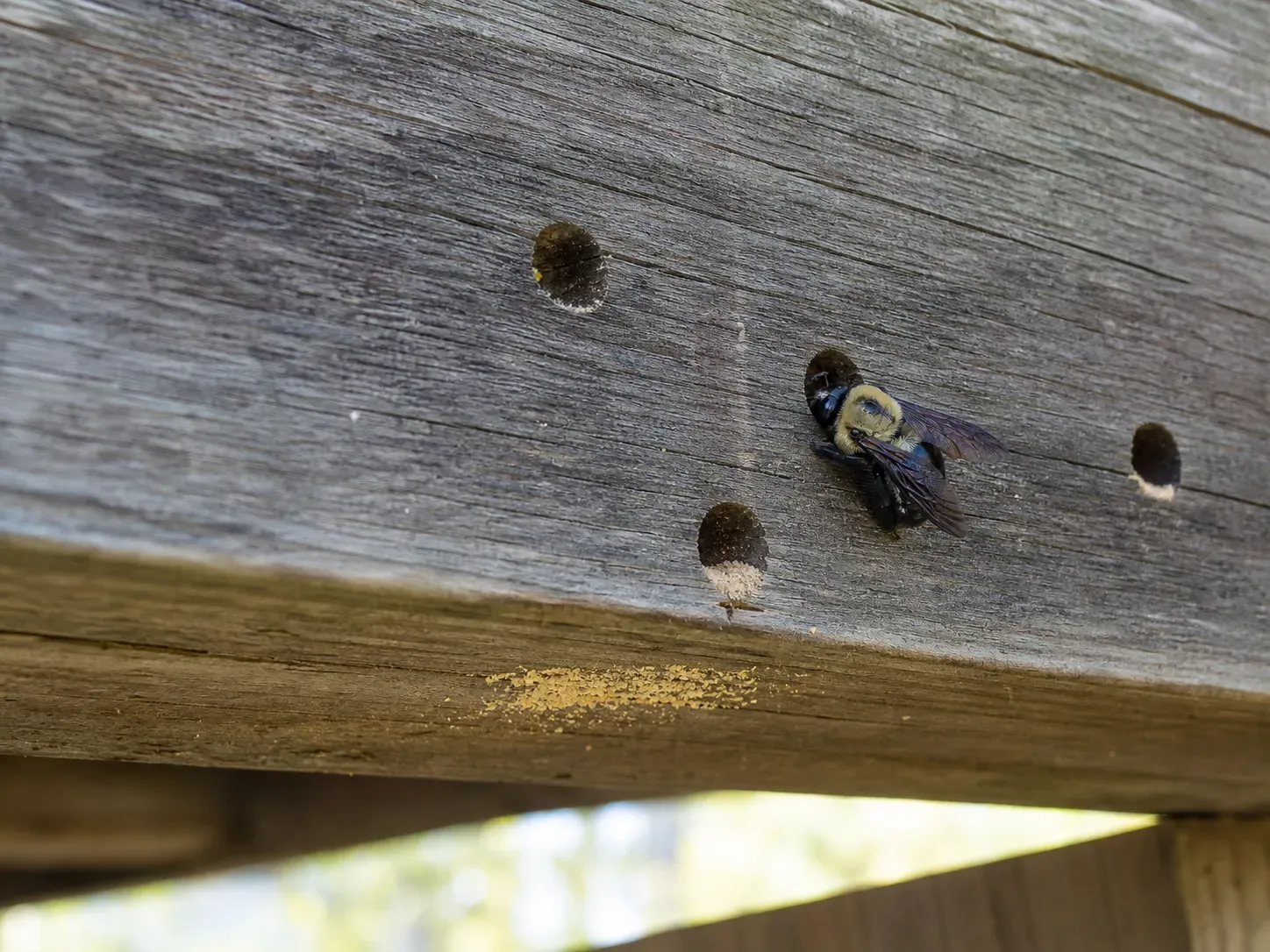
Pests are the other reality homeowners underestimate. Carpenter bees bore into wood beams to nest, and the woodpeckers that come hunting the larvae can do real cosmetic and structural damage on top of that. Untreated wood invites termites, which is why builders steer toward cedar or treated lumber for anything in ground or post contact. And a warning worth heeding: pressure-treated lumber tends to warp and twist as it dries out after installation, so if you go the wood route, cedar generally holds its shape and looks better over time. Wood is the right call if the natural look is non-negotiable and you'll genuinely keep up with the maintenance and the occasional pest patrol. It's the wrong call if a busy summer means the sealing never happens.
Vinyl: Low-Maintenance With Real Limits
Vinyl sits in the middle on price and low on maintenance. It won't rot, it shrugs off insects, and an annual wash is usually all it needs to keep its color. For a homeowner who wants a clean, formal look without a staining schedule, that's a genuine appeal.
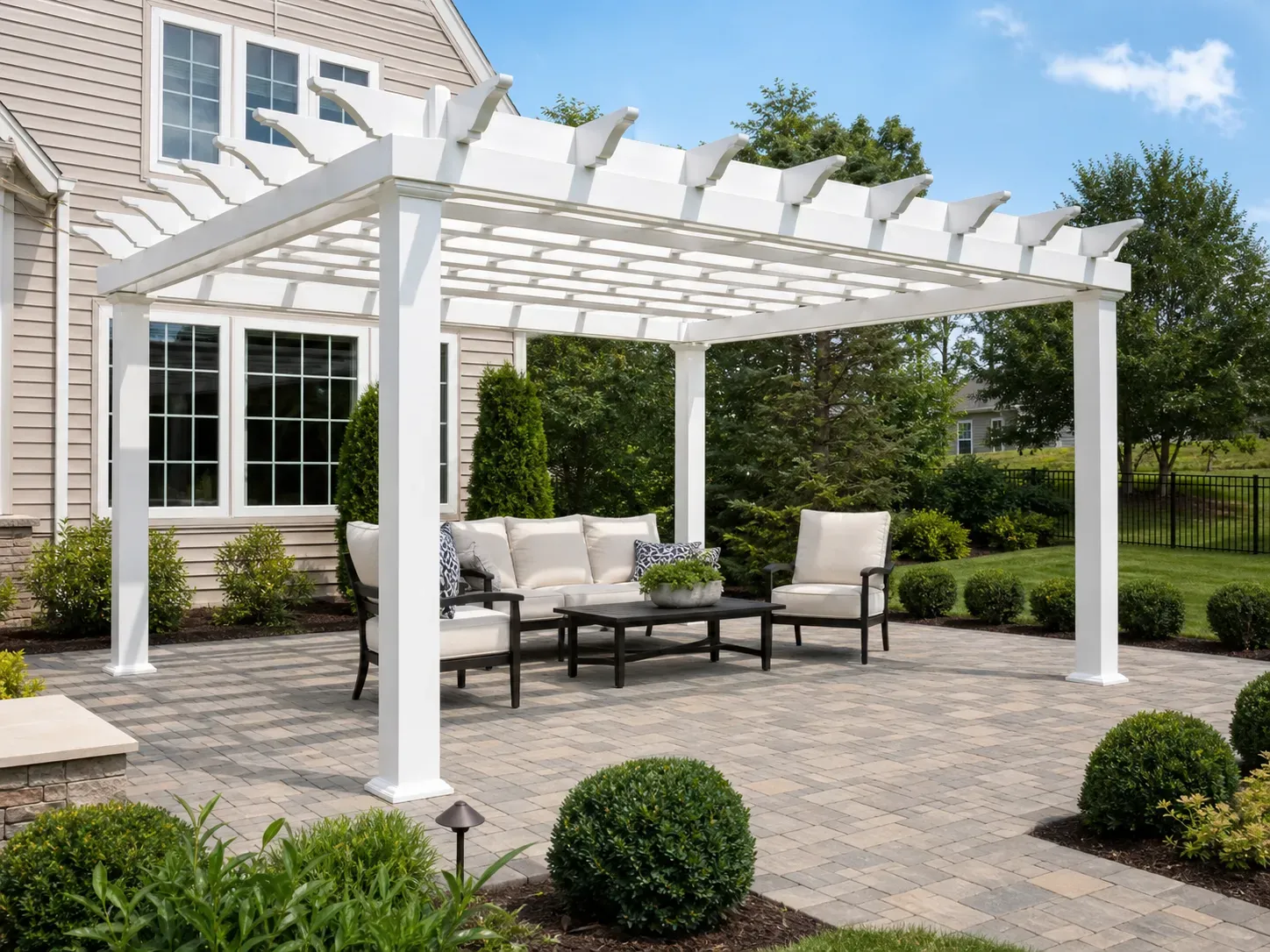
The limits matter more in our climate than in a milder one. Vinyl is the least sturdy of the three under a snow load, which is a real consideration given Northern Virginia's wet snows and ice, and it can become brittle in hard cold. Its structural spans are more limited, so large designs are harder to build in vinyl than in wood or aluminum, and color choice is narrow, usually white or beige, since painting it adds back maintenance. It can also read as less premium than aluminum up close. Vinyl makes sense for a modest, formal, low-upkeep pergola in a sheltered spot. It's a weaker choice for a large structure or an exposed yard that sees the brunt of winter.
Aluminum: Durable, Low-Maintenance, and Built for Louvers
Aluminum is the most expensive of the three to buy and the least expensive to own. It doesn't rot, rust, warp, or feed insects, and because the color is baked in through a powder-coated finish rather than painted on, it holds that color for decades with nothing more than an occasional rinse. Quality aluminum pergolas routinely last 25 to 40 years and beyond, which is why it's the durability leader by a wide margin. The finish comes in a far wider palette than vinyl's white-and-beige, with textured coatings that can match your home, and the overall look is clean and modern.
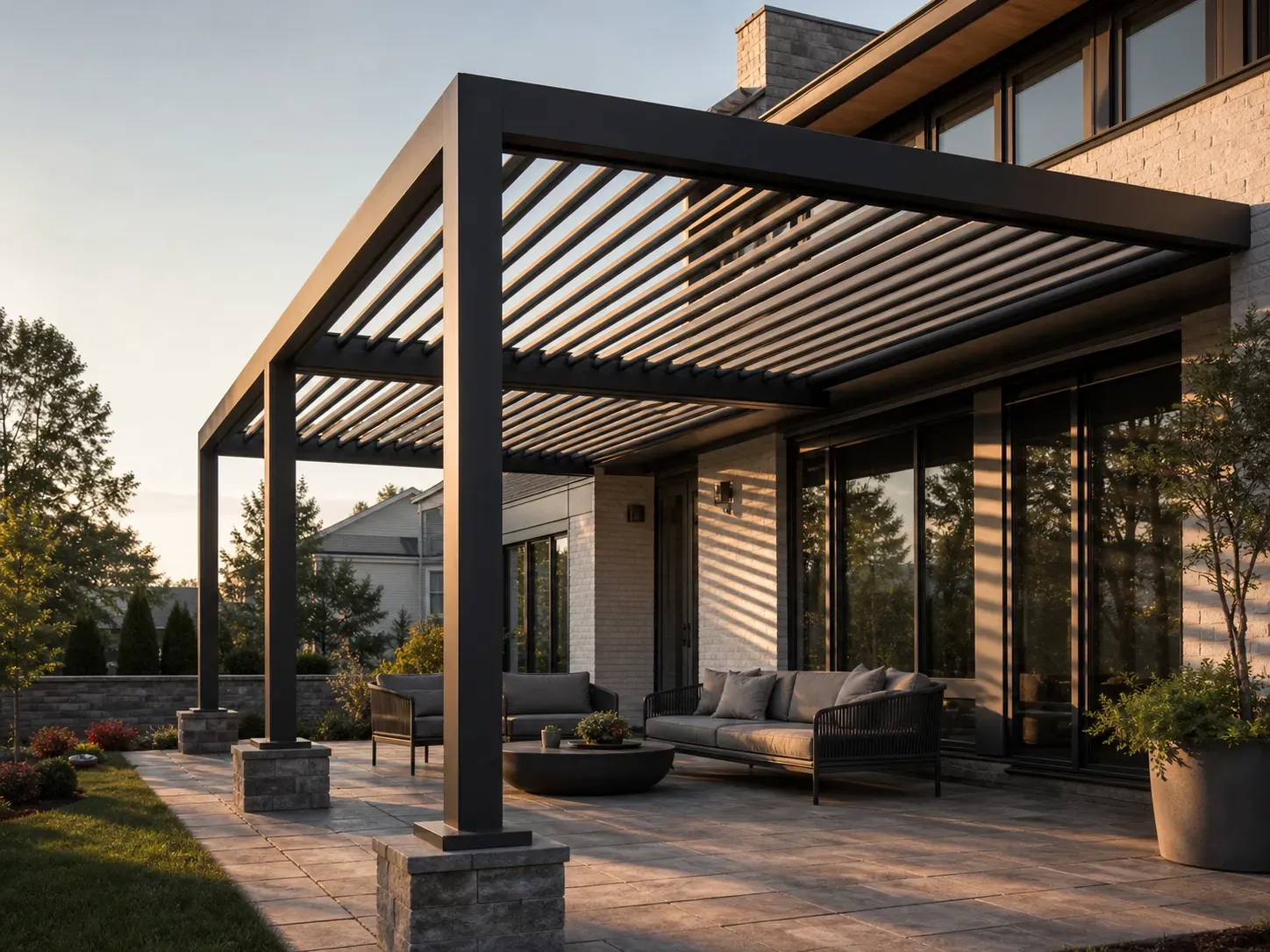
For Northern Virginia specifically, aluminum lines up with the climate better than either alternative. It handles our humidity without mildew concerns, carries snow and ice loads that trouble vinyl, resists the carpenter bees and termites that go after wood, and stands up to the summer thunderstorm and derecho gusts our harsh-weather guide describes.
Aluminum has honest downsides too, and they're worth naming. Some homeowners feel it reads as less warm and less permanent than solid wood up close. Because it's lighter, an under-anchored aluminum pergola can move or creak in strong wind, though proper footings and anchoring solve that entirely, which is exactly why installation quality matters. The metal can get hot to the touch in direct summer sun, hail can mar the powder-coated finish, and it's less suited to hanging heavy plants than a timber beam. There's also a wide quality gap in the market: budget big-box aluminum kits are not the same product as a professionally installed, properly engineered louvered system, and the low-cost end is where most of the movement and durability complaints come from. The upfront cost is the other real tradeoff, and a tight budget or a strong preference for natural wood are legitimate reasons to choose otherwise. But measured over the life of a well-installed structure, aluminum is usually the lowest total cost of ownership.
The Louvered Roof Only One Material Supports
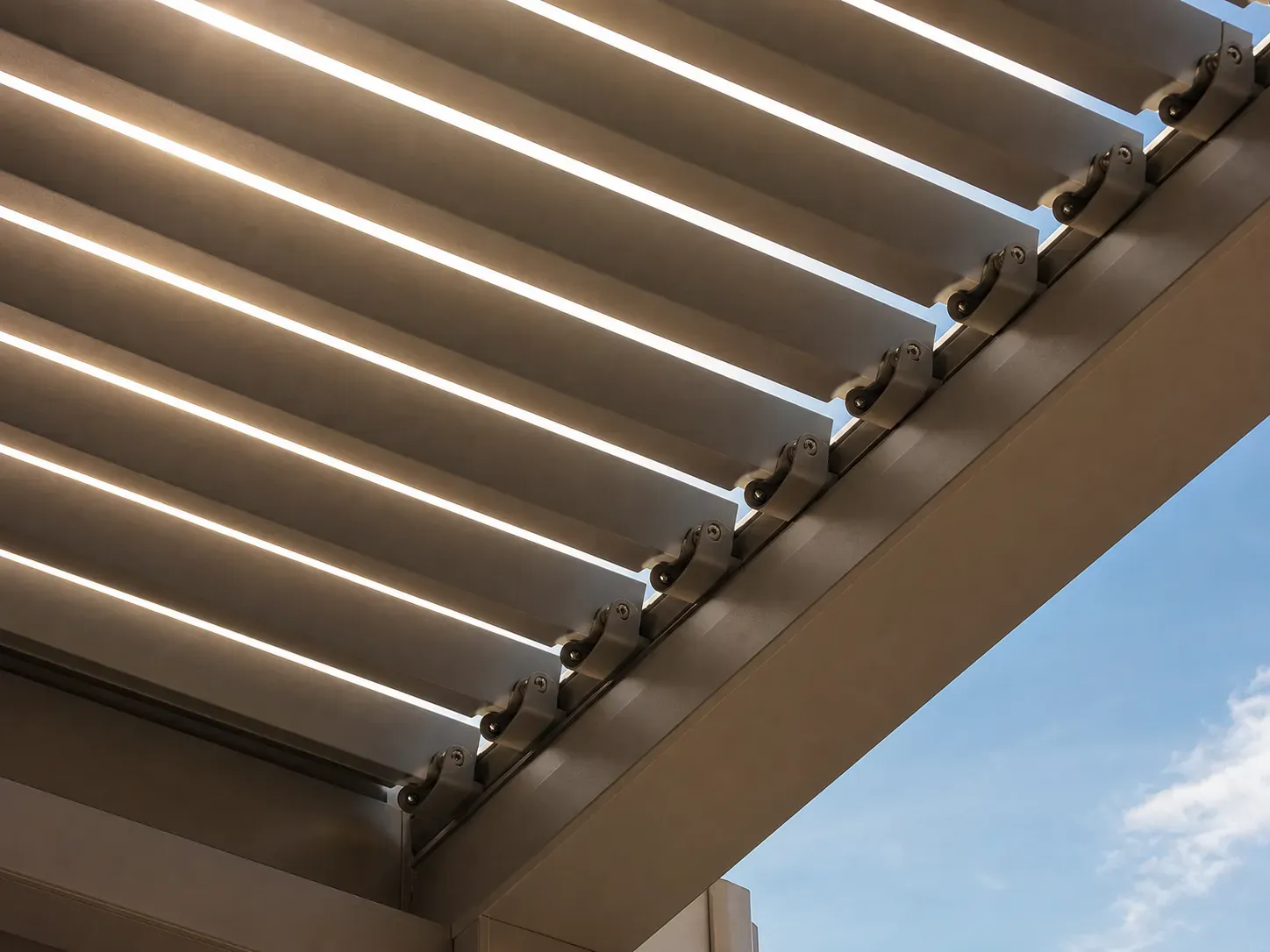
There's one capability that isn't a matter of taste. Wood and vinyl pergolas have a fixed roof, either open lattice or a solid panel, which means you can't change how much sun or rain reaches the space. The most versatile pergolas use a motorized louvered roof, aluminum slats that rotate open for full sun, angle for partial shade, or close into a solid, gutter-drained surface when it rains. That system is only practical in aluminum, because it needs the strength-to-weight and corrosion resistance the other materials can't match at that moving-part precision.
If year-round usability is the goal, being able to open the roof on a clear October evening and close it against a July downpour, that points to aluminum by default. It's also the feature that turns a pergola from a fair-weather structure into one that works across all four of our seasons. Our guide on adjusting louvered pergola shades covers how that mechanism works day to day.
Side-by-Side Comparison
| Factor | Wood (Cedar / PT) | Vinyl | Aluminum |
|---|---|---|---|
| Typical lifespan | 15–30 yrs with upkeep | 15–20 yrs | 25–40+ yrs |
| Maintenance | Reseal/stain every 2–3 yrs | Occasional wash | Occasional rinse |
| Upfront cost | Lowest | Mid | Highest |
| Snow / ice load | Good if sized right | Weakest | Strongest |
| Humidity / rot | Prone without upkeep | Resistant | Resistant |
| Pests (bees, termites) | Vulnerable | Resistant | Resistant |
| Color options | Stain (cedar), paint (PT) | Mostly white/beige | Wide powder-coat palette |
| Louvered roof | No | No | Yes |
| Look | Warm, natural | Clean, formal | Modern, sleek |

How to Choose for Your Priorities
Start from what matters most to you, not from a catalog photo. If lowest upfront cost drives the decision and you'll keep up with sealing, wood is your material, ideally cedar for its natural rot resistance. If you want low maintenance at a moderate price, a modest formal look, and your pergola sits in a sheltered spot out of the worst weather, vinyl can work. If you want the longest life, the least upkeep, a louvered roof, or a structure that carries our snow and wind without worry, aluminum is the fit, and it's why it's the material behind most modern louvered systems.
The one framing to avoid is treating upfront price as the whole cost. Wood's lower sticker comes with 2-to-3-year maintenance cycles and a shorter life; aluminum's higher sticker comes with decades of near-zero upkeep. Over ten or twenty years, the ranking often flips.
What Our Climate Rewards
Step back to the region and a pattern emerges. Northern Virginia's humidity punishes unsealed wood, its wet snow and ice test vinyl's load limits, its carpenter bees and termites go after timber, and its summer storm gusts reward a strong, well-anchored frame. None of that makes wood or vinyl wrong, they're the right answer for the right priorities, but it does explain why aluminum, and aluminum louvered systems in particular, has become the default for homeowners who want a pergola that simply works across all four seasons with minimal fuss.
Frequently Asked Questions for Pergola Materials
What is the best material for a pergola in Northern Virginia?
For most homeowners here, aluminum is the best all-around choice: it resists the humidity that rots wood, carries the snow and ice loads that strain vinyl, shrugs off the carpenter bees and termites that go after timber, holds up to summer storm gusts, and needs almost no maintenance. Wood remains the best pick if a natural look and lowest upfront cost matter most and you'll keep up with sealing, and vinyl suits a modest, low-maintenance structure in a sheltered spot.
How long does each pergola material last?
Roughly speaking, a wood pergola lasts 15 to 30 years with consistent sealing and staining, vinyl lasts around 15 to 20 years, and quality powder-coated aluminum lasts 25 to 40 years or more. The biggest variable for wood is whether the maintenance actually happens; for aluminum it's mostly just finish quality.
Is an aluminum pergola worth the extra cost?
Usually, yes, when you measure total cost rather than sticker price. Aluminum costs the most upfront but needs almost no upkeep and lasts decades, while wood's lower entry price comes with recurring sealing costs and a shorter life. Over ten to twenty years the total often favors aluminum, and it's the only material that supports a motorized louvered roof.
Which pergola material needs the least maintenance?
Aluminum. Because its color is powder-coated into the finish rather than painted on, it holds up with nothing more than an occasional rinse, no sealing, staining, or rust treatment. Vinyl is close behind with an annual wash, while wood is the most maintenance-intensive, needing resealing every two to three years.
Cedar or pressure-treated wood for a pergola?
Cedar resists rot and insects naturally, carries a warm reddish tone and natural aroma, and must be stained rather than painted. Pressure-treated wood costs less and can be painted in more colors, but it relies on its chemical treatment for protection, is more prone to rot and mold, and tends to warp as it dries. Cedar is the more common pergola choice unless budget or a specific paint color is the priority.
Do vinyl pergolas hold up to snow?
Vinyl is the least sturdy of the three materials under a snow load and can grow brittle in hard cold, which is a real consideration for Northern Virginia's wet snows and ice. For a larger structure or an exposed yard, aluminum or properly sized wood handles winter loads better.
Do carpenter bees and other pests damage wood pergolas?
Yes, and it's one of the most underestimated downsides of wood. Carpenter bees bore into wood beams to nest, and woodpeckers hunting the larvae can enlarge the damage. Untreated wood is also vulnerable to termites. Cedar and treated lumber resist these better than raw softwood, and regular sealing helps, but aluminum sidesteps the pest issue entirely.
Do aluminum pergolas get hot or creak in the wind?
A properly installed one shouldn't creak. Aluminum is lighter than wood, so an under-anchored structure can move or make noise in strong wind, but adequate footings and anchoring eliminate that, which is why installation quality matters more than the material alone. The metal can get warm to the touch in direct summer sun, though light powder-coated finishes stay cooler than dark ones, and a louvered or covered roof keeps direct sun off the frame.
Found this helpful? Make us your go-to source on Google
If our content has been useful, you can tell Google to show more of it when you search. Click below, then check the box next to Modern Kitchen and Bath on the page that opens. It takes about five seconds.

You'll need to be signed in to your Google account. One click, then tick the box next to our name.