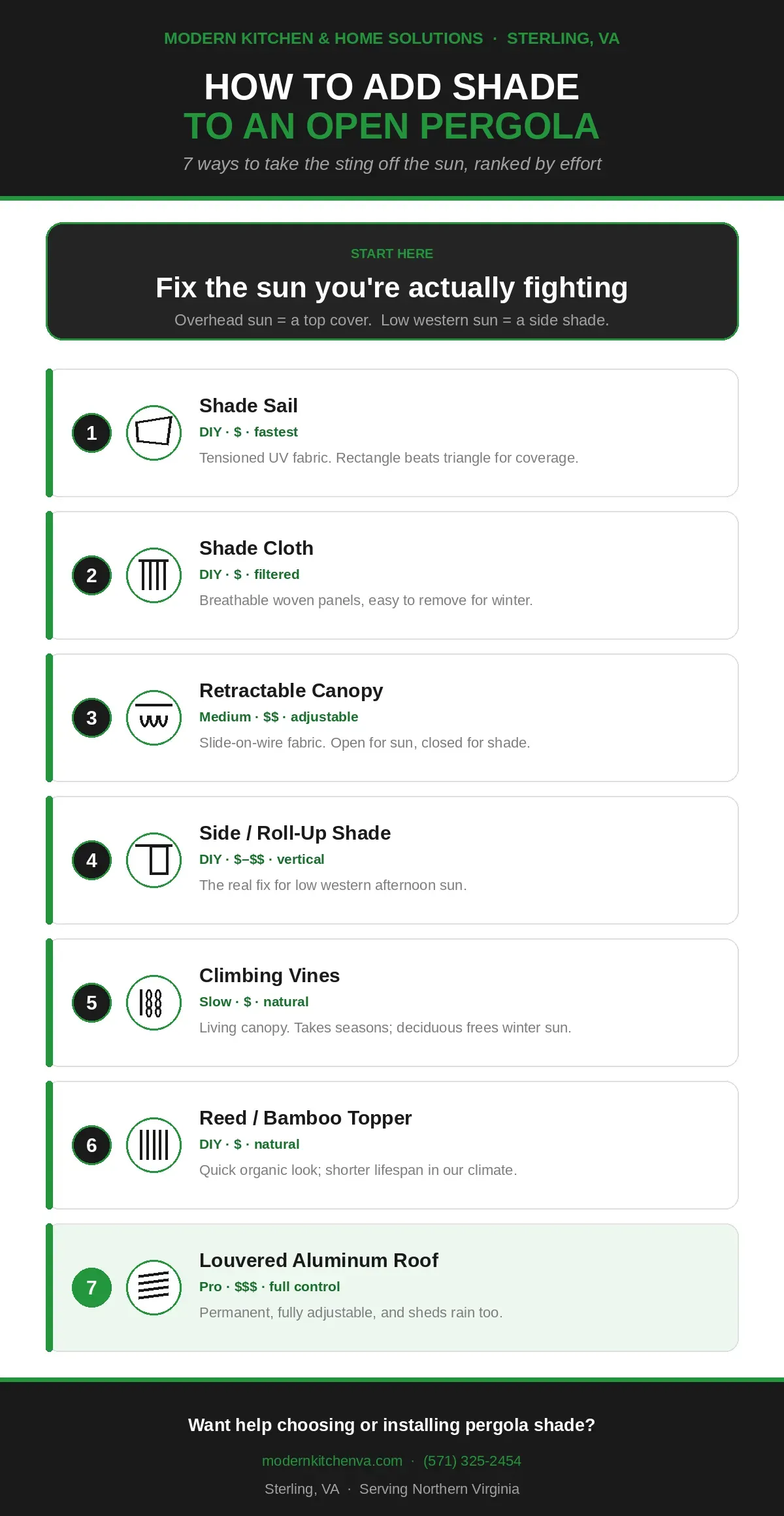
An open-slat pergola defines a space beautifully, but on a west-facing patio in July it can still leave you squinting into the late-afternoon sun. The good news is you don't need to rebuild anything. Adding real shade to a pergola you already have is usually a weekend project, sometimes an afternoon, and the options range from a fabric sail you hang yourself to a motorized canopy that retracts at the touch of a button. Here are the practical ways to take the sting out of the sun, ranked roughly from fastest and simplest to most involved, with notes on what actually works in Northern Virginia.
One quick distinction before the options: this guide is about adding shade and sun comfort to an open pergola. If you want full rain and snow protection, that's a permanent roof decision covered in our guides on protecting a pergola from harsh weather and pergola materials. And if positioning is still on the table, our orientation guide covers shade through sun-path planning.
Start With Where the Sun Actually Hits
Before buying anything, spend a weekend noticing when and where the sun becomes a problem. Most homeowners find the issue isn't overhead midday sun, which the slats already break up, but the low western sun that slides in under the roofline from mid-afternoon on. A west or southwest-facing patio takes the worst of it in summer. That single observation changes the answer: if your problem is overhead sun, an overhead cover solves it; if it's low afternoon glare, you'll want vertical shade on the western side as much as anything on top. Knowing which one you're fighting keeps you from spending on the wrong solution.
Shade Sails: Fast, Affordable, DIY-Friendly
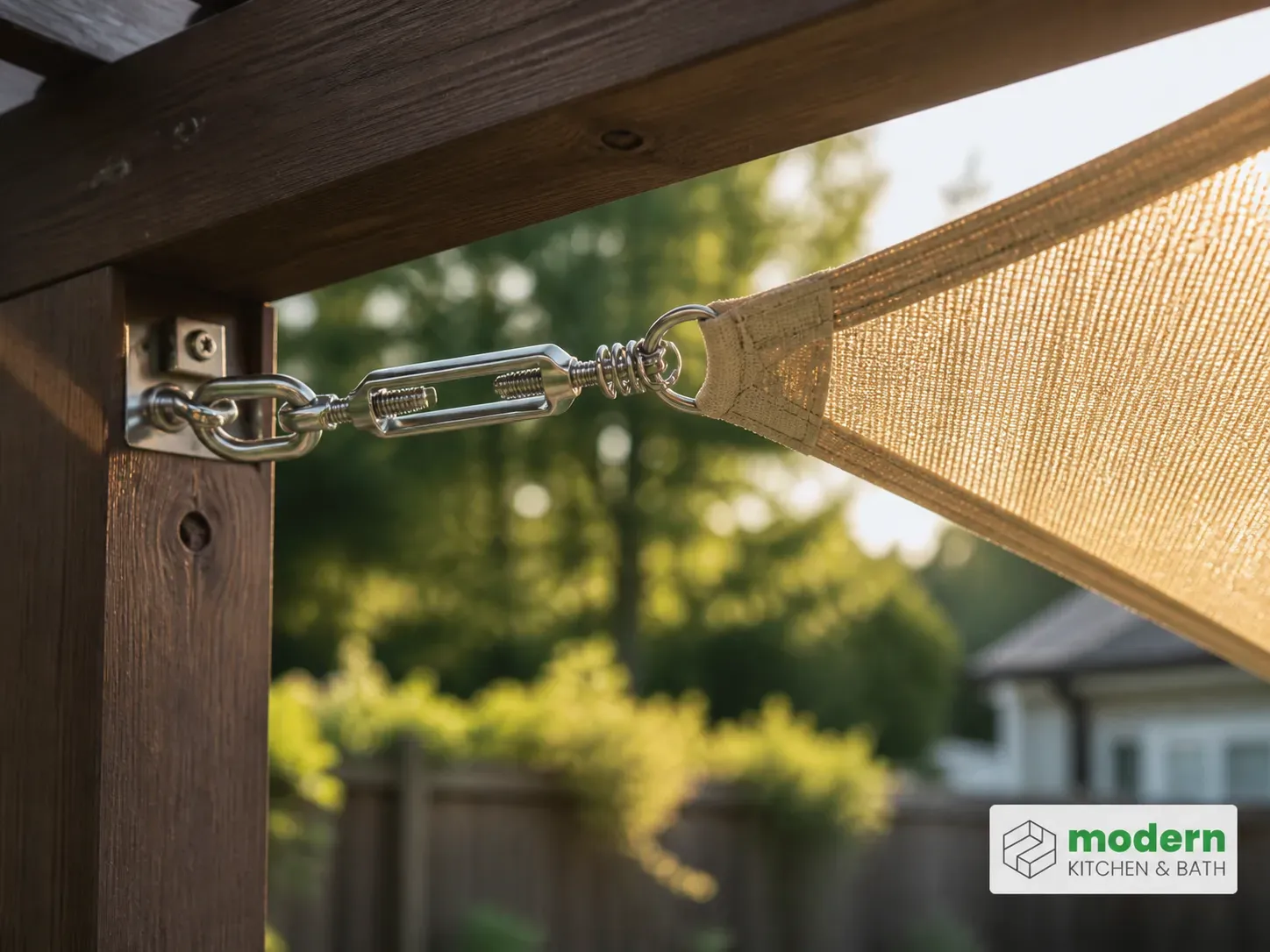
For immediate overhead shade with the least effort, a fabric shade sail is the go-to, and it's the option most homeowners reach for first. These are UV-blocking fabric panels you stretch across the top of the pergola and anchor at the corners. Installation is genuinely quick, often half an hour with stainless carabiners and a few tensioning fittings, and no special skills. They come in a wide range of sizes and colors, and custom sizes are available if your pergola isn't a standard footprint. One tip from people who install them a lot: a square or rectangle sail gives you more actual shade and more layout flexibility than a triangle, even though the triangle look is popular.
The one thing that makes or breaks a shade sail is tension. A saggy sail looks bad and flaps in the wind, so the goal is to pull it tight. The trick installers use is corner hardware that lets you crank the tension without tearing the fabric: springs to absorb gusts and turnbuckles to draw each corner tight, tensioning the lowest corner last. Use marine-grade stainless hardware so it doesn't rust in our humidity, mount the sail with a slight slope so water runs off, and respect the wind. A sail catches gusts, so anchor it to solid parts of the pergola frame and take it down or re-tension it before the severe summer thunderstorms our region sees. A well-tensioned sail is the fastest way to turn a sun-baked patio into a usable one.
Shade Cloth and Fabric Panels
A close cousin to the sail is shade cloth, breathable woven fabric rated by how much sun it blocks, typically in the 70 to 90 percent range. Where a sail is one large span, shade cloth can be run in panels between rafters or laid across the top slats, giving a more even, filtered light. It's inexpensive, easy to attach with clips or grommets, and easy to swap out or remove for winter. Because it's woven rather than solid, it breathes, which keeps hot air from pooling underneath the way it can under a solid cover. It won't keep rain off, but for pure sun and heat relief it's one of the most cost-effective options going.
Retractable Canopies
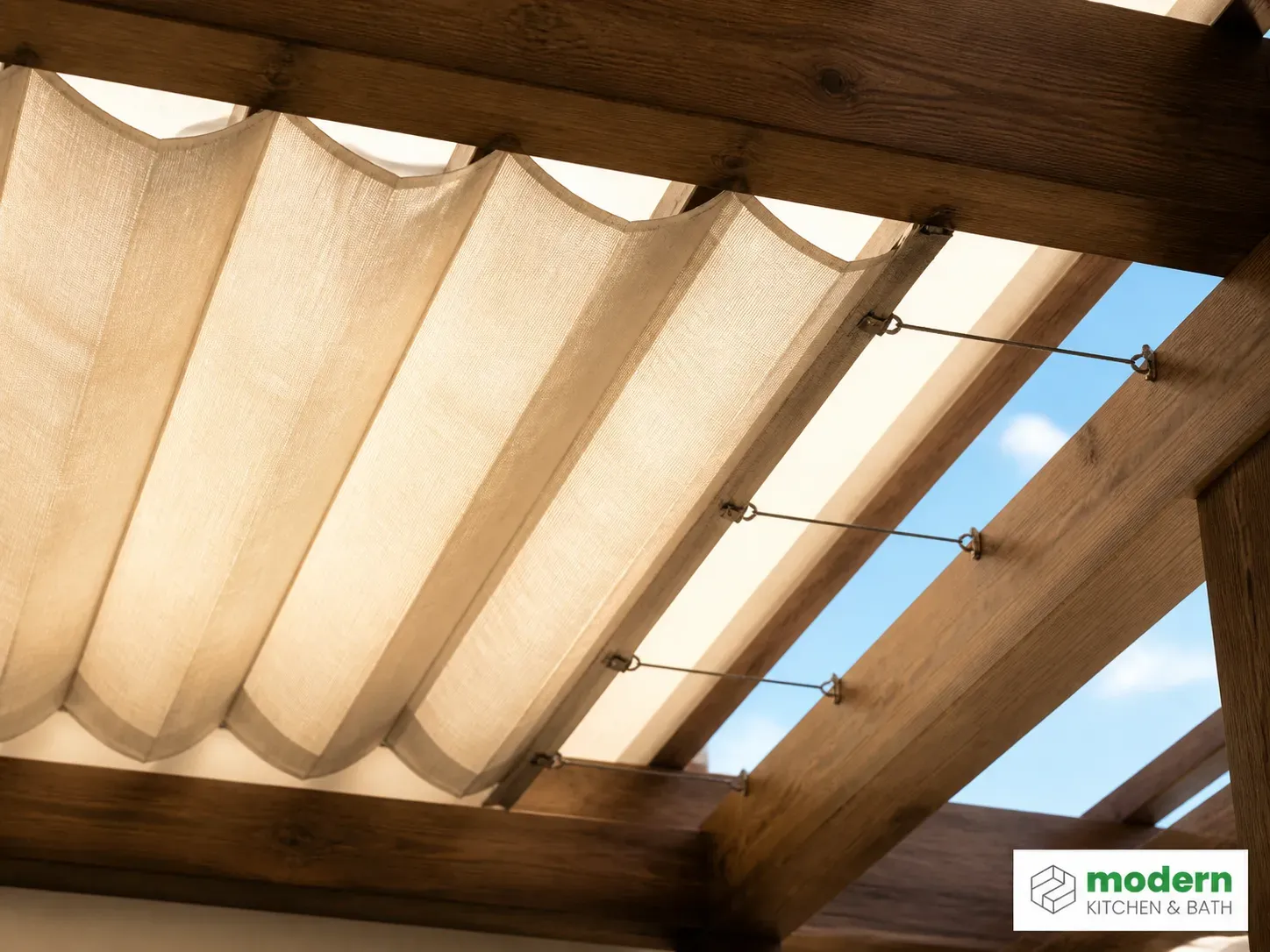
If you want the choice between sun and shade rather than a fixed answer, a retractable canopy is the step up, and it's one of the most popular pergola upgrades going. The common style is a slide-on-wire canopy: fabric panels that glide along cables strung between the beams, so you pull them closed for shade and bunch them open for sun. Manual versions are budget-friendly and many are straightforward to install on an existing pergola, while motorized versions open and close by remote. They cost more than a fixed sail or cloth and the fabric will eventually need replacing, but the flexibility is the appeal: you're not committing the space to full shade or full sun, and you can retract the fabric ahead of a storm.
Side Shades and Roll-Up Curtains
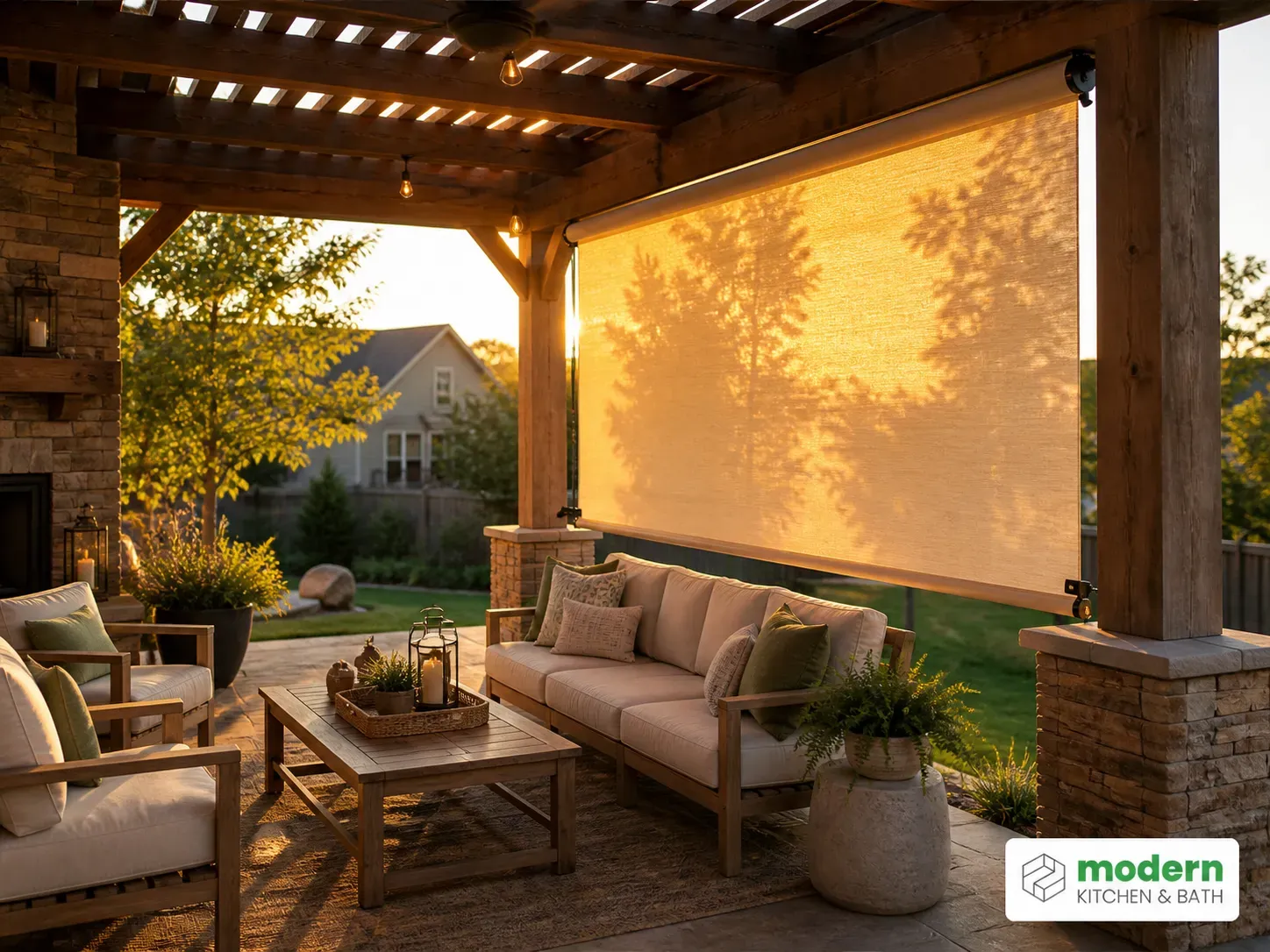
This is the piece people forget, and it's often what actually fixes a west-facing patio. Overhead cover does nothing against low sun coming in from the side, so pairing a top shade with a vertical roll-up shade or outdoor curtain on the western side is what makes late-afternoon dining comfortable. Roll-up cloth shades tuck away when you don't need them and drop down when the sun gets low, and matching them to your overhead fabric keeps the look intentional. Outdoor curtains add the same function with a softer, more decorative feel and a bit of privacy as a bonus. For a southwest exposure, this vertical layer often matters more than the roof.
Climbing Plants and Vines
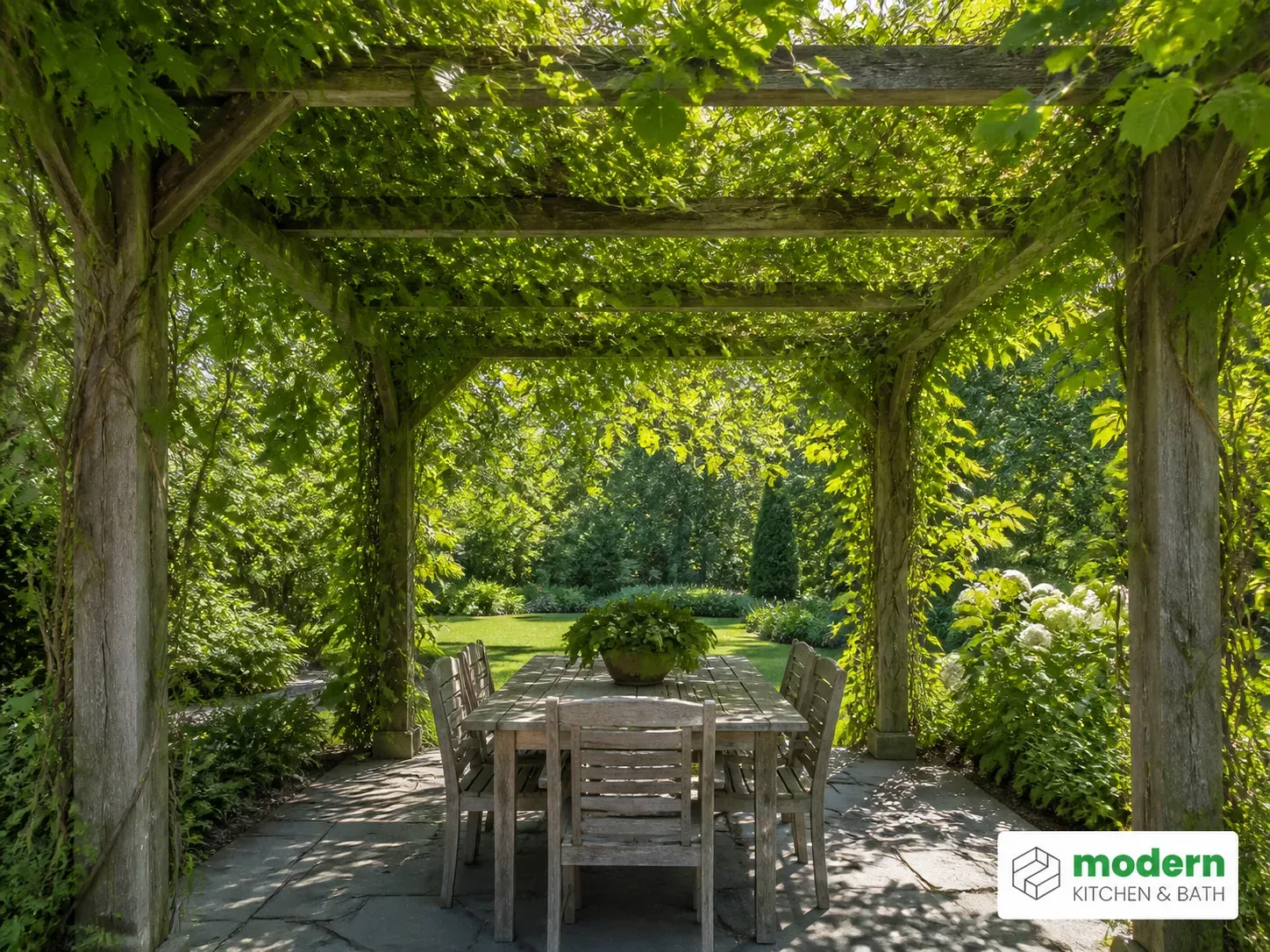
For a natural, living canopy, training climbing vines over the pergola is the classic approach, and it's beautiful when it fills in. The honest caveat is time: vines take a few seasons to grow dense enough to throw real shade, so this is a long game, not an immediate fix. You can shorten the wait with larger, more established plants from the nursery rather than starting from small starts. In our climate, deciduous vines have a nice bonus, dense shade in summer and bare vines that let winter sun through after the leaves drop. Just keep growth pruned back off the structure so trapped moisture doesn't accelerate wear, a point our maintenance guide covers in more detail.
Reed, Bamboo, and Lattice Toppers
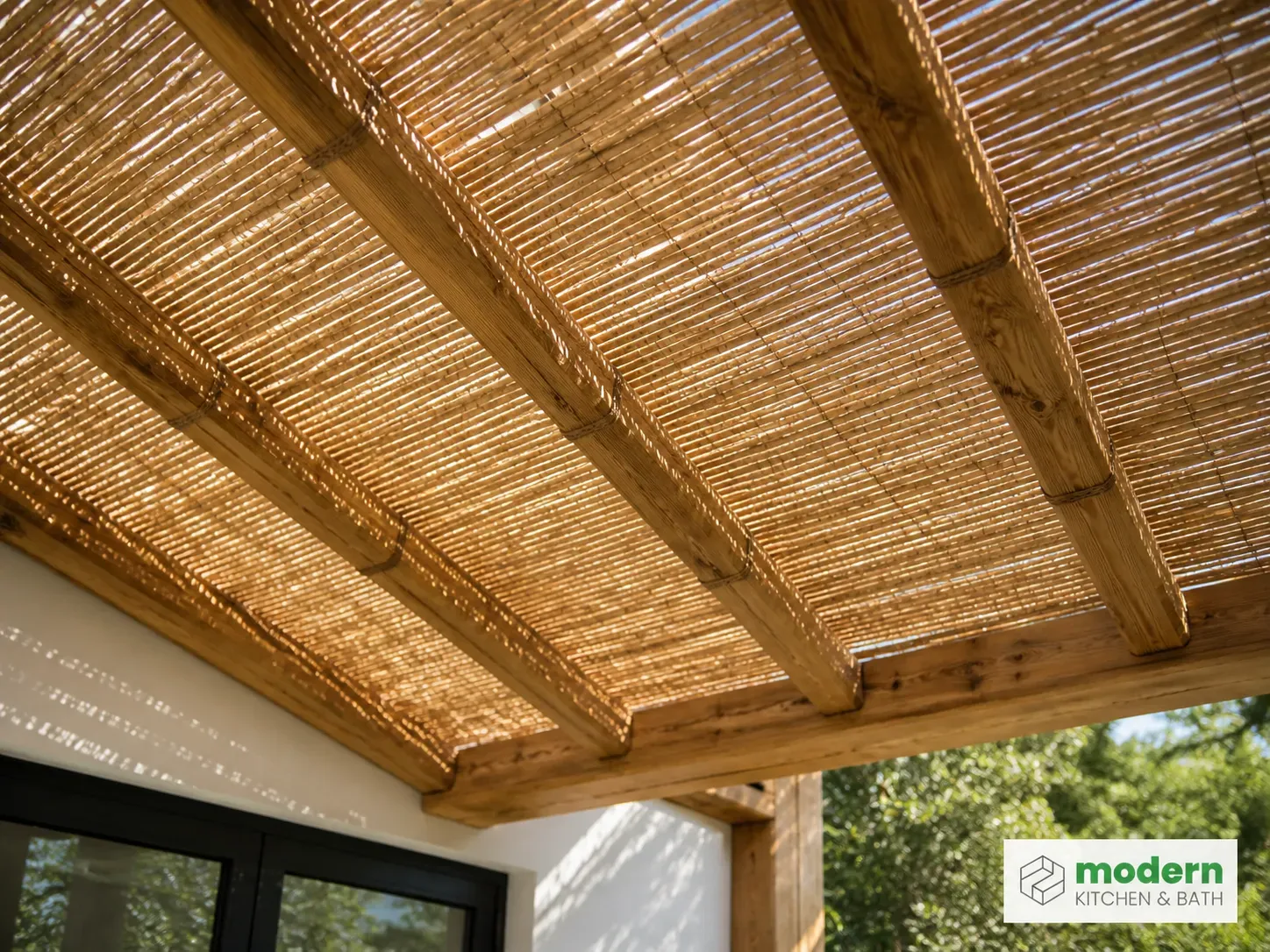
For a quick natural look without waiting on plants, rolls of reed or bamboo fencing laid across the top slats, or added lattice panels, filter sun and add texture for very little money. They're a popular DIY weekend upgrade and read as more organic than fabric. The tradeoff is lifespan: natural reed and bamboo weather and break down faster than fabric or metal in our humidity and freeze-thaw, so treat them as a refreshable few-year solution rather than a permanent one.
If You Want Adjustable, Permanent Shade
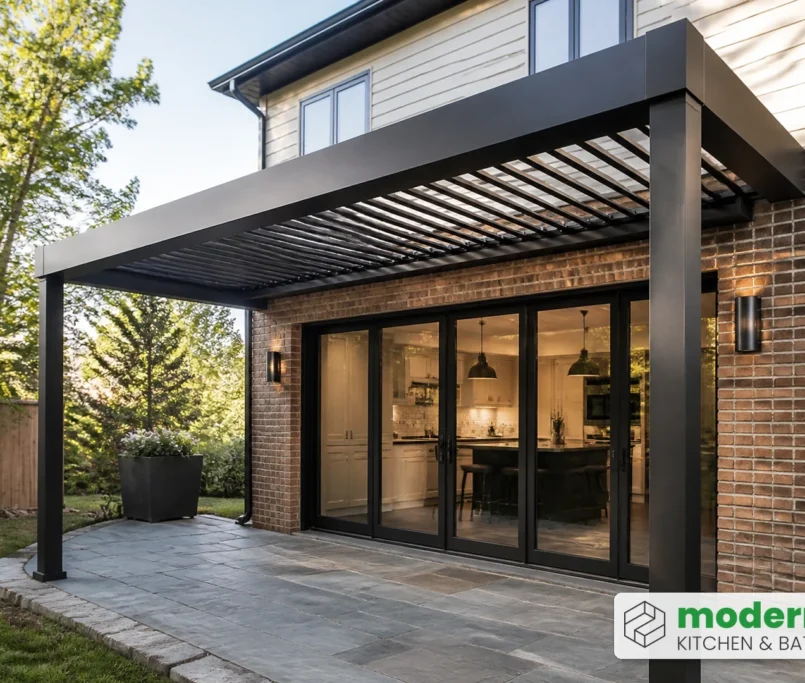
If you find yourself wanting to dial shade up and down all season without hanging and removing fabric, the permanent answer is a motorized louvered roof, aluminum slats that rotate for full sun, partial shade, or a closed position. That's a bigger investment and a different category from the add-on options here, but it's the most versatile shade control there is, and it doubles as rain protection. Our guide on adjusting louvered pergola shades covers how that system works day to day, and the materials guide covers why only aluminum supports it.
Shade Options at a Glance
| Option | Install Effort | Cost | Shade Control | NoVA Notes |
|---|---|---|---|---|
| Shade sail | Low (DIY, ~30 min) | $ | Fixed | Tension well; stainless hardware; take down for storms |
| Shade cloth panels | Low | $ | Fixed, filtered | Breathable; easy to remove for winter |
| Retractable canopy | Medium | $$ | Adjustable | Flexible; fabric needs eventual replacing |
| Side / roll-up shades | Low | $ – $$ | Adjustable (vertical) | Key fix for low western sun |
| Climbing vines | Low, but slow | $ | Seasonal | Takes seasons; deciduous lets in winter sun |
| Reed / bamboo topper | Low | $ | Fixed, filtered | Natural look; shorter lifespan in our climate |
| Louvered aluminum roof | Professional | $$$ | Fully adjustable | Permanent; also sheds rain |
Frequently Asked Questions for How to Add Shade to a Pergola
How do I add shade to an existing pergola?
The simplest immediate options are a UV-blocking shade sail or shade cloth stretched across the top, both of which you can install yourself in under an hour with stainless hardware. For adjustable shade, a retractable canopy slides open and closed. For low afternoon sun, add a vertical roll-up shade or outdoor curtain on the sunny side. Climbing plants give a natural canopy but take a few seasons to fill in.
What is the best shade for a west-facing pergola?
A west or southwest-facing patio takes low afternoon sun that overhead cover alone can't block, so the best setup pairs a top shade (sail, cloth, or canopy) with a vertical roll-up shade or outdoor curtain on the western side. That vertical layer is usually what makes late-day dining comfortable through a Northern Virginia summer.
How do I keep a shade sail from sagging?
Tension is everything, and a saggy sail is the most common complaint. Pull each corner tight using turnbuckles, which start loose and draw the fabric taut as you tighten them, and add corner springs so wind gusts don't rip the fabric. Tension the highest corners first and the lowest corner last, and make sure your anchor points span a couple of feet beyond the sail so you have room to pull it tight. A sail that was hard to hook up under tension is one that will stay taut.
Should I get a square or triangle shade sail?
For maximum coverage, a square or rectangle sail beats a triangle. Triangles look striking and can be layered for a designer effect, but a rectangular sail throws more actual shade for the same footprint and is easier to position over a seating or dining area. If pure sun relief is the goal, go rectangular; if you want a decorative overlapping look, triangles layered at different heights work well.
Are shade sails good in wind?
They work well if they're properly tensioned and solidly anchored, but a loose or oversized sail catches wind like a sail on a boat. Mount it with a slight slope and real tension using marine-grade stainless fittings, and take it down or check the tension before the severe thunderstorms and gusts our summers bring. For a permanently wind-rated solution, a louvered aluminum roof is sturdier.
Can I add shade to a pergola without drilling?
Often, yes. Shade sails, cloth, and many canopies attach to the existing pergola frame with clamps, carabiners, or wire fittings that grip the beams rather than requiring holes, which is popular for aluminum pergolas and for renters. Just make sure whatever you clamp to can handle the tension a taut sail puts on it. For heavier or motorized systems, some fastening into the frame is usually needed.
Do climbing plants work for pergola shade?
Yes, but slowly. Vines create a beautiful living canopy once established, though it typically takes a few growing seasons to get dense enough for real shade. Starting with larger nursery plants speeds it up. Deciduous vines are ideal in our climate because they shade in summer and drop their leaves to let winter sun through. Keep growth trimmed off the structure to avoid trapping moisture.
Can I add shade to an old pergola?
In most cases, yes. As long as the structure is still sturdy, an aging pergola is a fine anchor for a shade sail, cloth, retractable canopy, or side shades, none of which add much weight. If you're attaching anything that catches wind, just confirm the posts and connections are still solid first, since older wood can hide rot at the base.
Will fabric shade hold up to Northern Virginia weather?
Quality outdoor shade fabrics are UV-stabilized and hold up well to sun, but our humidity means you should choose mildew-resistant material and let it dry out rather than staying damp. Marine-grade stainless hardware avoids rust. Most homeowners take fabric sails and canopies down for winter and before major storms, which extends their life considerably.
Getting the Shade You Actually Want
Adding shade to a pergola isn't a rebuild, it's a match between the sun you're actually fighting and the solution that blocks it. Overhead sun wants a sail, cloth, or canopy; low western sun wants a vertical side shade; and if you want to change your mind by the hour, a retractable canopy or a permanent louvered roof gives you that control. For most Northern Virginia patios, a well-tensioned top shade plus a western side shade covers the real problem for a modest, mostly DIY investment. At Modern Kitchen , we help Sterling and Northern Virginia homeowners with everything from simple shade upgrades to fully integrated louvered systems.
Want help choosing or installing the right shade for your pergola?
Get a Free EstimateFound this helpful? Make us your go-to source on Google
If our content has been useful, you can tell Google to show more of it when you search. Click below, then check the box next to Modern Kitchen and Bath on the page that opens. It takes about five seconds.

You'll need to be signed in to your Google account. One click, then tick the box next to our name.